 Seminole Siding
 The Product We Standardized On, and Why
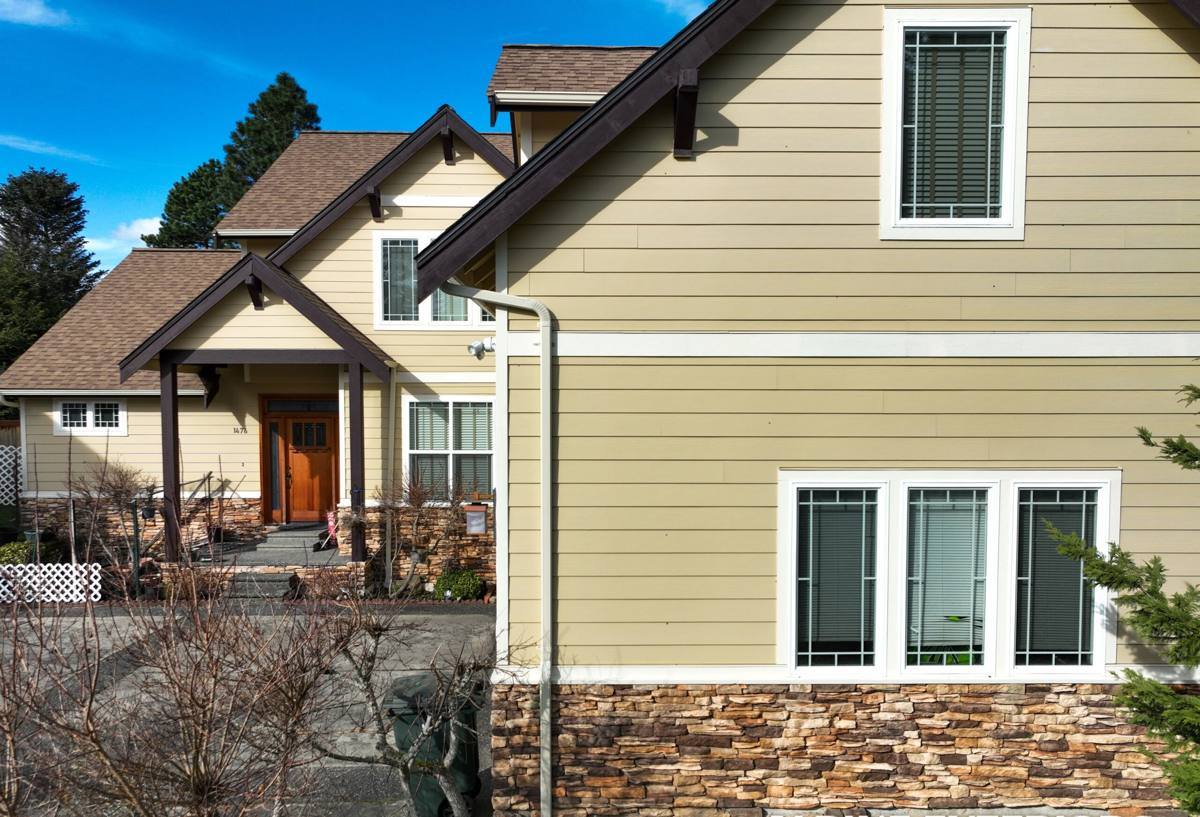
Every siding contractor eventually has to answer a simple question: what do you actually put on your own name when a customer asks "what's best?" For us, working on homes throughout Seminole and the rest of Pinellas County, the answer has been James Hardie fiber cement siding for years, and it's the only exterior cladding we install. Not because it's the cheapest option on the shelf, and not because a manufacturer rep talked us into it. We standardized on Hardie because of what happens to siding on the Pinellas County coast over a ten and twenty year timeline, and because Hardie is the product that holds up best against that timeline when it's installed correctly.
This page explains the reasoning in plain terms: what James Hardie siding actually is, how it's engineered for climates like ours, what the different product lines and finishes offer, and what correct installation requires. If you're comparing siding materials for a home in Seminole, Largo, or anywhere else along this stretch of the Gulf coast, this is the information we'd want you to have before you sign a contract with anyone.
What Seminole's Climate Actually Does to Siding
Seminole sits on a peninsula between Boca Ciega Bay and the Gulf, and that geography matters more than most homeowners realize when it comes to exterior materials. Four things work against siding here, continuously, year after year:
- Hurricane-force wind: Pinellas County sees tropical storm and hurricane conditions on a regular cycle, and wind-driven debris and sustained gusts test the fastening and impact resistance of every exterior product on a home.
- Intense, year-round UV: Florida sun doesn't take a winter off. Constant UV exposure breaks down pigments and surface coatings faster here than almost anywhere else in the country.
- Wind-driven rain: It's not just how much rain falls, it's how it hits the wall. Storms here drive water sideways into seams, laps, and fastener points, which makes moisture management at the installation level just as important as the material itself.
- Salt air: Being close to the Gulf and the bay means airborne salt is a constant low-grade corrosive on fasteners, trim, and any material that doesn't handle moisture well.
None of these are exotic conditions. They're just the baseline reality of owning a home in this part of Florida. Any siding decision made here should be made with all four of those factors in mind, not just upfront cost or appearance.
What James Hardie Siding Actually Is
James Hardie siding is fiber cement: a mix of Portland cement, sand, and cellulose fiber, formed under pressure and cured. It is not vinyl, not wood, and not a wood composite. That composition is what gives it the properties that matter most in a coastal climate:
Non-Combustible
Fiber cement doesn't burn, warp, or melt the way vinyl and some composite products can under heat exposure. That's a real, tangible difference in wildfire-adjacent conditions and in general fire safety for the home.
Dimensionally Stable
Fiber cement doesn't expand and contract with humidity and temperature swings the way wood or wood-based composites do. In a climate where humidity swings from a wet, saturated summer to a drier winter, that stability keeps paint lines, caulk joints, and butt seams from working loose over time.
Engineered for Moisture, Not Just Resistant to It
Fiber cement absorbs and releases moisture differently than wood fiber products, and Hardie's manufacturing process is built around managing that behavior rather than fighting it. This matters directly in a market that sees regular wind-driven rain.
Hardie's Climate-Engineered Product Lines
James Hardie doesn't make one generic siding product for the whole country. They engineer regional formulations, and the one specified for Florida and the Gulf Coast is the HZ5 product line, built specifically to perform in hot, humid, high-moisture climates. That's a meaningful distinction, and it's part of why we only install Hardie: the manufacturer has already done the climate-matching work, rather than leaving it to installers to guess at what will hold up.
| Product Line | What It Is | Best Use |
|---|---|---|
| HardiePlank | Lap siding, the most common horizontal siding profile | Whole-home siding, most popular choice in Pinellas County |
| HardieShingle | Textured shingle-style panels | Accent areas, gables, coastal cottage-style homes |
| HardiePanel | Vertical panel siding | Modern facades, porch ceilings, accent walls |
| HardieTrim | Fiber cement trim boards | Corners, window and door casing, fascia |
| HardieSoffit | Pre-vented and solid soffit panels | Roof overhangs, attic ventilation systems |
ColorPlus Technology: The Finish Matters as Much as the Board
A lot of the failures people associate with fiber cement siding actually trace back to the paint, not the board underneath it. Field-painted fiber cement is only as good as the paint job and the caulking around it, and in a UV-heavy, humid climate like ours, field-applied paint tends to fade, chalk, or peel well before the board itself shows any wear.
Hardie's ColorPlus finish is baked on at the factory, in a multi-coat, oven-cured process, before the boards ever reach a job site. That gives you a few practical advantages:
- More consistent, UV-resistant color that holds up better against constant Florida sun
- A finish that's already cured and hardened when it arrives, instead of curing on your wall
- A longer color warranty specifically because the finish is factory-controlled, not field-applied
- Touch-up products formulated to match, for the rare repair or nail patch
You can still order Hardie siding primed for field painting if you want a fully custom color outside the ColorPlus palette, but for most homeowners in Seminole, ColorPlus is the better long-term value because it removes an entire point of failure: the quality of a field paint job baking in coastal sun and salt air.
The Warranty, and What It's Actually Worth
James Hardie backs its siding products with a limited warranty that is transferable to a subsequent homeowner, which matters both for your own protection and for resale value if you sell the home. A transferable warranty on the siding is something a buyer's inspector and a real estate agent will both notice, and it's a detail that separates a well-documented Hardie installation from an unknown-history siding job.
Two things affect whether that warranty actually protects you when it matters:
Product Line Matters
Make sure you know which formulation was actually used and confirm it in writing. HZ5 is what's specified for this climate zone.
Installation Matters More
Warranty claims get denied more often over installation defects than material defects. Improper fastening, wrong nail placement, missing flashing, or gaps that let water behind the board can all void coverage regardless of how good the product itself is. This is the single biggest reason installer quality matters as much as, or more than, brand choice.
What Correct Installation Actually Involves
Fiber cement siding is unforgiving of shortcuts in a way that some other products are not. A rushed or careless install can undercut everything the material is engineered to do. Correct installation in a coastal wind and rain environment means paying attention to details that aren't visible once the job is done:
- Proper fastener spacing and placement to meet wind load requirements for our zone, not just "close enough"
- Correct nail penetration depth — overdriven or underdriven fasteners are one of the most common causes of warranty denial
- Flashing at every horizontal joint, window, and door to direct wind-driven rain away from the wall assembly
- Proper clearance from grade, roofing, and decks so the bottom edge of the siding isn't sitting in standing water or splash-back
- Correct caulking at butt joints and trim, using products compatible with ColorPlus finishes
- Manufacturer-specified starter strips and weep provisions so any moisture that does get behind the cladding has somewhere to go
This is also, honestly, part of the reason a company that only installs one product tends to do it better. Crews that switch between vinyl, LP SmartSide, and fiber cement week to week are juggling different fastening rules, different moisture behaviors, and different failure points. Specializing in one system means the crew isn't relearning best practices on your roof.
Why We Don't Install Other Siding Materials
We get asked fairly often why we don't offer vinyl or engineered wood siding as a lower-cost option. The honest answer is that we've made a professional judgment call about what holds up in this specific climate over the long run, and we'd rather stand behind one product we trust completely than offer a menu of options with very different long-term outcomes. Vinyl can warp and fade under sustained Florida UV and doesn't offer the same wind resistance profile. Engineered wood products carry moisture-management requirements that are harder to guarantee in a wind-driven rain environment. None of that means those products have no place anywhere — it means we'd rather not put our name on an installation we're not confident will perform here, in Seminole, for twenty-plus years.
Getting a Siding Estimate for Your Seminole Home
If you're planning a siding replacement or new construction project in Seminole or elsewhere in Pinellas County, we're happy to walk your property, look at your current exterior, and put together a straightforward, no-pressure estimate for a James Hardie installation. There's no obligation, and we'll give you a plain answer to any questions about product lines, colors, or the installation process. Reach out using the form below to get started.