 Seminole Siding
 Why We're Writing This
If you've been getting quotes for new siding in Seminole, chances are vinyl has come up. It's the most common siding material sold in the country, it's inexpensive, and plenty of contractors will happily install it. We won't. This page explains what vinyl does well, where it tends to struggle once it's on a house in Pinellas County, and why our crews only install James Hardie fiber cement siding. Our goal isn't to scare you off vinyl with exaggerated claims — it's to give you the same honest rundown we'd give a neighbor.
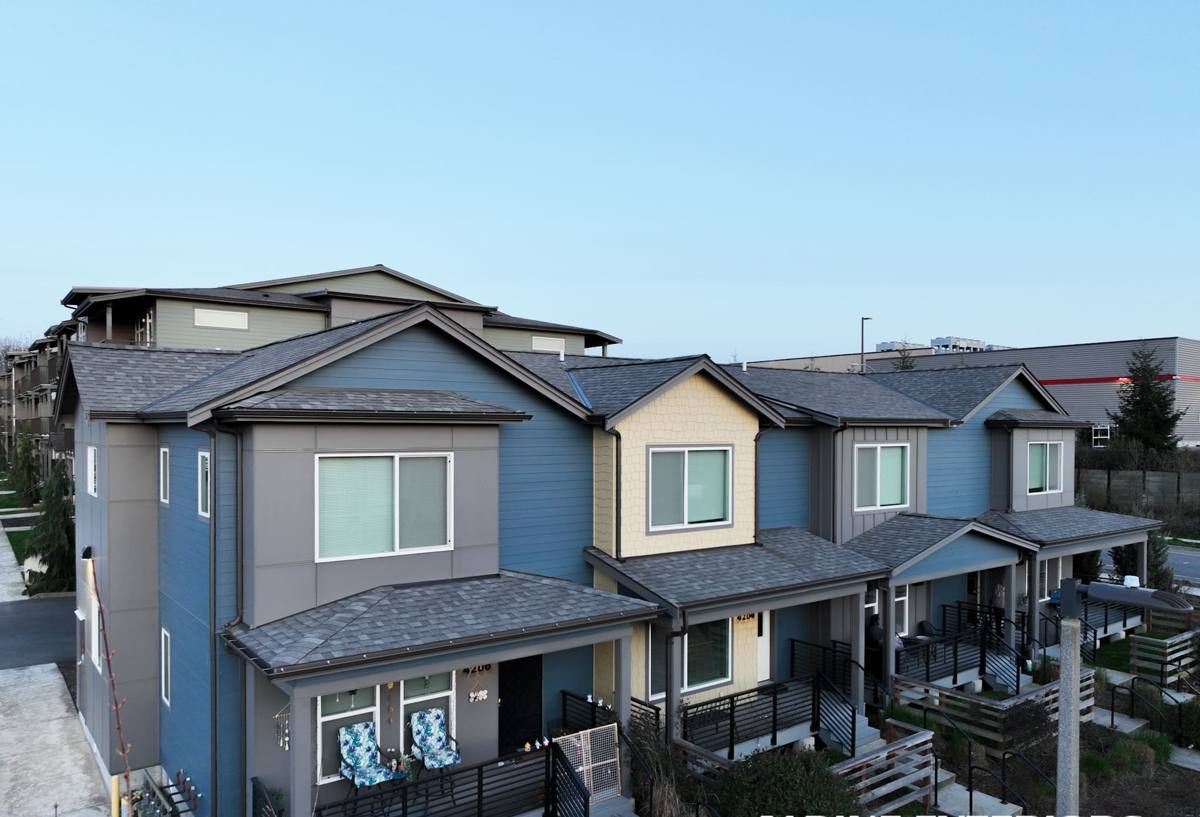
What Vinyl Siding Actually Gets Right
Vinyl siding earned its popularity honestly. It's lightweight, it goes up fast, and it's usually the lowest upfront cost per square foot of any siding option on the market. It doesn't rot, it doesn't need painting, and for a lot of climates it performs reasonably well for a couple of decades. If budget is the single deciding factor and a home isn't exposed to much coastal weather, vinyl isn't a scam or a bad product — it's a reasonable compromise for some homeowners.
Where it runs into trouble is when you put it on a home a few miles from the Gulf, under a building code written for hurricane-force wind, and under a sun that beats down on it 300+ days a year. That's most of Seminole.
Where Vinyl Struggles in Our Climate
Heat and UV Exposure
Vinyl is a plastic product, and plastic reacts to heat. On south- and west-facing walls in Pinellas County, siding surface temperatures can climb well beyond the surrounding air temperature on a summer afternoon. Over years of that cycle — heating up, cooling down, heating up again — vinyl panels can warp, buckle, or develop a wavy look, especially near dark colors that absorb more heat. Darker vinyl colors are often restricted by manufacturers for exactly this reason, which limits your color choices right out of the gate. UV exposure also fades vinyl's color over time; because the color is baked through the material rather than applied as a separate finish coat, there's no practical way to refresh it — fading means replacement, not a repaint.
Wind and Storm Exposure
Seminole sits in a wind-borne debris region under Florida's building code, and siding here has to be installed and fastened to hold up against sustained hurricane-force gusts, not just an average storm. Vinyl siding is hung, not fastened rigidly — each panel needs room to expand and contract, which is part of its design. That same hanging installation is also its weak point in wind. Under strong, sustained gusts, vinyl panels can flex, rattle, or in worse cases pull loose or crack at the locking edges. It can be installed to meet code, but the margin for error is tighter than most homeowners realize, and the material itself has less structural stiffness to fall back on than fiber cement.
Salt Air and Coastal Proximity
Being this close to the Gulf means salt-laden air settling on every exterior surface, including siding. Vinyl doesn't corrode the way metal does, but the combination of salt residue, humidity, and constant UV does accelerate the surface degradation and chalking that shows up as a dull, faded look years before a homeowner expects it. Regular rinsing helps, but it's one more maintenance task that non-coastal homeowners don't have to think about.
Installation Sensitivity Most Homeowners Never Hear About
Vinyl siding is often marketed as easy to install, and mechanically it is — that's part of why it's cheap. But "easy to install" and "easy to install correctly" aren't the same thing. Vinyl has to be nailed loosely enough to allow for thermal expansion and contraction; nail it too tight and panels can buckle in the heat. Every seam, corner, and J-channel is a spot where wind-driven rain can find its way behind the panel if the installer didn't overlap and flash it correctly. Because vinyl is inexpensive and fast to hang, it attracts installers who prioritize speed over precision — and the mistakes usually don't show up until the first bad windstorm or the first summer of real heat, well after the crew and the low bid are long gone.
Long-Term Maintenance and Appearance
Vinyl is marketed as low-maintenance, and compared to wood, it is. But "low-maintenance" doesn't mean "no maintenance" in this climate. Homeowners typically need to pressure wash it periodically to keep salt film and mildew from building up, check for panels that have loosened after storm season, and accept that faded or cracked panels are difficult to match years later because manufacturers change color lines. It also has a distinct look — a thinner, more flexible profile than fiber cement — that shows up most obviously at corners, butt joints, and anywhere the panel isn't perfectly flat against the wall.
Vinyl vs. Fiber Cement: A Side-by-Side Look
| Factor | Vinyl Siding | James Hardie Fiber Cement |
|---|---|---|
| Upfront cost | Lowest of common siding options | Higher upfront, priced closer to quality wood alternatives |
| Wind performance | Meets code but flexes; can loosen or crack under sustained gusts | Rigid, heavier panel with a stronger fastening system |
| Heat/UV behavior | Can warp or buckle in intense, direct sun; color fades over time | Dimensionally stable; ColorPlus factory finish resists fading |
| Fire rating | Combustible plastic material | Non-combustible |
| Color options | Limited, especially in darker tones (heat absorption concerns) | Broad palette, including deeper colors engineered for heat |
| Typical lifespan before major issues | Often shows fading, warping, or seam issues within 10-15 years in this climate | Built and warrantied for multi-decade performance |
| Repainting | Not practical — color is through-material | Factory finish; repaint intervals are long and optional |
Why We Standardized on James Hardie
We don't install vinyl, LP SmartSide, Cemplank, Allura, primed spruce, or cedar. We install James Hardie fiber cement exclusively, and it's not because of a marketing partnership — it's because after years of doing exterior work in this part of Florida, it's the product we trust to hold up under our specific mix of heat, wind, humidity, and salt air. A few reasons that matter most:
- It's non-combustible, which matters for both safety and, in some cases, insurance considerations.
- Hardie's HZ5 product line is engineered specifically for high-humidity, storm-prone climates like ours, not a generic national product.
- The ColorPlus factory finish is baked on and warrantied separately from the substrate, so color holds up far better under UV than a through-colored plastic panel.
- It's dimensionally stable — it doesn't expand, contract, warp, or buckle the way a heat-sensitive plastic product can.
- It carries a strong transferable warranty, which matters if you sell the home before you'd otherwise replace the siding.
None of that makes Hardie the cheapest option on your quote sheet. It costs more upfront than vinyl, and it's heavier and slower to install, which is reflected in labor cost. We think that trade-off is worth it for a Seminole home that's going to face decades of Gulf-adjacent weather, but we'd rather tell you that plainly than let you find out the hard way.
A Practical Checklist If You're Comparing Siding Options
- Ask what wind rating the manufacturer specifies for the product, and confirm it matches or exceeds Pinellas County's wind-borne debris requirements.
- Ask whether the color you want is available in the material — and whether darker colors carry heat-absorption warnings or restrictions.
- Ask how the warranty is structured: does it cover the material, the finish, and labor, and is it transferable to a future owner?
- Ask what installation details (fastening, flashing, gapping) the crew follows, and whether they're manufacturer-certified for that specific product.
- Ask what the product looks like after 10-15 years in a similar coastal climate, not just what it looks like brand new.
- Get a written, itemized estimate rather than a flat "per square foot" number, so you know what's actually included.
A Word on Cost
We're not going to throw out specific numbers here, because real pricing depends on your home's size, layout, trim detail, and current siding condition. What we can say honestly: vinyl will almost always come in as the lowest bid, fiber cement will typically run higher upfront, and the real cost comparison only makes sense when you factor in how often each material needs attention or replacement over the years you'll own the home. A low bid today isn't a bargain if it means redoing the job in half the time.
Let's Talk About Your Home
Every home in Seminole faces a slightly different mix of sun exposure, wind exposure, and salt air depending on its lot, orientation, and distance from the water. We're glad to walk your property, look at your current siding, and give you a straight answer about what we'd recommend and why — no pressure, no obligation. Request a free estimate below and we'll take it from there.