 Seminole Siding
 Siding in Belleair: A Coastal Pinellas County Community With Real Exterior Demands
Belleair sits among the most established residential communities on the Pinellas County peninsula, tucked between the Intracoastal Waterway and the Gulf of Mexico. It's a mix of long-owned homes with mature landscaping and newer builds and renovations going in alongside them. What almost every house in Belleair shares, regardless of age or style, is exposure: salt-laden air moving in off the water, intense subtropical sun for most of the year, heavy wind-driven rain during the summer storm season, and the real possibility of hurricane-force wind loading during an active tropical season. Exterior materials here don't get an easy life.
We're Seminole Siding Installer, based just south in Seminole and working exterior projects — siding, roofing, windows, and decks — throughout Pinellas County. Belleair is close enough to home that our crews know the conditions firsthand: how quickly humidity finds a weak seam, how sun exposure varies from a shaded, tree-canopied lot to an open one closer to the water, and how a storm system moving through the bay can put wind and rain into a wall assembly from angles a lot of siding products just aren't built to handle.
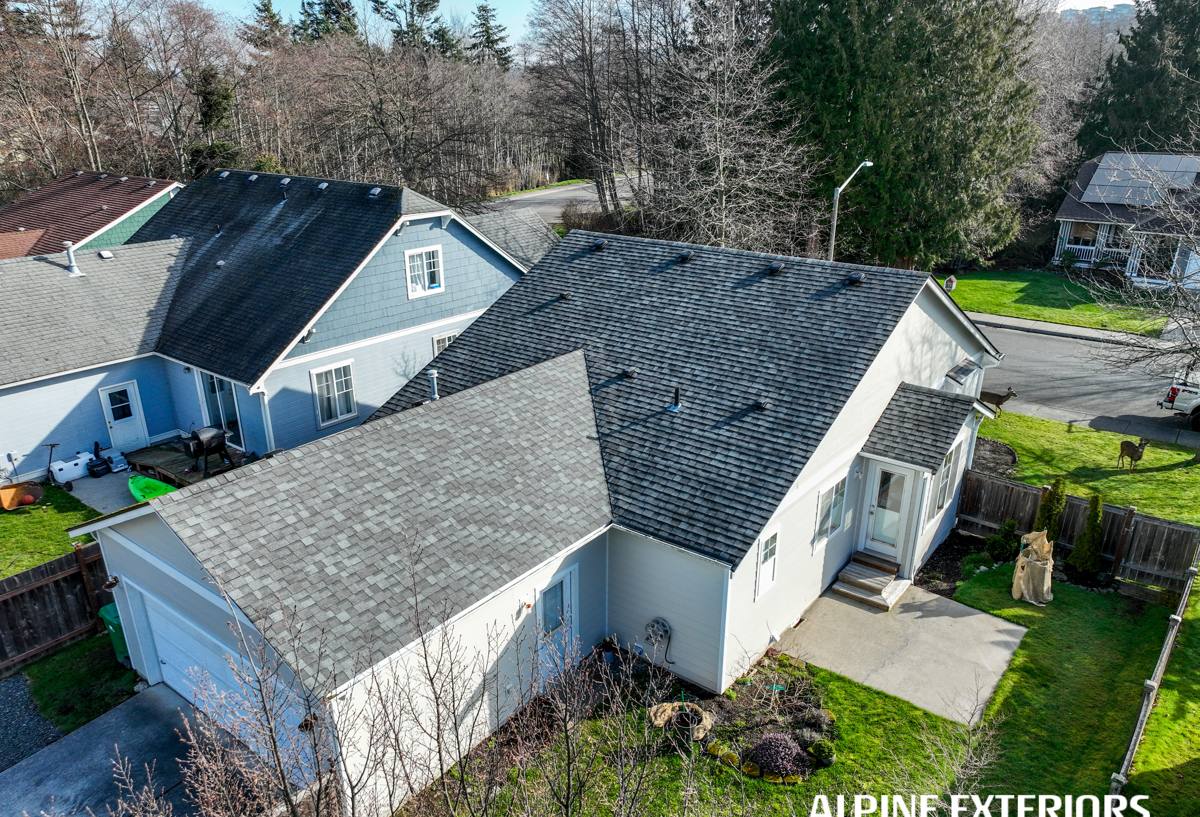
What Belleair's Climate Does to a House Over Time
Salt Air and Humidity
Proximity to the Gulf and the Intracoastal means airborne salt is a constant, even for homes not directly on the water. Salt exposure accelerates corrosion of fasteners and metal trim, and it interacts badly with any siding material that isn't dimensionally stable or that relies on a surface coating to keep moisture out. Combine that with Florida's baseline humidity and you get conditions that punish anything prone to swelling, delaminating, or holding moisture against the wall.
Year-Round UV Exposure
Central Florida sun is intense for most of the calendar year, not just in summer. UV breaks down pigments and resins in lower-grade coatings, which is why cheap paint jobs on siding fade and chalk fast here. South- and west-facing walls in Belleair take the worst of it and are usually the first place you'll see a finish start to go.
Wind-Driven Rain and Storm Wind Loading
Rain in this region rarely falls straight down during a storm — it's pushed sideways by wind, which means it's testing your siding's laps, joints, and flashing details, not just its face. During named storms, Belleair's exposure to wind coming off open water can mean sustained gusts that put real structural load on a wall system. Siding that isn't installed to a tight fastening schedule, or that isn't rated for the exposure, is where failures start.
Why We Only Install James Hardie Fiber Cement Siding
Seminole Siding Installer installs one siding system: James Hardie fiber cement. We don't install vinyl, LP SmartSide, Cemplank, Allura, or primed wood siding like spruce or cedar. That's not a marketing position — it's a standard we hold because of what we've seen these products do over years of exposure in exactly the conditions Belleair deals with.
- Vinyl can soften, warp, or crack under sustained heat and doesn't hold up well as a structural barrier in high wind events.
- LP SmartSide and other engineered wood products are wood-based, which means moisture intrusion at a cut edge or fastener point can lead to swelling and rot over time — a real risk in a humid, salt-air coastal environment.
- Cemplank and Allura are also fiber cement, and reasonable products, but Hardie's ColorPlus finish, HZ5 climate-engineered formulation, and transferable warranty structure are the combination we've standardized on for consistency and accountability across every job.
- Primed spruce or cedar looks good going up, but bare wood siding puts the entire moisture defense on a field-applied paint job that has to be maintained on a strict schedule or the wood underneath starts to suffer.
James Hardie fiber cement is non-combustible, dimensionally stable in humidity swings, and available in HZ5 formulation engineered specifically for humid climates like ours. The ColorPlus factory finish is baked on under controlled conditions, which means better UV and fade resistance than a field-applied coat, and it comes with its own finish warranty separate from the substrate warranty. For a coastal Pinellas County home, that combination — stable material, factory-cured finish, non-combustible core — is what we're willing to put our name behind.
James Hardie Product Lines We Install
| Product | Best For | Notes |
|---|---|---|
| HardiePlank Lap Siding | Most homes, traditional or coastal style | Available in smooth or cedar-textured finish; the most common choice in this area |
| HardieShingle | Accent gables, dormers | Staggered or straight-edge panel styles for architectural detail |
| HardiePanel Vertical Siding | Modern or Florida vernacular accents | Often paired with lap siding for mixed-texture facades |
| HardieTrim | Corners, fascia, window and door trim | Matches siding durability so trim doesn't become the weak point |
Every one of these is available in the HZ5 formulation appropriate for our climate zone, and in Hardie's ColorPlus factory-finish palette so the color match is consistent, warrantied, and doesn't rely on job-site painting conditions.
How a Belleair Siding Project Actually Runs
1. On-Site Assessment
We walk the home, check the condition of the existing siding and the sheathing underneath, note water staining or soft spots, and look at exposure by elevation — a shaded north wall behind mature trees and an open, water-facing wall have different demands even on the same house.
2. Water Management Details
Most siding failures we're called out to repair trace back to poor flashing, not the siding material itself. Around windows, doors, roof-to-wall transitions, and penetrations, correct flashing and weather-resistive barrier installation matter as much as the siding itself. We install per Hardie's published specifications, including fastener pattern, clearance from grade and roofing, and joint treatment.
3. Installation
Fiber cement is heavier and less forgiving of shortcuts than vinyl — it has to be fastened correctly, gapped correctly at butt joints, and caulked with a product compatible with the ColorPlus finish. Rushed installation is where a good product gets a bad reputation, and it's the main thing separating a Hardie job that lasts decades from one that has problems in five years.
4. Final Walkthrough
We go over the finished work, trim details, and caulking lines, and make sure everything is documented for warranty registration.
Beyond Siding: Roofing, Windows, and Decks
Siding is one part of a home's exterior envelope, and in Belleair it rarely acts alone. A compromised roof edge or an old, poorly sealed window can undermine even correctly installed siding by letting water into the wall assembly from a different direction. Because we handle roofing, windows, and decks in addition to siding, we can look at a home's exterior as one connected system rather than treating each component in isolation — which matters most right where two systems meet, like a roofline transition or a window opening, since that's typically where problems actually start.
What Belleair Homeowners Should Check Before a Siding Project
- Are there soft spots, staining, or visible gaps where siding meets trim, windows, or the roofline?
- Is the current siding original wood, vinyl, or an engineered product showing swelling or delamination at seams?
- Has the home had a recent roof or window replacement that should be coordinated with new siding work?
- Are there areas with heavier tree canopy that stay damp longer after rain?
- Is the home's water-facing side showing more fade or wear than sheltered elevations?
- Does the contractor carry proper Florida licensing and insurance, and will they put installation specs in writing?
Cost Factors for a Belleair Siding Project
| Factor | Why It Matters |
|---|---|
| Home size and elevation complexity | More corners, gables, and stories mean more material and labor |
| Existing siding removal | Tear-off and disposal of old material adds time, especially with wood or vinyl over old sheathing |
| Sheathing condition | Water-damaged sheathing found during tear-off needs repair before new siding goes on |
| Product line and texture | Lap vs. shingle vs. panel, and smooth vs. textured finish, affect material cost |
| Trim and detail work | Homes with more architectural detail require more precise, labor-intensive trim work |
We give straightforward, written estimates after an on-site look at the actual conditions — not a phone-quoted number that changes once the crew shows up.
Why a Local Crew Matters
A contractor working out of Seminole and covering Pinellas County sees the same coastal conditions Belleair homes face on a regular basis — not as a one-off job type, but as the normal, expected exposure for every house on the schedule. That familiarity shows up in the details: how tight the fastening schedule needs to be for storm exposure, which elevations need extra attention to flashing, and how to sequence work around Florida's rainy season instead of fighting it. It also means we're a known, local, licensed and insured business if you ever need a warranty question answered or a follow-up visit — not a name that only shows up during storm season and disappears afterward.
If your Belleair home's siding is showing its age, or you're planning ahead of a renovation, we're happy to come take a look and give you a straightforward, no-pressure estimate — no obligation, just an honest read on where things stand. Use the form below to get started.