 Seminole Siding
 Kenneth City is one of the smaller, tighter-knit communities tucked into Pinellas County, surrounded by Seminole and the greater St. Petersburg area. Many of its homes date back several decades, which means a lot of original siding, trim, and soffit work in this town is well past the point where "it still looks okay from the street" is a reliable indicator of what's actually happening underneath. We work throughout Kenneth City installing and replacing exterior siding, and this page covers what local homeowners should know before their next replacement.
What Kenneth City's Climate Does to Exterior Siding
Pinellas County sits on a peninsula, and Kenneth City is close enough to the Gulf and Tampa Bay that salt-laden air is a constant, low-grade stressor on every exterior surface in town — not just homes directly on the water. Add in the rest of the region's climate profile and you get a combination that's genuinely hard on siding:
- Hurricane-force winds during named storms, plus routine summer thunderstorm gusts that stress fasteners and seams year-round, not just during hurricane season.
- Wind-driven rain that gets pushed sideways into wall assemblies, testing every lap, joint, and penetration in the siding system rather than just running down the face of the wall.
- Intense, near-constant UV exposure that breaks down pigments, resins, and coatings faster here than in most of the country.
- Salt air corrosion that attacks exposed fasteners, trim edges, and any material not engineered to resist it.
- Humidity and afternoon heat that keep wall assemblies warm and damp for long stretches, which is exactly the environment moisture-sensitive materials struggle with.
None of this is unique to Kenneth City specifically — it's the reality for all of Pinellas County — but it's worth saying plainly because a lot of siding products sold nationally were never engineered with this specific combination in mind.
Why We Only Install James Hardie Fiber Cement
We get asked fairly often why we don't offer vinyl, LP SmartSide, or other engineered wood and composite siding options. The honest answer is that after years of installing and repairing siding across this region, we standardized on James Hardie fiber cement because it's the product that consistently holds up to what Pinellas County throws at it, and we'd rather build a business on one product we trust completely than offer a menu of options with different failure points.
The trade-offs with the alternatives
Vinyl siding is affordable and easy to install, but it's a petroleum-based product that softens, warps, and becomes brittle under sustained heat and UV — a real concern in a market where roof and wall surface temperatures regularly climb well into the triple digits in summer. It also has a lower wind-load ceiling than fiber cement in most product lines, which matters here.
Engineered wood products like LP SmartSide use a wood-strand core with a resin-saturated overlay. When that overlay is compromised — at a cut edge, a fastener hole, or a joint that wasn't properly sealed and maintained — the wood core underneath is vulnerable to moisture intrusion and rot in exactly the humid, rain-heavy conditions this area sees. It's a maintenance-dependent product in a climate that doesn't forgive missed maintenance.
Other fiber cement brands and primed wood products each have their own trade-offs in moisture behavior, factory finish quality, or long-term color retention. We're not here to disparage any of them — we simply made a professional call to standardize on the one system we've seen perform best, longest, in this specific climate.
What Makes James Hardie the Right Fit Here
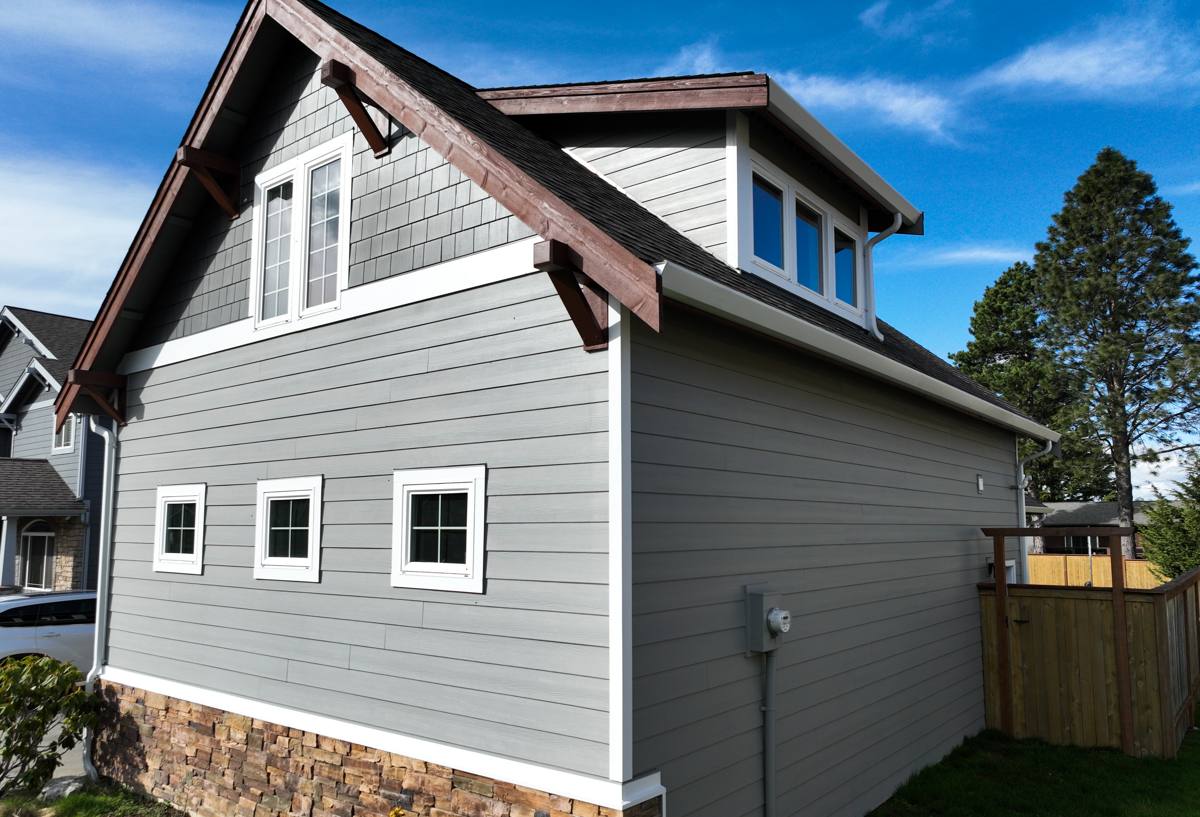
James Hardie fiber cement is a cement, sand, and cellulose fiber composite — non-combustible, dimensionally stable, and engineered specifically for humid, storm-prone climates through its HZ5 product line, which is built for Florida and the Gulf Coast. A few specifics that matter directly to Kenneth City homeowners:
- Non-combustible core — fiber cement doesn't feed a fire the way wood-based products can, which some insurers factor into premiums.
- ColorPlus factory finish — a baked-on, UV-cured finish applied under controlled factory conditions, which holds color far more consistently under intense Florida sun than field-applied paint.
- Moisture resistance — fiber cement doesn't rot, swell, or delaminate the way wood-based products can when water finds its way in.
- Pest resistance — no cellulose food source for termites or wood-boring insects, a real consideration in this part of Florida.
- Strong transferable warranty — Hardie's product warranties are among the longest in the industry and are transferable to a new owner, which can matter if you sell within the warranty period.
James Hardie Product Lines We Install
| Product | Best Use | Notable Feature |
|---|---|---|
| HardiePlank Lap Siding | Most common full-home application | Classic lap profile, several textures and widths |
| HardiePanel Vertical Siding | Accent walls, gables, modern facades | Clean vertical lines, board-and-batten look available |
| HardieTrim | Corners, window and door trim, fascia | Matches siding durability, crisp finish lines |
| HardieSoffit | Eaves and overhangs | Vented and non-vented options for attic airflow |
Why Correct Installation Matters as Much as the Product
Fiber cement siding is only as good as the installation behind it. In a wind-driven-rain climate like ours, most siding failures we get called out to inspect trace back to installation shortcuts, not the material itself. That includes things like:
- Improper fastener spacing or fasteners driven too deep, which compromises the plank's grip and wind resistance.
- Missing or inadequate flashing at windows, doors, and other penetrations — the single most common point of water intrusion on any home.
- Insufficient clearance between siding and grade, roofing, or decking, which traps moisture against the bottom edge of the boards.
- Butt joints that aren't properly caulked or backed, leaving a direct path for wind-driven rain.
- Skipping manufacturer-specified starter strips or weather-resistant barrier details.
Hardie publishes detailed installation specifications for exactly this reason, and following them is what keeps the product's warranty valid and keeps water out of your walls. A crew that treats fiber cement like it's interchangeable with any other lap siding is a crew that's setting a homeowner up for problems down the road.
Beyond Siding: A Full Exterior Envelope Approach
Siding doesn't work in isolation — it's one piece of the exterior envelope alongside your roof, windows, and any attached structures like decks. We handle all four because problems in one area often show up as symptoms in another. A roof leak can wick into wall sheathing behind siding that looks perfectly fine from the outside. A failing window seal can push moisture behind trim boards. A deck ledger board attached without proper flashing can rot the wall it's fastened to.
When we assess a Kenneth City home, we're looking at the whole exterior system, not just the siding surface, because that's the only way to actually solve a moisture or wind-damage problem rather than just re-covering it.
What a Kenneth City Siding Project Typically Involves
Assessment and Tear-Off
We start by inspecting the existing siding, sheathing, and any visible trim or flashing for signs of prior water intrusion, wood rot, or pest damage. Old siding comes off and the sheathing gets a real look — this is often where hidden problems from years of small leaks surface.
Weather-Resistant Barrier and Flashing
Before new siding goes up, we address the water-resistive barrier and flashing details at every window, door, and penetration. This step is where most long-term performance is won or lost, and it's not visible once the project is done — which is exactly why it shouldn't be rushed.
Installation to Manufacturer Spec
Hardie boards go up following manufacturer fastening, clearance, and joint-treatment specifications, engineered for the wind and moisture loads this region actually sees.
Trim, Soffit, and Finish Details
Corners, trim, and soffit work get finished to match, with attention to ventilation where soffit is involved — proper attic airflow matters for both energy performance and moisture control.
Cost Factors for Kenneth City Homeowners
Every home is different, but the factors that typically drive project cost are consistent:
| Factor | Why It Matters |
|---|---|
| Home size and story count | More surface area and access complexity increase labor time |
| Condition of existing sheathing | Rot or damage found during tear-off may require repair before new siding goes on |
| Siding profile and texture chosen | Some HardiePlank textures and widths cost more than others |
| Trim and detail complexity | Homes with more corners, gables, and window trim take more time to finish correctly |
| Color — ColorPlus vs. field paint | Factory-finished ColorPlus adds cost upfront but reduces long-term repainting |
We provide a written estimate after an in-person assessment so you're pricing your actual home, not a generic average.
Why a Local Crew Matters
A crew that works Pinellas County regularly knows what to look for that an out-of-area contractor might miss — how salt air behaves a few miles inland, how wind-driven rain finds gaps in older construction common to this area, and how to sequence a project around Florida's summer storm patterns. Local presence also means we're reachable after the job is done if a question comes up, not a name from a directory that did one job in town and moved on.
Maintaining Your Siding After Installation
Fiber cement is low-maintenance compared to wood or vinyl, but "low-maintenance" isn't "no-maintenance," especially in a salt-air environment. A simple annual routine goes a long way:
- Rinse siding periodically to clear salt residue and airborne debris, especially on homes closer to the water.
- Inspect caulking at joints and trim annually and re-caulk if it's cracking or pulling away.
- Walk the perimeter after major storms looking for cracked boards, loose trim, or displaced flashing.
- Keep gutters clear so water isn't overflowing directly onto siding runs.
- Trim vegetation back from exterior walls to maintain airflow and reduce moisture retention against the siding.
If you're weighing a siding, roofing, window, or deck project for your Kenneth City home, we're happy to walk the property with you, explain what we're seeing, and put together a free, no-pressure estimate — no obligation, just a straight assessment of where things stand.