 Seminole Siding
 Siding on a Barrier Island Is a Different Job
Indian Shores sits on a narrow strip of land with the Gulf of Mexico on one side and the Intracoastal Waterway on the other. That geography is what makes the town beautiful, and it's also what makes the exterior of a house work harder than almost anywhere else in Pinellas County. There is no buffer of inland tree cover or distance from open water to soften what the weather does to a home's siding. Salt-laden air moves across the island from both directions, sun exposure is nearly constant, and when a storm comes through, there's very little standing between a house and the full force of gulf winds and driving rain.
A siding product that performs fine three or four miles inland can fail early on an island lot. That's not a knock on any one material — it's just physics. Salt is corrosive, UV breaks down polymers and finishes, and wind-driven rain finds every seam and gap that wasn't detailed correctly. This page is about what that means specifically for James Hardie fiber cement siding on an Indian Shores home, and what a correctly done installation looks like in this environment.
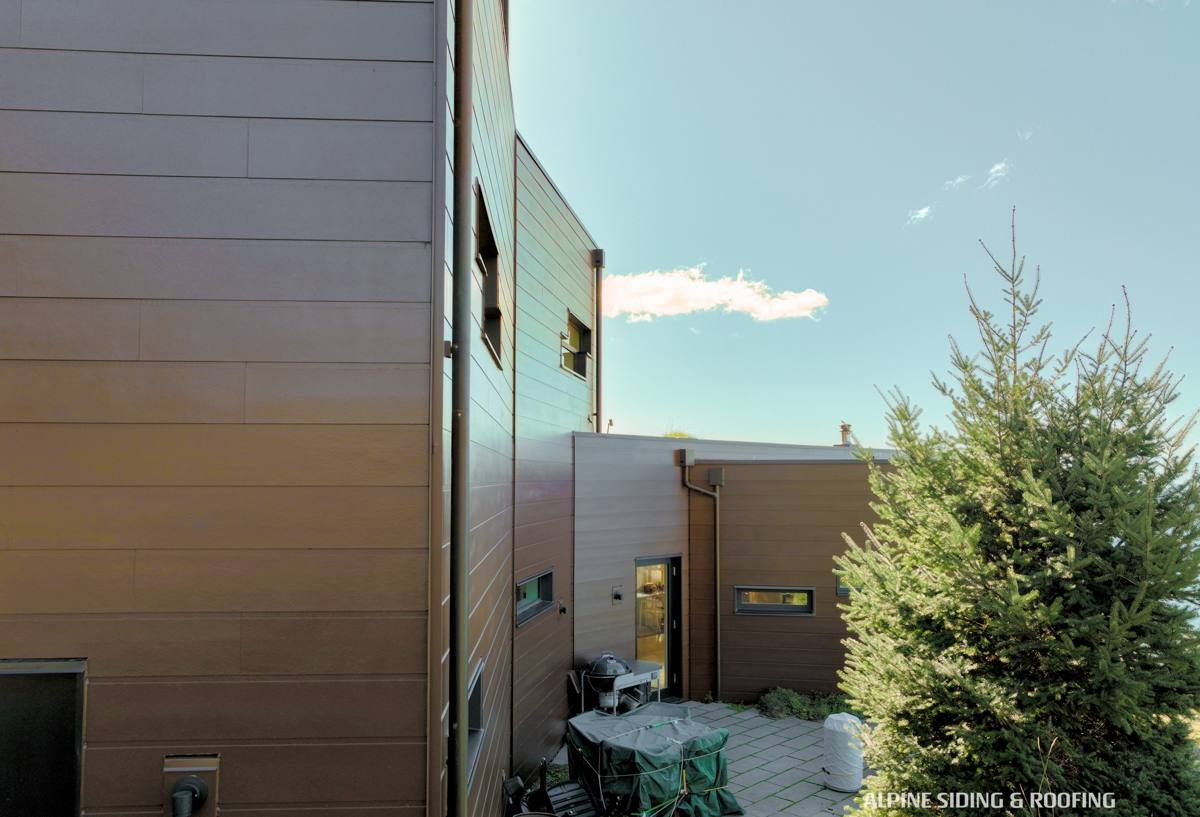
What Salt Air, Sun, and Storms Actually Do to Siding
Salt Air
Airborne salt settles on every exterior surface on the island, not just the ones facing the water directly. Over time it corrodes exposed metal fasteners and trim, degrades weaker paint and coating systems, and accelerates the breakdown of materials that weren't built to handle a marine environment. Siding, flashing, and fastener choices all need to account for this — it's a constant, low-level chemical stress that never really stops.
Year-Round UV
Florida sun is intense for most of the year, and an island lot with fewer trees and more open sky gets more of it, not less. UV exposure fades color, dries out and cracks lesser coatings, and is one of the main reasons cheaper or improperly finished siding starts looking tired well before it's structurally failed.
Wind-Driven Rain
Rain on a barrier island rarely falls straight down — gulf winds push it sideways, and during tropical systems that pressure can drive water into seams, laps, and penetrations that would stay dry in a calmer setting. This is a water-management problem as much as a material problem. Even the best siding on the market will let water in if it's flashed, lapped, or fastened incorrectly.
Hurricane-Force Wind
Indian Shores homes need siding rated and installed to hold up under sustained high wind and wind-borne debris, without sections lifting, cracking, or blowing off in a storm. That's a function of both the product and the install — a good product installed loosely is still a liability.
Why We Standardized on James Hardie for This Environment
We install James Hardie fiber cement siding exclusively — not vinyl, not LP SmartSide, not Cemplank, not Allura, not primed wood. That's a deliberate standard, built around what holds up on the Gulf Coast over the long run, not just what looks good going up.
Fiber cement is fundamentally a cement-and-cellulose composite, not a plastic or wood-based product. It doesn't melt or soften in extreme heat the way vinyl can, it doesn't rely on solid wood's natural weaknesses to moisture, and it's non-combustible, which matters both for fire safety and for insurance considerations on coastal property. James Hardie backs its ColorPlus factory-applied finish with a real, transferable warranty, and the company engineers specific product lines for different climate zones — including a version built for exactly the kind of humidity, heat, and moisture exposure Pinellas County properties deal with.
None of that means fiber cement is magic or maintenance-free. It means that, installed correctly, it's the product we're comfortable standing behind on homes that take this much environmental abuse.
The HZ5 System: Engineered for This Climate
James Hardie makes region-specific product formulations rather than a single one-size-fits-all board. For Florida and the broader Gulf and Southeast humid climate zone, that means their HZ5 (HardieZone 5) engineered product line, formulated to resist moisture-related damage in high-humidity, high-rainfall environments better than a generic formulation would. On a job as close to open water as an Indian Shores home, using the climate-matched product line isn't an upsell — it's the baseline we work from.
Beyond the base board, the ColorPlus finish is baked on in a factory-controlled process rather than field-sprayed, which produces a more consistent, UV- and fade-resistant color layer than most site-applied paint jobs can match. On an island with near-constant sun exposure, that finish durability is a real, visible difference over the years, not a marketing footnote.
What a Correct Installation Involves Here
The siding board is only one piece of the system. On a barrier island home, the installation details are what actually determine whether the house stays dry and intact through years of salt, sun, and storms.
- Proper clearance and flashing: siding held off decks, roof lines, and grade per manufacturer spec, with flashing at every horizontal transition so water sheds outward instead of behind the board.
- Correct fastener spec: corrosion-resistant fasteners driven to the manufacturer's pattern and depth — not overdriven, not underdriven, both of which cause problems in high-wind, high-moisture conditions.
- Sealed and detailed penetrations: every window, vent, light fixture, and utility penetration properly flashed and sealed against wind-driven rain, not just caulked over.
- Correct lap and joint treatment: butt joints and laps installed and sealed to the spec that keeps wind-driven rain from working its way behind the siding plane.
- Wind-rated installation: fastening and coursing done to hold up under sustained hurricane-force wind loads, not just standard exposure ratings.
- Compatible trim and accessory materials: trim, soffit, and accessory products that won't corrode or degrade faster than the siding itself and undermine the whole system.
Skip or rush any one of these and the siding itself becomes almost irrelevant — water and wind will find the weak point regardless of what board is on the wall.
How We Approach an Indian Shores Job
1. On-Site Assessment
We walk the property and look at exposure direction, existing siding and trim condition, moisture or corrosion evidence, and any structural or flashing issues that need addressing before new siding goes up — not just once it's already installed.
2. Product and Color Selection
We work from the HZ5 climate-engineered line and help match ColorPlus finish options to the home, HOA guidelines where applicable, and the surrounding streetscape.
3. Removal and Substrate Check
Old siding comes off and we check the substrate underneath for water damage or rot before anything new goes on. Covering up an existing moisture problem is one of the most common ways siding jobs fail early — we don't do that.
4. Installation to Manufacturer and Climate Spec
Flashing, fastening, clearances, and joint treatment all done to James Hardie's published installation requirements for this climate zone, with the wind exposure of an island lot factored in.
5. Final Walkthrough
We review the finished work with the homeowner, including care and maintenance basics specific to a salt-air environment.
Comparing Common Siding Options in a Gulf-Front Exposure
| Material | Salt Air Resistance | UV/Color Stability | Wind Performance | Typical Longevity Here |
|---|---|---|---|---|
| James Hardie Fiber Cement (HZ5, ColorPlus) | Strong when installed to spec | Factory finish resists fading | Rated for high-wind installation | Decades with proper install and basic upkeep |
| Vinyl Siding | Can become brittle and discolor faster in salt/UV combo | Field-applied color fades over time | Can deform or blow off in high wind if not rated/installed carefully | Variable; often shorter in direct coastal exposure |
| LP SmartSide (engineered wood) | Wood-based core sensitive to sustained moisture exposure | Requires field coating maintenance | Performance depends heavily on sealed edges and joints | Shorter if moisture management isn't perfect |
| Primed Wood / Cedar | Vulnerable to moisture, rot, and insect issues near salt water | Needs regular repainting/resealing | Adequate if maintained, but high upkeep burden | Requires the most ongoing maintenance of the group |
Cost Factors on an Island Property
Every home is different, and we won't quote a number without seeing the property, but a few things tend to move the cost on Indian Shores jobs specifically:
| Factor | Why It Matters Here |
|---|---|
| Home elevation and access | Elevated coastal homes and tight island lots can affect staging, scaffolding, and labor time |
| Existing substrate condition | Salt-air homes more often need trim, sheathing, or flashing repair discovered during tear-off |
| Trim and detail complexity | Multiple penetrations, dormers, or architectural detail increase flashing and sealing time |
| Product line and finish | HZ5 boards and ColorPlus finish options vary by style and color selection |
| Site logistics | Narrow island streets and limited staging space can affect material delivery and scheduling |
Why It Matters That We Already Work This Island
A crew that mostly works inland subdivisions doesn't necessarily think in terms of gulf-facing wind loads, salt-air fastener corrosion, or how tight some Indian Shores lots are for staging material and equipment. Those aren't things you learn from a manual — they're things you learn from doing the work here, seeing how siding actually holds up (or doesn't) a few years after installation, and adjusting accordingly.
We service Indian Shores as part of our regular Pinellas County work, alongside Seminole and the surrounding barrier island and mainland communities, and we install James Hardie to the same climate-specific standard on every one of those jobs. That consistency — one product line, one installation standard, applied correctly every time — is a big part of why we don't diversify into other siding brands. It's easier to do one thing right than five things adequately.
Get a Free, No-Pressure Estimate
If you're weighing a siding replacement on an Indian Shores home, we're glad to come take a look, walk you through what we're seeing, and put together a straightforward estimate — no pressure, no hard sell. Use the form below to get started.