 Seminole Siding
 Exterior Work Built for Ridgecrest, Not a Generic Florida House
Ridgecrest sits inside our regular Seminole service area, and like the rest of Pinellas County it takes a beating that most siding and roofing products simply weren't designed to survive long-term. We work on homes in this neighborhood regularly, which means we already understand the mix of older ranch-style houses, remodeled additions, and newer construction that make up this part of Seminole, and we bring the same standards to every one of them: fiber cement siding, no shortcuts on flashing and moisture management, and materials rated for coastal wind exposure.
Our crews handle the full exterior envelope on Ridgecrest homes — siding, roofing, windows, and decks — because these systems all interact. Bad roof flashing rots the siding beneath it. A failing window lets water behind the wall. A deck ledger attached wrong pulls moisture into the house framing. Treating the exterior as one connected system, rather than four unrelated trades, is a big part of why work holds up here.
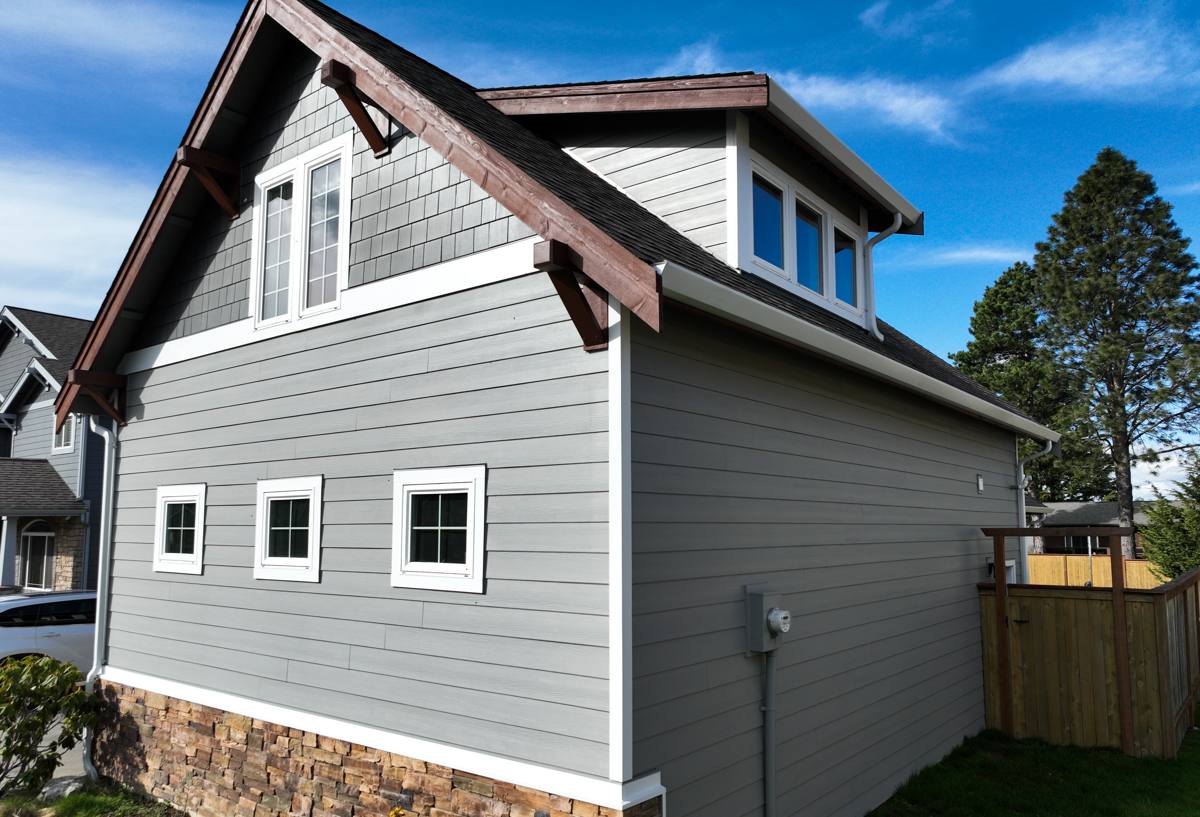
What the Climate Actually Does to a Ridgecrest Home
Seminole and the surrounding Pinellas County coastline get a specific combination of stressors that inland Florida towns don't deal with in the same intensity:
- Hurricane-force wind: Even homes that never take a direct hurricane hit see repeated tropical storm and gale-force wind events every season, which stresses fasteners, seams, and panel edges over and over.
- Intense, year-round UV: Florida sun breaks down pigments, sealants, and caulk faster than almost anywhere else in the continental U.S. Paint fades and chalks; unstable materials warp and crack.
- Wind-driven rain: Rain in this area rarely falls straight down. Storms push water sideways into wall assemblies, which is why seams, laps, and flashing details matter more here than in drier climates.
- Salt air: Ridgecrest isn't waterfront, but Pinellas County as a whole sits between two bodies of saltwater, and salt-laden air travels well inland on Gulf breezes. Salt accelerates corrosion of fasteners and metal components and degrades materials that aren't formulated to resist it.
Individually, any one of these is manageable. Together, and repeated year after year, they're what separates an exterior that looks good at year three and fails at year eight from one that's still solid at year thirty.
Why We Only Install James Hardie Fiber Cement Siding
We made a decision as a company to install exactly one siding product: James Hardie fiber cement. Not vinyl, not LP SmartSide, not Cemplank or Allura, not primed spruce or cedar. That's a narrower stance than most contractors take, and homeowners deserve an honest explanation of why, not just a sales pitch.
Vinyl Siding
Vinyl is inexpensive and easy to install fast, which is exactly why it's everywhere. The trade-off is that it's a thin plastic product that softens, warps, and becomes brittle under sustained heat and UV exposure — both of which Pinellas County has in abundance. In high wind, vinyl panels can lift, crack at the locking edges, or blow off outright, and once a section is damaged, matching faded old vinyl to a new panel is often impossible. It also has almost no impact resistance compared to fiber cement.
LP SmartSide
LP SmartSide is an engineered wood product — strand board with a resin-treated surface. It performs reasonably well in drier, more moderate climates. In a humid, storm-exposed coastal environment, any wood-based product depends entirely on perfect, uninterrupted sealing at every cut edge and seam to keep moisture out. One missed edge, one failed caulk joint from UV breakdown, and moisture gets into the substrate. We don't want to build a product's long-term performance on a bet that every joint stays perfectly sealed for decades in this climate.
Cedar and Primed Wood
Real wood siding looks great and plenty of homeowners love it, but it's a maintenance commitment — regular repainting or restaining, vigilant caulk upkeep, and real vulnerability to moisture, insects, and rot in a humid coastal climate. We're upfront that we don't install it, because we don't want to hand a homeowner a product that needs that level of ongoing attention to hold up here.
None of these are "bad" products in every application. They're just not what we're willing to warranty our workmanship on in a Gulf Coast wind and humidity environment. James Hardie fiber cement is cement, sand, and cellulose fiber — it doesn't burn, doesn't rot, doesn't swell with moisture, and holds paint and color far longer than wood or vinyl because it doesn't move with temperature the way those materials do.
The HZ5 Product Line: Engineered for This Exact Climate
James Hardie doesn't make one generic siding product — the company engineers its HZ (HardieZone) product lines for specific climate regions, and Pinellas County falls in the HZ5 zone, built for high humidity, heavy rain, and the freeze-thaw isn't the concern here — moisture cycling and sun exposure are. HZ5 formulations are designed to resist moisture intrusion and hold up under the intense UV load Florida homes see all year.
Most of our installs use Hardie's ColorPlus factory-applied finish, which is baked on under controlled conditions rather than field-painted on site. That matters in a place like Ridgecrest because factory finishes resist fading and chalking from UV far better than site-applied paint, and the color is backed by its own finish warranty separate from the product warranty. It also means less repainting over the life of the siding — a real cost consideration when you're comparing materials over 20-30 years, not just at installation.
Comparing Siding Materials for a Coastal Pinellas County Home
| Factor | James Hardie Fiber Cement | Vinyl | LP SmartSide / Wood |
|---|---|---|---|
| Wind resistance | Rated for high-wind installation when installed to spec | Can lift or crack at edges in sustained high wind | Adequate if sealed perfectly; edge damage exposes substrate |
| UV / fade resistance | ColorPlus finish resists fading and chalking | Fades and can become brittle over time | Requires repainting on a regular cycle |
| Moisture behavior | Doesn't swell, rot, or absorb water like wood | Doesn't absorb water but can trap moisture behind panels | Vulnerable at any unsealed cut edge or seam |
| Fire resistance | Non-combustible | Combustible | Combustible |
| Maintenance | Occasional wash; no repainting for many years | Low maintenance but limited repair options | Regular painting/staining and caulk inspection |
| Typical lifespan when installed correctly | Decades, with a strong transferable warranty | Shorter, especially with UV and wind stress | Shorter without consistent upkeep |
Roofing, Windows, and Decks: The Rest of the Exterior Envelope
Siding decisions don't happen in isolation on a Ridgecrest home. We handle the full exterior because the systems have to work together against the same climate stresses:
Roofing
A roof takes the first hit from wind-driven rain and UV, and roof flashing failures are one of the most common hidden causes of siding and sheathing damage we find when we open up a wall. Correct roof-to-wall flashing detail protects everything below it.
Windows
Window flashing and sealing integrate directly with new siding installation. Replacing siding is often the right time to address aging window seals or units that are letting wind-driven rain past the frame.
Decks
Outdoor living structures in this climate deal with the same UV and humidity load as the rest of the house, plus direct weather exposure with no wall assembly protecting them. Ledger attachment, fastener selection, and material choice all need to account for that.
What Correct Installation Actually Involves
Fiber cement siding performs the way it's rated to perform only when it's installed correctly. A rushed or improperly detailed install can undercut even the best material. Here's what we hold every Ridgecrest project to:
- Proper starter strip and clearance from grade, decking, and roof lines
- Correct fastener type, spacing, and penetration depth for HZ5 wind-load requirements
- Weather-resistant barrier installed and lapped correctly behind the siding
- Flashing at every window, door, and roof intersection — not just caulk covering a gap
- Proper joint and butt-seam treatment to shed wind-driven rain rather than trap it
- Factory-finished panels handled and cut to avoid chipping the ColorPlus coating
- Final inspection of caulking, trim, and paint-line details before we call a job done
What Drives Cost on a Ridgecrest Siding Project
Every home is different, but a few factors consistently move the price on jobs in this area:
| Cost Factor | Why It Matters |
|---|---|
| Home size and wall complexity | More corners, gables, and dormers mean more cutting, flashing, and labor time |
| Extent of substrate repair | Wood rot or moisture damage found under old siding has to be repaired before new siding goes on |
| Siding profile and trim selection | Lap width, shake accents, and trim detail all affect material and labor cost |
| Tear-off vs. overlay | Full removal of old siding costs more than overlay but is usually the right call when there's hidden damage |
| Access and site conditions | Fencing, landscaping, and multi-story sections affect labor time and equipment needs |
We don't quote broad numbers without seeing the house — condition, size, and scope vary too much for a flat estimate to mean anything. What we can promise is a transparent, itemized proposal before any work starts.
Why a Local Crew Matters for Ridgecrest Homeowners
A contractor who works Seminole and the surrounding Pinellas County area regularly knows the wind-load and building code requirements that apply here, has relationships with local suppliers for James Hardie material, and isn't guessing about how a coastal humidity cycle affects a wall assembly. That local familiarity shows up in the details — flashing choices, fastener specs, and knowing which parts of a house take the worst weather exposure based on orientation and exposure to prevailing Gulf winds.
It also means accountability. A local crew is here for warranty follow-up, not a one-time job before moving to the next region.
Ready to Talk About Your Home
If you're weighing a siding, roofing, window, or deck project for your Ridgecrest home, we're happy to take a look and walk you through what we'd recommend and why. There's no pressure and no obligation — just a straightforward assessment from a crew that installs one siding system because we trust it in this climate. Fill out the form below to schedule a free estimate.