 Seminole Siding
 Why Indian Rocks Beach Homes Need More Than Standard Siding
Homes near Indian Rocks Beach sit close enough to the Gulf that the building envelope takes a beating most inland Pinellas County houses never see. Salt-laden air corrodes fasteners and trim. Wind-driven rain gets pushed sideways into every seam, joint, and penetration during summer storms. Intense, near-constant UV breaks down paint films and lesser siding substrates year-round, not just in July and August. And when a tropical system or hurricane comes through, the wind loads on this stretch of coast are simply higher than what a product rated for a standard suburban lot was ever designed to handle.
None of this is exotic knowledge to anyone who has worked exteriors in this part of Florida — but it matters enormously when you're choosing a siding material and a crew to install it. A product and installation method that's "fine" fifteen miles inland can fail early a few blocks from the water. We install James Hardie fiber cement siding exclusively, and on homes in this area we install it to the coastal-specific details it was engineered for.
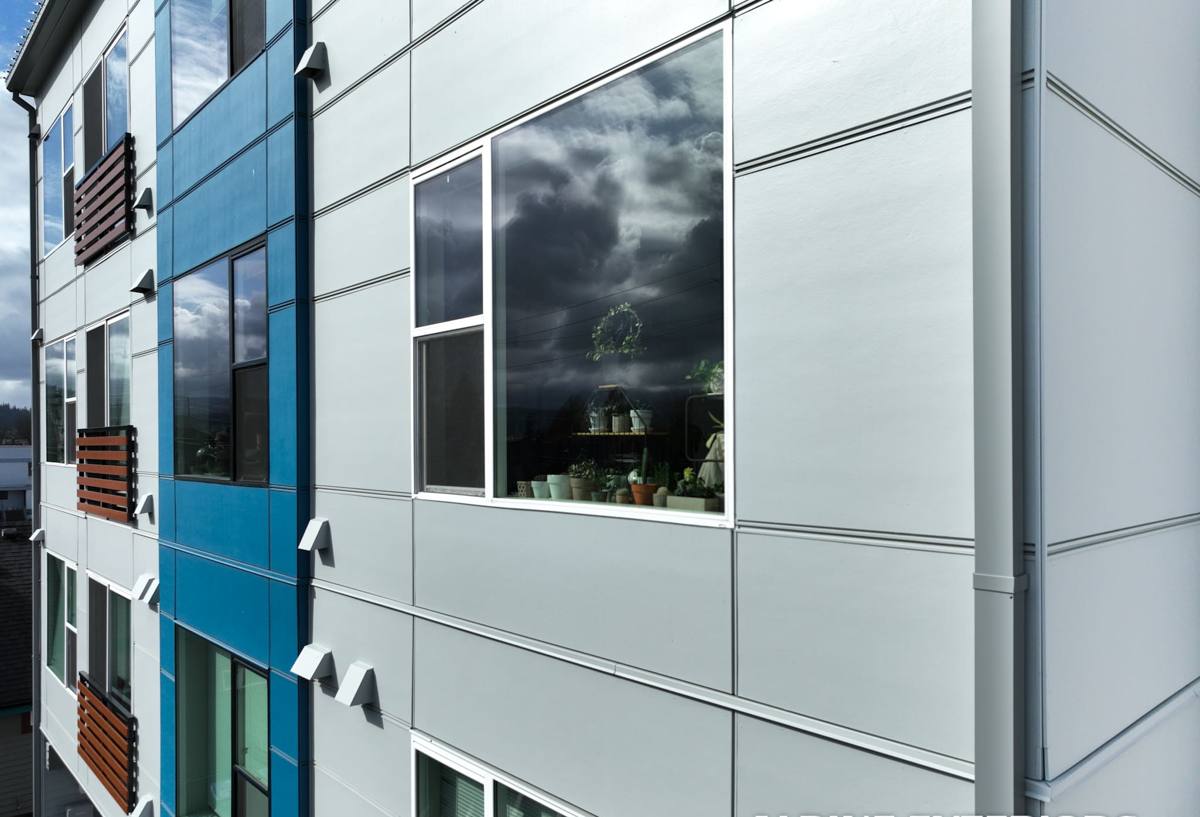
What Coastal Exposure Actually Does to a Home's Exterior
Salt Air and Corrosion
Airborne salt doesn't just sit on the surface — it works into fastener heads, trim joints, and any exposed metal. Over years, this accelerates corrosion of anything not rated for coastal use, which is why fastener selection (not just siding selection) is one of the first things we address on an Indian Rocks Beach job.
Wind-Driven Rain
Rain that arrives horizontally, pushed by sustained coastal wind, finds every gap a standard installation might tolerate. It drives moisture behind siding at butt joints, around window and door trim, and at penetrations for hose bibs, vents, and light fixtures. Once moisture gets behind the cladding, what happens next depends entirely on what's underneath — which is why the water-resistive barrier and flashing details matter as much as the siding itself.
UV and Heat Cycling
Florida sun is hard on any exterior finish. Paint films chalk, fade, and crack years faster here than in milder climates, and repeated heat-cool-humidity cycling stresses joints and caulk lines. A factory-applied finish that's engineered for this exposure holds up very differently than field-applied paint over a porous substrate.
Hurricane-Force Wind
Beyond the everyday wear, this area is squarely in a wind zone where siding, fasteners, and attachment methods have to meet a higher bar. Manufacturer wind ratings and installation specs aren't marketing — they're the difference between siding that stays put in a strong storm and siding that peels off in sheets.
Why We Install James Hardie and Nothing Else
We made a decision as a company to install only James Hardie fiber cement siding — not vinyl, not LP SmartSide, not Cemplank, Allura, primed spruce, or cedar. That's not brand loyalty; it's a judgment call based on how each of those materials actually performs in a coastal Gulf Coast climate over the long run.
Vinyl softens, warps, and can pull loose from fasteners in sustained high heat and wind, and it offers no real fire resistance. Wood and wood-based products like LP SmartSide depend heavily on an intact factory or field finish to keep moisture out — miss a spot during maintenance, and rot can start from the inside of the board out. James Hardie fiber cement is non-combustible, dimensionally stable in heat and humidity, and available with a factory-applied ColorPlus finish that's baked on and warranted separately from the substrate. For a home a few minutes from the Gulf, that combination is worth the switch.
The James Hardie Product Lines That Fit This Area
James Hardie engineers its siding by climate zone, and homes in this part of Florida fall into the HZ10 category — the company's hot, humid, high-moisture zone specification. That's a meaningfully different product formulation than what gets shipped to a drier or colder region, and it's one reason we only source Hardie product rated correctly for where the house actually sits.
- HardiePlank lap siding — the most common choice for single-family homes here, available in several exposure widths and a range of ColorPlus finishes.
- HardiePanel vertical siding — used for board-and-batten looks, accent gables, and some coastal architectural styles.
- HardieTrim — fiber cement trim boards that hold up around windows, corners, and fascia far better than wood trim exposed to salt air and rain.
- ColorPlus Technology finishes — factory-baked color coats that resist fading and chipping better than field-applied paint, backed by their own finish warranty.
What a Correct Installation Involves Here
The siding itself is only part of the equation. Most siding failures we're called out to inspect near the coast trace back to installation shortcuts, not the product. On every Indian Rocks Beach-area project, our process includes:
Assessment and Tear-Off
We start by removing the existing siding down to the sheathing and doing a real inspection — checking for hidden moisture damage, soft sheathing, and compromised framing before anything new goes up. Covering over an existing problem just locks it in.
Water-Resistive Barrier and Flashing
A correctly lapped weather-resistive barrier, properly integrated flashing at windows, doors, and penetrations, and careful attention to drainage planes are what actually keep wind-driven rain from reaching your framing. This is the part of the job that's invisible once the siding goes on — and the part that determines whether the wall assembly lasts.
Fastening for Wind Zone
Fastener type, spacing, and embedment are set according to James Hardie's published specifications for this wind zone, not a generic pattern. Corrosion-resistant fasteners matter here specifically because of the salt air exposure.
Joint Treatment and Finish
Where ColorPlus products allow for tighter, caulk-minimized joints, we follow the manufacturer's joint treatment guidance rather than relying on heavy field caulking, which is one of the first things to fail under UV and movement.
Comparing Siding Options for This Exposure
| Factor | James Hardie Fiber Cement | Vinyl | Wood / LP SmartSide |
|---|---|---|---|
| Wind performance | Rated by climate/wind zone (HZ10 for this area) | Can deform, crack, or blow off in sustained high wind | Adequate if fastened correctly, but panel integrity depends on moisture condition |
| Salt air / moisture resistance | Dimensionally stable, resists moisture-driven warping | Doesn't rot, but seams and fasteners are a weak point | Vulnerable if finish is breached; rot risk increases near the coast |
| UV / fade resistance | ColorPlus factory finish resists fading and chalking | Fades and can become brittle over time in intense sun | Field-applied paint fades faster and needs more frequent recoating |
| Fire resistance | Non-combustible | Combustible | Combustible |
| Long-term maintenance | Periodic caulk/paint touch-up per finish warranty | Low maintenance but limited repair options once brittle | Regular repainting and moisture monitoring required |
Signs Your Current Siding May Already Be Failing
Given how hard this climate is on exteriors, it's worth checking your siding periodically rather than waiting for an obvious problem. Watch for:
- Soft or spongy spots when you press on siding near the bottom of walls or below windows
- Visible warping, buckling, or gaps at panel seams
- Peeling, bubbling, or chalking paint that keeps returning after touch-up
- Staining or dark streaks that suggest water is tracking behind the siding
- Corroded or rust-streaked fasteners
- Increased pest activity or a musty smell near exterior walls
Why Local Installation Experience Matters
A crew that already works homes in and around Indian Rocks Beach and Seminole understands the practical realities that don't show up in a manufacturer's install manual: how Pinellas County's building and wind-load requirements apply to a re-side, what permitting looks like for exterior work in this jurisdiction, and how coastal exposure differs even within a few miles of the shoreline. That experience shows up in the details — flashing choices, fastener selection, and where extra attention goes on a given elevation — rather than treating every house the same regardless of where it sits.
Warranty and Long-Term Value
James Hardie backs its siding products with a manufacturer's limited warranty, and ColorPlus finishes carry a separate finish warranty covering fade and chip resistance. Warranty coverage is meaningful only when installation follows the manufacturer's specifications for the correct climate zone — another reason installation quality and product selection have to be treated as one decision, not two.
Getting Started
If your Indian Rocks Beach-area home has aging, storm-worn, or failing siding, we're happy to take a look and walk you through what correct James Hardie installation would involve for your specific house. Reach out for a free, no-pressure estimate using the form below.