 Seminole Siding
 Madeira Beach sits directly on the Gulf, and that changes what "siding installation" actually means. A home a few miles inland in Seminole deals with heat, humidity, and the occasional tropical system. A home on or near the barrier island deals with all of that plus near-constant salt-laden air, wind-driven rain that finds every gap in a wall assembly, and sun exposure that doesn't let up for most of the year. Siding installed without accounting for that difference tends to show it early — chalking finishes, corroding fasteners, swelling seams, or paint that fails years ahead of schedule. We install James Hardie fiber cement siding for homeowners in Madeira Beach and throughout the Seminole area because it's built to handle that exposure when it goes on correctly, and "correctly" is doing a lot of work in that sentence.
What Makes Madeira Beach Different From a Typical Seminole Install
Pinellas County covers a wide range of exposure conditions, from inland neighborhoods to homes that sit within a few blocks of open water. Madeira Beach is on the barrier island side of that range. Salt aerosol carries much farther inland than most homeowners assume, especially with onshore wind, and it accelerates corrosion on anything metal — fasteners, flashing, trim screws — faster than it will on a home set back from the coast. Add near-daily direct sun off the Gulf and the UV load on exterior finishes is higher here than a few miles inland. None of this means siding can't hold up on the island. It means the product and the installation details have to be chosen for this exposure specifically, not for "Florida" in general.
Salt Air and Corrosion
Airborne salt attacks unprotected or lower-grade metal continuously, not just during storms. Fastener choice, flashing material, and even the hardware used for trim and accessories matter more here than on an inland job. A siding job that looks identical to an inland install on day one can fail years earlier near the beach if corrosion-resistant materials weren't used throughout — not just on the visible siding.
Wind-Driven Rain and Hurricane Exposure
Barrier island homes take wind and wind-driven rain more directly than homes shielded by miles of inland terrain. Water doesn't just fall in a storm here — it's pushed sideways into every seam, joint, and penetration in the wall. Siding that isn't lapped, flashed, and sealed to spec will let water behind the cladding, where it can sit against sheathing and framing long after the storm passes.
UV and Heat Cycling
Constant, intense sun breaks down poorly formulated or field-applied paint finishes over time — fading, chalking, and eventually peeling. Combined with the daily heat-up and cool-down cycle common near open water, weaker siding materials expand and contract more than they were designed for, which is where cracking and joint failure usually start.
Why We Install Only James Hardie Fiber Cement
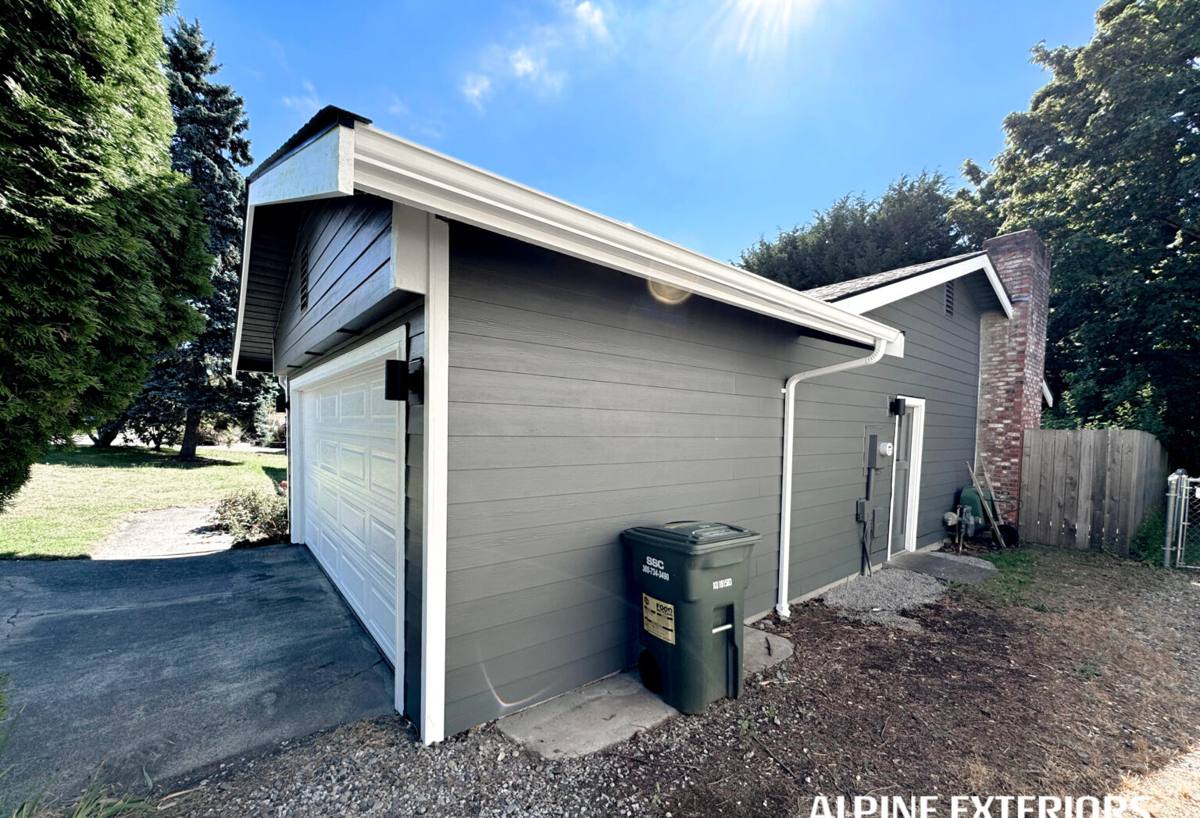
We standardized on James Hardie products for every home we side, and that decision matters even more on the island. Hardie fiber cement is non-combustible and dimensionally stable, so it doesn't swell, rot, or delaminate the way wood-based or wood-adjacent products can when repeatedly wetted by wind-driven rain. Hardie's HZ5 product line is engineered specifically for hot, humid, high-moisture climates like ours, which is the whole Tampa Bay coastline, not a generic national spec. The factory-applied ColorPlus finish is baked on under controlled conditions and backed by its own finish warranty — it resists the fading and chalking that field-applied paint struggles with under this much direct sun, and it holds color better against salt exposure than most site-applied coatings.
We don't install vinyl, LP SmartSide, Cemplank, Allura, or primed wood siding, and on a barrier island home the reasons matter more, not less. Vinyl softens, warps, and becomes brittle under sustained UV and heat, and its seams give wind-driven rain an easier path behind the cladding. Wood-based composite products are more vulnerable to swelling and edge deterioration when they take on repeated moisture, which is a real risk this close to the water. We'd rather install one product correctly, to spec, every time, than offer a menu of options we don't fully stand behind for this exposure.
What a Correct Installation Actually Involves
The siding itself is only part of the system. Most siding failures — on any brand, including Hardie — trace back to what happens underneath it, not the board itself. On a Madeira Beach home we pay particular attention to the following.
Tear-Off and Wall Inspection
Before anything new goes up, the old siding comes off and the sheathing underneath gets inspected for hidden moisture damage, soft spots, or prior water intrusion — common on older homes near the coast where a previous siding job may have trapped moisture for years without visible signs. Any compromised sheathing gets addressed before installation continues; new siding over a damaged wall just hides the problem.
Weather-Resistant Barrier and Flashing
A correctly lapped weather-resistant barrier, paired with proper window, door, and penetration flashing, is what actually keeps wind-driven rain out of the wall assembly. Kick-out flashing at roof-wall intersections, head flashing above openings, and correct integration with the WRB are non-negotiable details on a home exposed to direct Gulf wind.
Fastening and Hardware
We use corrosion-resistant fasteners appropriate for coastal exposure and follow Hardie's fastening specifications for pattern, spacing, and penetration depth. Under-fastening or using the wrong fastener type is a common shortcut that shows up years later as loose boards or streaking corrosion stains — a bigger risk here than inland.
Gapping, Caulking, and Trim Details
Hardie siding needs proper gapping at butt joints and trim to allow for expansion, along with the correct sealant at those gaps — not just any exterior caulk. Skipping or rushing this step is one of the most common causes of premature joint failure, and it's more visible on a home that takes this much direct sun.
How Our Process Works
- On-site evaluation: We walk the exterior, check the current siding and wall condition, and note anything specific to the home's exposure — wind direction, proximity to open water, existing moisture issues.
- Written estimate: A clear scope covering tear-off, wall prep, flashing details, the Hardie products and profile selected, and total cost — no vague allowances.
- Permitting: We handle the permit process with the appropriate local jurisdiction, which matters more on the island where permitting and inspection requirements are tied closely to wind exposure and flood zone considerations.
- Tear-off and prep: Old siding removed, sheathing inspected and repaired as needed, WRB and flashing installed correctly before a single piece of new siding goes up.
- Installation to spec: Hardie boards installed per manufacturer fastening, gapping, and clearance requirements for our climate zone.
- Finish and cleanup: Trim, caulking at required joints, touch-up as needed, and full site cleanup — job debris doesn't sit on a barrier island lot.
- Final walkthrough: We review the finished work with the homeowner before calling the job done.
Existing Siding Conditions We Commonly See on Madeira Beach Homes
| Existing Siding | Typical Condition Near the Coast | Why It's Struggling |
|---|---|---|
| Older vinyl | Warping, fading, brittle or cracked panels | UV and heat cycling degrade the material; seams let wind-driven rain behind it |
| Wood or wood-composite lap | Soft edges, paint failure, swelling at joints | Repeated moisture exposure without adequate protection |
| Older fiber cement (unknown brand/age) | Chalking finish, corroding fasteners, some cracking | Field-applied or aged finish, non-coastal-grade hardware used originally |
| Stucco with prior patch repairs | Hairline cracking, staining near penetrations | Movement and moisture intrusion at unsealed cracks and joints |
Why a Local Crew Matters Here Specifically
A crew that regularly works Madeira Beach and the surrounding Seminole area already knows the exposure conditions on this stretch of coast — which fastener grade to default to, which detailing gets extra attention on a Gulf-facing wall, and which local jurisdictions handle permitting and inspection for this area. That familiarity shows up in the parts of the job a homeowner never sees but will eventually feel: whether the flashing was lapped correctly, whether the fasteners were rated for salt exposure, whether the wall was actually dry before it got closed back up.
Working on barrier island properties also comes with logistics that differ from an inland job — narrower lots, limited staging space, and in many cases a home that's a vacation rental with turnover schedules to work around. A crew used to that reality plans around it instead of treating every job like a standard suburban install.
Signs Your Current Siding Needs Attention
- Visible warping, buckling, or gaps between siding panels
- Chalky residue that rubs off on your hand when you touch the surface
- Soft spots when you press on the siding, especially near the bottom edge or seams
- Rust streaking below fasteners or trim hardware
- Peeling or bubbling paint that keeps returning after repainting
- Visible daylight or drafts at trim and window edges
- Musty odor or discoloration on interior walls that back up to exterior siding
What to Ask Before Hiring a Siding Contractor Near the Coast
Not every siding crew installs the same way, and on a barrier island home the gap between a correct install and a shortcut one shows up faster than it would inland. Before hiring, it's worth asking direct questions.
| Question to Ask | Why It Matters Here |
|---|---|
| Are you a licensed, insured Florida contractor? | Confirms legal standing and protects you if something goes wrong on the job |
| What fastener and flashing materials will you use? | Coastal-grade hardware is essential; standard hardware corrodes faster near salt air |
| Will you inspect and repair sheathing before installing new siding? | Prevents sealing existing moisture damage behind new siding |
| How do you handle permitting for this jurisdiction? | Barrier island permitting can differ from inland requirements |
| What's covered under the product and labor warranty? | Clarifies what's protected if an issue shows up after installation |
Cost Factors for a Madeira Beach Siding Installation
Every home is different, but a few factors consistently move the price of a siding installation on the island up or down: the size and complexity of the home's exterior (multiple gables, dormers, and trim details cost more labor than a simple rectangular footprint), the condition of the existing wall assembly (sheathing repairs add cost but shouldn't be skipped), the Hardie product and profile selected, and access constraints common on tighter barrier island lots. We walk through all of this during the on-site estimate so there are no surprises in the written scope.
If your Madeira Beach home is due for new siding, or you want a second opinion on whether your current siding is holding up the way it should, we're happy to take a look. Reach out for a free, no-pressure estimate — we'll walk the exterior, answer your questions honestly, and give you a clear picture of what the job actually involves.