 Seminole Siding
 Why Indian Shores Is a Different Kind of Siding Job
Indian Shores sits on a narrow barrier island in Pinellas County, with the Gulf of Mexico on one side and the Intracoastal Waterway on the other. That geography is part of what makes the area desirable, and it's exactly what makes siding here wear out faster than it does a few miles inland. Homes on or near the island take on salt-laden air almost year-round, get more direct sun exposure with fewer windbreaks, and see wind-driven rain pushed sideways into walls during storms rather than falling straight down. A siding product that performs fine in a shaded inland neighborhood can fail years early out here.
Siding replacement in this environment isn't just a cosmetic upgrade. It's the point where a home's exterior either gets rebuilt to handle coastal conditions correctly, or gets set up to repeat the same problems in another decade. We treat every Indian Shores project as a coastal-durability job first and an appearance job second — the look comes from doing the durability part right.
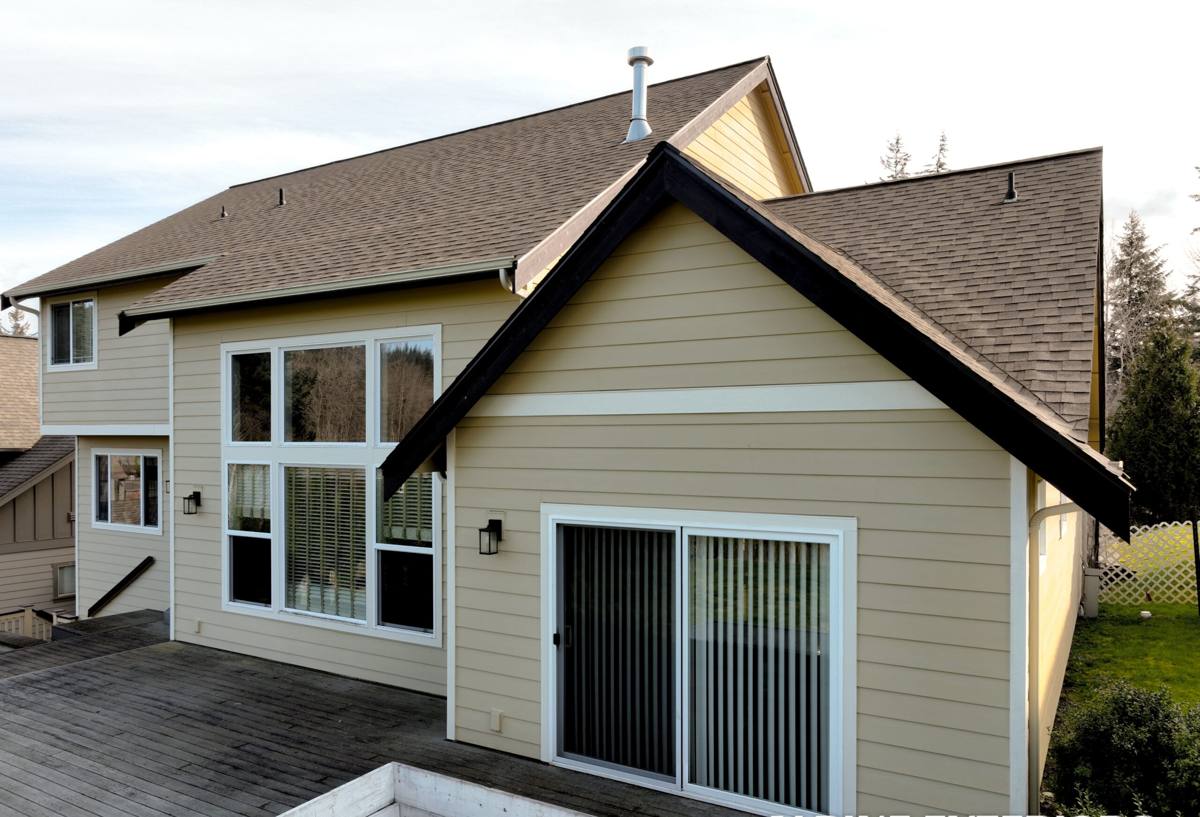
What Salt Air, UV, and Wind Actually Do to Siding
Salt Air
Airborne salt settles on exterior surfaces and accelerates corrosion of fasteners, trim fittings, and any exposed metal. On siding materials that rely on paint film integrity to stay watertight, salt residue combined with humidity speeds up coating breakdown, especially at seams, laps, and cut edges. Homes closer to the Gulf-facing side of the island see this fastest, but salt travels well inland on prevailing wind, so even homes a few streets back aren't exempt.
Year-Round UV
Florida's UV load is intense and consistent across all twelve months, not seasonal like it is farther north. Paint and coatings chalk, fade, and lose flexibility under that kind of sustained exposure. Siding materials with factory-applied, UV-stabilized finishes hold color and integrity far longer than field-painted materials, which is a big part of why finish quality matters as much as the base material.
Wind-Driven Rain and Hurricane-Force Gusts
During tropical storms and hurricanes, rain doesn't just fall — it's driven horizontally into walls under pressure. That means water testing, flashing details, and fastening patterns matter more here than in calmer climates. Wind uplift on loose or improperly fastened siding is also a real risk during named storms, which is why fastening schedule and installation method are treated as structural details on this coast, not just cosmetic ones.
Signs an Indian Shores Home Needs Siding Replacement
Repairs make sense when damage is isolated. Full replacement makes sense when the underlying material or moisture barrier has been compromised broadly. Look for:
- Soft, spongy, or crumbling spots when you press on siding panels
- Paint that's chalking heavily, peeling in sheets, or fading unevenly across walls
- Visible warping, buckling, or gaps opening up at panel seams
- Rust streaks running down from nail heads or trim fasteners
- Persistent musty smell or interior wall staining near exterior walls
- Siding that's original to a home built or last re-sided 20+ years ago
- Visible damage after any recent tropical storm or high-wind event
What a Correct Siding Replacement Involves
Full Tear-Off, Not Overlay
On a coastal home, installing new siding over old siding traps moisture and hides the condition of the sheathing underneath. We remove existing siding down to the wall structure so we can actually inspect what's there — sheathing, framing, and any prior water damage — before anything new goes up.
Sheathing and Moisture Barrier
Any soft or compromised sheathing gets replaced before siding goes back on; covering damaged wood with new siding just delays a bigger repair. A weather-resistive barrier is installed correctly lapped, shingle-style, so water is shed outward at every seam rather than channeled behind the wall.
Flashing at Every Penetration
Windows, doors, hose bibs, vents, and any other wall penetration get properly integrated flashing. This is where wind-driven rain finds its way in if it's skipped or rushed, and it's one of the most common corner-cutting points in lower-quality installs.
Fastening for Wind Exposure
Fastener type, length, and spacing are matched to the product manufacturer's high-wind installation instructions, not just general-use guidelines. This is a detail inspectors and insurers increasingly pay attention to on barrier island and near-coastal properties.
Trim, Caulking, and Finish Details
Corner boards, trim, and joints are sealed with exterior-rated sealants suited to sun and salt exposure, and finished so water sheds away from the wall rather than pooling at horizontal transitions.
Why We Install Only James Hardie Fiber Cement
We don't install vinyl siding, LP SmartSide, Cemplank, Allura, or primed wood products like spruce or cedar. That's a deliberate standard, not a lack of options. Each of those products has legitimate uses in the right climate, but on a Gulf-exposed, salt-air, high-UV, hurricane-zone island like Indian Shores, they carry trade-offs we're not willing to build a reputation on.
| Material | Coastal Trade-Off |
|---|---|
| Vinyl siding | Can warp or distort at lower temperature thresholds than fiber cement, and is more vulnerable to wind uplift in named storms; color is through-body but can fade and chalk over time in intense UV |
| LP SmartSide (engineered wood) | Wood-based substrate is more moisture-sensitive; performance depends heavily on caulking and paint maintenance staying ahead of humidity and salt exposure |
| Primed spruce or cedar | Natural wood requires the most frequent repainting and sealing of any option here, and is the most susceptible to rot if maintenance lapses even briefly |
| Cemplank / Allura (fiber cement alternatives) | Similar base material to Hardie but different factory finish systems, warranty structure, and regional engineering; we standardized on one system we can install and warranty consistently |
| James Hardie fiber cement | Non-combustible, dimensionally stable in heat and humidity, factory-applied ColorPlus finish resists fading and chalking, engineered HZ product lines built specifically for high-wind, high-moisture climates |
James Hardie's ColorPlus finish is baked on at the factory under controlled conditions, which gives it more consistent UV resistance than field-applied paint and comes with its own finish warranty. The fiber cement substrate itself doesn't rot, and it holds up to wind-driven rain and humidity swings far better than wood-based products. That combination is why it's the only siding system we put our name behind on this coast.
HardieZone HZ10 for This Climate
James Hardie engineers its products for specific climate zones, and Pinellas County falls into the HZ10 zone — the designation built for high heat, humidity, and moisture exposure. Choosing the correct HZ-rated product line matters more here than most homeowners realize; it affects how the product handles moisture cycling over the long term, not just how it looks on day one.
Our Process on Indian Shores Homes
Working repeatedly in this specific area means we already know what barrier island homes tend to need before we even open the walls — the typical condition of sheathing on older Gulf-side homes, the flashing shortcuts we commonly find on prior installs, and the permitting expectations for exterior work in Seminole and unincorporated Pinellas County. That familiarity shortens the guesswork and speeds up the accurate part: inspection, quoting, and execution.
- On-site inspection of current siding, sheathing condition, and trim/flashing details
- Written estimate covering scope, product line, color, and timeline
- Permitting handled before work begins
- Full tear-off, sheathing repair as needed, and correct moisture barrier installation
- James Hardie installation to manufacturer high-wind fastening specifications
- Final walk-through and cleanup
We also account for practical realities of island logistics — narrow lots, limited staging space, and coordinating around seasonal traffic on the barrier island — so the job stays on schedule without disrupting the property more than necessary.
What Affects the Cost of a Siding Replacement Here
| Factor | Why It Matters |
|---|---|
| Home size and wall complexity | More corners, gables, and trim details mean more labor and material |
| Sheathing condition | Rot or water damage found during tear-off adds repair scope before new siding goes on |
| Hardie product line and profile | Lap width, texture (smooth vs. cedar-shake style), and panel vs. plank choice affect material cost |
| Color and finish | Standard ColorPlus colors vs. custom field-painted finishes price differently |
| Trim and accessory scope | Corner boards, soffit, fascia, and window trim replacement add to total project cost |
| Access and site conditions | Narrow lots, elevated foundations, and limited staging area on barrier island properties can affect labor time |
We give a broad honest range up front once we've seen the home, rather than a number pulled from a phone call — coastal homes vary too much in sheathing condition and trim complexity to estimate accurately without a walk-around.
Living With Coastal Siding Long-Term
Even the right material needs basic upkeep in this environment. Rinsing salt residue off exterior walls periodically, keeping gutters clear so water isn't running down siding faces, and having caulking and trim checked every few years keeps a correctly installed Hardie system performing for decades. The maintenance burden is meaningfully lower than wood or vinyl, but "lower maintenance" isn't "no maintenance" on a barrier island.
If your Indian Shores home is showing wear, or you're planning ahead of the next storm season, we're happy to take a look and walk you through what we'd recommend — no pressure, no obligation. Fill out the form below for a free estimate.