 Seminole Siding
 Why Bardmoor Decks Wear Out Faster Than the Manual Says
Bardmoor is one of the more established, tree-shaded communities in the Seminole area, and a lot of the decks we get called out to have been sitting under that canopy and coastal air for decades. Manufacturers write their maintenance schedules for a generic climate. Pinellas County isn't generic. Between the Gulf humidity, the salt air that drifts inland on a sea breeze, nearly year-round UV exposure, and the wind-driven rain that comes with almost every summer storm, a deck here is under more stress than the same structure would face almost anywhere inland.
Wood swells when it's humid and shrinks when it dries out, and in this climate that cycle repeats constantly instead of settling into a seasonal pattern. Fasteners corrode faster in salt-laden air, especially anything that isn't rated for coastal exposure. UV breaks down surface finishes and, over enough years, even the resin binders in composite decking. And in a lot of Bardmoor's older, well-landscaped yards, sprinkler overspray and mature shade trees keep ground-level framing damp longer than it should ever stay wet. None of that means a deck is doomed — it means the materials, fasteners, and framing details matter more here than a generic build would suggest.
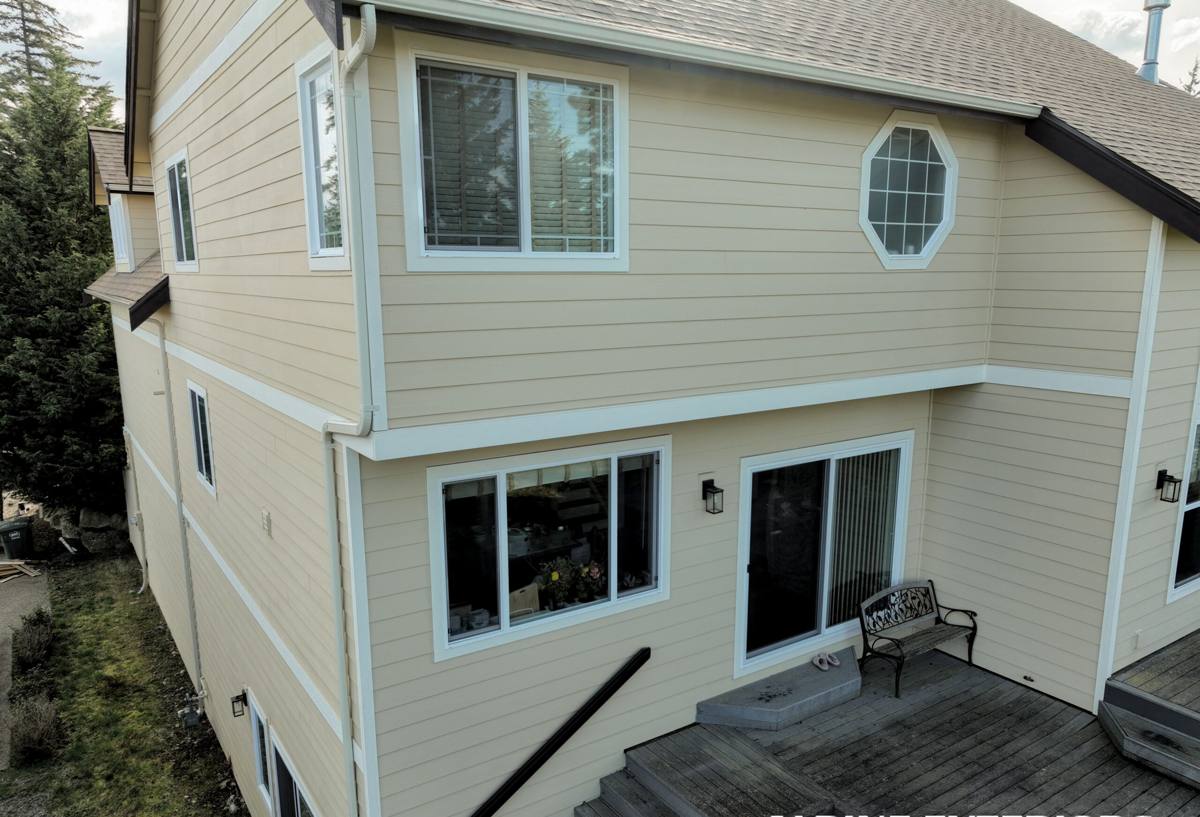
Signs a Bardmoor Deck Needs Replacing, Not Just Patching
Not every tired-looking deck needs to come out. But there's a point where patching individual boards stops being a repair and starts being a way to delay a bigger problem. Some signs worth taking seriously:
- Boards that feel soft, spongy, or give slightly underfoot
- Rust streaks bleeding out around fastener heads
- Any gap or movement where the deck's ledger board meets the house
- Railings or posts that wobble when pushed, not just wiggle
- Repeated spot repairs in the same area that keep failing again within a year or two
- Visible rot or insect damage at posts, beams, or the framing near ground contact
If the problems are cosmetic — surface graying, a few loose screws, minor splintering on an otherwise sound structure — repair or refinishing is usually the honest answer, and we'll tell you that. Replacement makes sense when the framing itself, not just the surface, is compromised.
When Repair Still Makes Sense
A deck with solid, dry framing and posts, but worn or faded decking boards, is often a good candidate for a resurfacing rather than a full tear-out. We'll always look at the substructure first, since that's the part that's expensive and disruptive to replace — the surface boards are the easier part to swap.
Choosing a Decking Material That Holds Up in Coastal Pinellas Conditions
There's no single "best" decking material — there's a best material for your budget, your maintenance tolerance, and how much direct sun and moisture your particular yard gets. Here's how the common options actually behave under Seminole's conditions:
| Material | Heat Underfoot | Moisture Behavior | Maintenance | Typical Lifespan Here |
|---|---|---|---|---|
| Pressure-treated wood | Moderate | Swells/shrinks with humidity; needs sealing to resist rot | Annual cleaning and resealing | 10–15 years with upkeep |
| Capped composite | Can run hot in full sun | Resists rot and moisture absorption well | Periodic cleaning, no sealing/staining | 20–25+ years |
| PVC decking | Runs hottest of the three | Fully moisture-resistant, won't rot | Low — occasional washing | 25+ years |
| Tropical hardwood | Moderate | Naturally rot-resistant but still needs sealing for color | Regular oiling to prevent graying | 20–25 years |
For yards with a lot of afternoon shade — common in Bardmoor's older, tree-lined lots — heat retention is less of an issue and composite or PVC often makes sense. For decks in full sun most of the day, that same composite can get uncomfortably hot barefoot, which is worth factoring in before you commit.
What a Correct Deck Replacement Actually Involves
The decking boards are the part everyone sees. The part that determines whether the deck is still safe in ten years is underneath.
Framing and Ledger Attachment
Where a deck attaches to the house — the ledger board — is the single most common failure point in decks nationally, and it's the detail we're most careful about. That connection needs proper flashing to keep water from getting behind it and rotting the house's rim joist, along with lag screws or through-bolts sized and spaced correctly, not just nails. Joist hangers and structural connectors need to be rated for the fastener and lumber being used, correctly sized, and fully nailed off — not partially, which we see often on older repairs.
Fasteners and Hardware for Salt Air
Standard galvanized fasteners corrode faster than most homeowners expect once they're exposed to Gulf-coast salt air over years, not just at the beach itself — Seminole is close enough to the coast for it to matter. We use stainless steel or coastal-rated hot-dip galvanized fasteners and connectors on replacement decks specifically because the cost difference upfront is small compared to redoing corroded hardware in a decade.
Wind-Rated Railings and Connections
Florida's building code accounts for wind load on guardrails and structural connections, not just the decking surface. Post-to-beam connections, railing attachment points, and baluster spacing all need to meet code — this isn't optional detailing, it's what keeps a railing from failing under a lateral push during a storm.
Permits and Inspections in Pinellas County
Deck replacement in Seminole typically requires a building permit, since it involves structural framing, footings, and often electrical work for outdoor lighting or outlets. That means inspections at key stages — footings before they're covered, framing before the decking goes down — rather than a single sign-off at the end. It adds a step to the timeline, but it also means an inspector who isn't invested in the job is confirming the structural work is sound. We handle the permit process and schedule inspections as part of the job, not as something you have to coordinate yourself.
Our Deck Replacement Process
- On-site assessment of the existing deck, focusing on the framing, ledger attachment, and posts — not just the visible surface
- Honest recommendation on repair versus full replacement, with reasoning explained
- Removal and disposal of the old deck
- Repair or replacement of any compromised posts, beams, footings, or ledger framing
- Installation of new framing with corrosion-resistant fasteners and proper flashing at the house connection
- Decking installation to the manufacturer's specifications for your chosen material
- Railing installation meeting current code for height, spacing, and connection strength
- Final walkthrough and cleanup before we consider the job done
What Affects the Cost of a Bardmoor Deck Replacement
Deck replacement costs vary a lot based on size and condition, and we're not going to quote a number that doesn't reflect your actual project. The factors that move the price most are:
| Factor | Why It Matters |
|---|---|
| Deck size and footprint | More square footage means more material and labor, straightforwardly |
| Material choice | Pressure-treated wood costs less upfront; composite and PVC cost more but need far less ongoing maintenance |
| Substructure condition | Rotted posts, beams, or footings found during demo add repair scope beyond the surface replacement |
| Height and stairs | Multi-level decks or decks with stairs require more framing, railing, and code detail than a single-level, ground-adjacent deck |
| Railing style | Cable, glass, or custom railing systems cost more than standard baluster railing |
| Permit and inspection requirements | Structural and electrical work factor into permit scope and fees |
The only way to get an accurate number is to look at your specific deck — condition of the framing underneath is often the biggest variable, and it's not something that can be estimated from a photo.
Keeping a New Deck Looking Right in This Climate
Whatever material you choose, a little regular attention goes a long way in Seminole's climate:
- Walk the deck once or twice a year and check fasteners, railings, and stair connections for movement or corrosion
- Rinse off pollen, salt residue, and organic debris regularly — shaded, humid areas are prone to mildew and algae growth on any material
- Reseal or restain wood decking on the schedule the finish product recommends, not just when it visibly looks faded
- Keep gutters and downspouts directing water away from the deck structure and posts
- Trim back vegetation that keeps framing or ground-level posts shaded and damp
Composite and PVC decking skip most of the sealing and staining maintenance, but they still need periodic cleaning — algae and mildew don't care what the boards are made of.
Why Hire a Crew That Already Works in Bardmoor
A lot of what makes a deck replacement go smoothly isn't the decking material — it's knowing what's typically underneath an older Bardmoor home's existing deck, how the local permitting process runs through the county and city, and how much shade and moisture a given lot actually deals with based on its tree cover and layout. A crew that's worked in the neighborhood before isn't guessing at any of that. That familiarity translates into fewer surprises once demo starts and a more accurate estimate from the first visit.
If your deck is showing its age, or you just want an honest opinion on whether it needs to be replaced or can be repaired, we're happy to take a look. Reach out for a free, no-pressure estimate using the form below.