 Seminole Siding
 Building Decks for a Barrier Island Climate
Treasure Island sits out on the Gulf side of Pinellas County, and that location shapes everything about how a deck should be built there. A deck that would hold up fine well inland can fail years early once it's exposed to salt-laden air, near-constant sun, and the wind loads that come with living this close to open water. We build custom decks specifically for this environment — sized, engineered, and detailed for the property in front of us — rather than a generic design adapted after the fact.
Homes in and around Treasure Island and Seminole deal with a specific combination of stresses: hurricane-force wind gusts during storm season, wind-driven rain that gets pushed sideways into structures, UV exposure that runs nearly year-round instead of seasonally, and salt air that accelerates corrosion on anything metal. A deck built without those four factors in mind is a deck that will need premature repairs, and in some cases won't meet current wind-load code at all.
Custom here doesn't just mean a nicer railing pattern. It means the deck is designed around how your household actually uses outdoor space near the water — multi-level layouts that step down toward a pool or canal, built-in bench seating, shade structures, or a footprint that works around existing trees and setbacks — while still meeting the structural standards this climate demands.
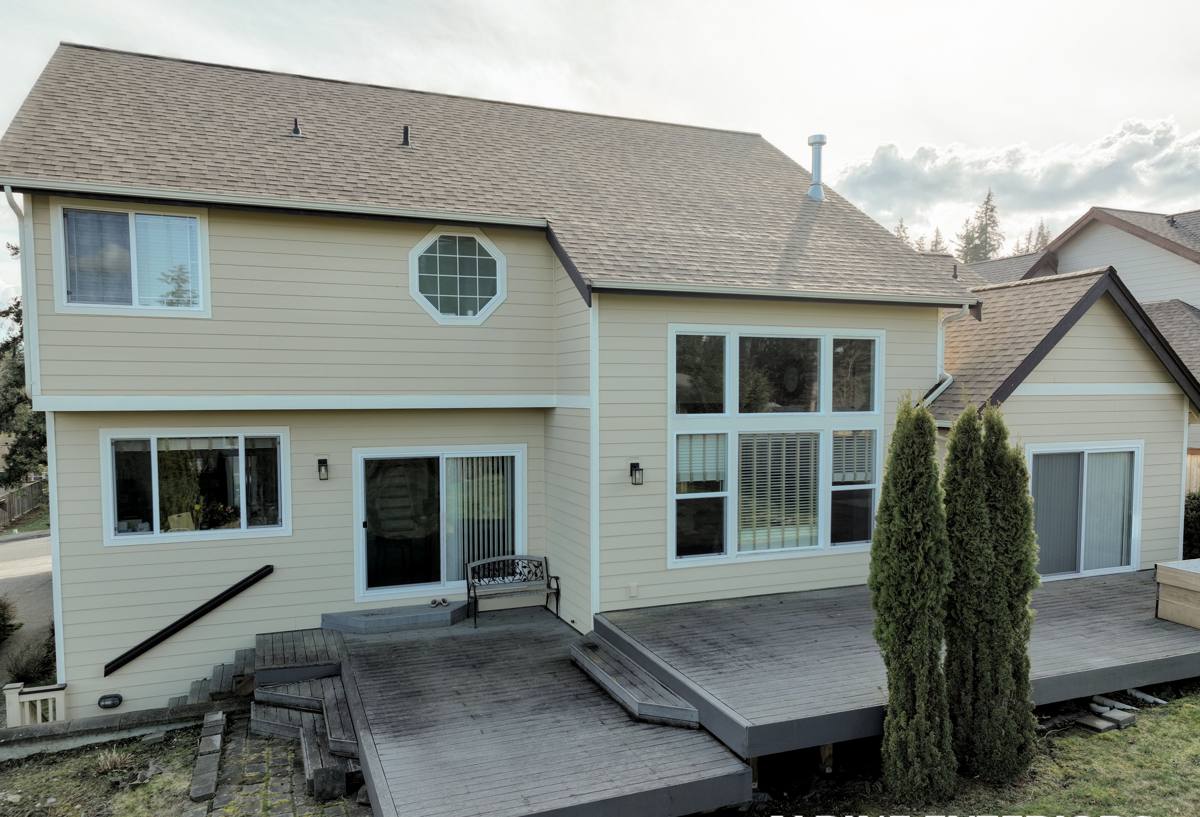
What a Treasure Island Deck Has to Withstand
Salt Air and Corrosion
Being close to the Gulf means airborne salt settles on every exposed surface, including framing hardware tucked underneath the decking boards. Standard zinc-coated fasteners and connectors that are fine forty miles inland can start rusting within a couple of years out here. Corrosion doesn't just look bad — it weakens the structural connections holding the deck together, which is a safety issue, not just a cosmetic one.
Wind Exposure
Pinellas County's barrier island communities see higher sustained wind loads than inland neighborhoods, and that's before you factor in tropical storms and hurricanes. Deck framing, post connections, and railing systems all need to be engineered for those loads, not just built to a minimum spec that happens to pass a quick inspection.
Wind-Driven Rain and Moisture
Storms here don't just bring rain straight down — wind pushes it sideways, into ledger board connections, under railing posts, and into any gap where flashing or sealant was done poorly. Where the deck attaches to the house is one of the most important details on the entire project, because a poorly flashed ledger board is a slow, hidden path for water into the home's structure.
UV and Heat
Florida sun breaks down untreated wood fibers, dries out sealants, and fades composite and PVC boards if they aren't rated for it. A deck here gets far more cumulative UV exposure per year than the same deck would in most of the country, which changes what "low-maintenance" actually means in practice.
Choosing the Right Decking Material for This Climate
There's no single "best" decking material — the right choice depends on budget, how much upkeep you're willing to do, and how close to the water your property sits. Here's how the common options actually perform under Treasure Island conditions:
| Material | How It Handles Salt Air & Sun | Maintenance |
|---|---|---|
| Pressure-treated pine | Needs sealing to resist moisture and salt intrusion; can warp or check if neglected | Annual cleaning and re-sealing recommended |
| Composite decking (capped) | Strong resistance to fading, moisture, and salt when capped on all sides | Occasional washing; no staining or sealing |
| PVC decking | Fully synthetic, doesn't absorb moisture or salt; among the most stable in coastal exposure | Lowest upkeep of the common options |
| Tropical hardwoods (e.g., ipe) | Naturally dense and rot-resistant, but still needs oiling to prevent graying and surface checking | Higher-effort maintenance schedule |
We won't push a premium material on a home where it doesn't make sense, and we won't recommend a budget material for a project sitting a block from the water where it will underperform early. Part of an honest estimate is telling you the real maintenance trade-off, not just the upfront cost.
Framing, Fasteners, and Hardware That Hold Up in Salt Air
The framing underneath a deck does the real structural work, and it's also the part most likely to get skipped over on a rushed job because nobody sees it once the boards go down. For Treasure Island projects we use stainless steel or marine-grade coated fasteners and structural connectors rather than standard galvanized hardware, because standard coatings simply don't hold up long-term this close to the Gulf.
Joist hangers, post bases, and hurricane ties all get the same treatment. We also pay close attention to how framing members are protected where they meet the ground or concrete footings, since that's where moisture and corrosion tend to start, and to how the ledger board is flashed and bolted where the deck meets the house. Cutting corners on hardware is one of the most common ways a coastal deck fails early, and it's also one of the hardest things for a homeowner to check for themselves once construction is finished.
Railings, Stairs, and Florida Building Code Requirements
Any elevated deck needs a code-compliant guardrail system, and Florida's building code sets specific requirements for railing height, baluster spacing, and the structural load the railing itself needs to resist — that last part matters more here than in most states because of wind loading. Stairs need proper rise-and-run consistency and secure stringer attachment, which becomes more important on sloped or elevated lots common near the water.
We build railings and stairs to meet current Florida Building Code wind and structural requirements, not just to pass a visual inspection. That includes proper post spacing, correctly rated connectors, and baluster gaps that meet code minimums for both appearance and child safety.
Permits and Local Requirements Around Treasure Island
Deck construction in Pinellas County generally requires a building permit, and barrier island properties often carry additional considerations around flood zone designation and elevation requirements that inland decks don't have to deal with. Some Treasure Island properties also fall under HOA or community association guidelines that affect deck height, materials, or setback from property lines, so it's worth checking those requirements before finalizing a design.
We handle the permitting process as part of the job rather than leaving it to the homeowner to sort out. That includes preparing the documentation the permitting office expects, scheduling required inspections, and making sure the finished structure is signed off correctly — which matters both for safety and for avoiding issues if you ever sell the home.
Replacing a Storm-Damaged or Aging Deck
A lot of the work we do in this area isn't a first-time deck — it's replacing one that's been through a few storm seasons and is showing it. Soft spots in decking, rusted-through hardware, a railing that's gotten loose, or a ledger connection that was never flashed properly are all common on older decks built before some of the current coastal detailing became standard practice. If your existing deck is more than a decade or two old, it's worth having it looked at even if it still looks fine on the surface, since the framing underneath tells a different story than the boards on top.
In some cases a deck can be partially rebuilt — new decking and railing on structurally sound framing. In others, especially after storm damage or with corroded connectors, a full rebuild is the safer and more cost-effective route. We'll tell you honestly which situation you're in rather than defaulting to the more expensive option.
Our Deck-Building Process
Every project follows the same basic sequence, adjusted for the specifics of your property and how it sits relative to wind and water exposure:
- On-site visit to assess the lot, existing structure (if replacing a deck), drainage, and sun and wind exposure
- Design and material selection based on your budget, maintenance preference, and how the space will be used
- Engineering and permit preparation through Pinellas County and any applicable local requirements
- Site prep and footing installation, sized and placed for the actual soil and wind conditions on your lot
- Framing with corrosion-resistant hardware, followed by decking, railing, and stair installation
- Final walkthrough and inspection coordination before the job is considered complete
We don't skip steps to move faster, and we won't start construction before a permit is in hand — doing that creates real risk for the homeowner if an inspector flags the work later.
What Drives the Cost of a Custom Deck
Every deck is priced around the specifics of the project, but a few factors consistently move the number up or down more than anything else:
| Factor | Effect on Cost |
|---|---|
| Decking material (treated wood vs. composite vs. PVC) | Material cost per square foot varies widely; composite and PVC cost more upfront but less over time in upkeep |
| Deck height and footing depth | Elevated decks and deeper footings required by local soil or flood conditions add labor and materials |
| Railing style and complexity | Custom railing designs and cable or glass systems cost more than standard baluster railing |
| Size and shape | Multi-level decks, angles, and built-in features add framing complexity beyond simple square footage |
| Hardware grade | Stainless or marine-grade fasteners cost more than standard galvanized but last significantly longer in this environment |
We give straightforward, itemized estimates so you can see exactly where the cost is coming from and where you have room to adjust — whether that's a different material tier, a simpler railing design, or a smaller footprint.
Caring for a Coastal Deck
Any deck near the Gulf needs a bit more attention than one built well inland, but the maintenance load varies a lot depending on the material you chose:
- Rinse the deck surface periodically to remove salt residue, especially after storms or high-wind days
- Inspect fasteners and railing connections at least once a year for early signs of corrosion or looseness
- Reseal or restain wood decking on a regular schedule rather than waiting until it visibly needs it
- Check underneath the deck occasionally for framing moisture, debris buildup, or pest activity
- Keep gutters and downspouts clear so runoff isn't draining directly onto or under the deck structure
- Trim back nearby vegetation that traps moisture against the decking surface or framing
A little routine attention goes a long way toward getting the full lifespan out of a deck built for this climate, and it's much cheaper than dealing with a structural repair later.
Why Hire a Crew That Already Works Treasure Island
Building decks correctly on a barrier island isn't the same trade as building them a few miles inland. A crew that already works in and around Treasure Island and Seminole knows what the local permitting office expects, understands which fastener and framing choices actually hold up against Gulf salt air, and has already worked through the logistics of getting materials and equipment onto tighter island lots.
That experience shows up in details a homeowner might not think to ask about — footing depth appropriate for local soil, hardware specified for coastal exposure rather than a standard inland build, and a permit application that's filled out correctly the first time instead of getting kicked back for missing information. It's the difference between a deck that looks right on day one and a deck that's still solid ten years later.
If you're planning a new deck or replacing an aging one in Treasure Island or the surrounding Seminole area, we're happy to take a look at your property and walk through your options. Reach out for a free, no-pressure estimate — use the form below to get started.