 Seminole Siding
 Why Belleair Beach Siding Takes More Punishment Than Most
Belleair Beach sits on a narrow barrier island in Pinellas County, with the Gulf of Mexico on one side and the Intracoastal on the other. That location is what makes it a beautiful place to live, and it's also exactly why the exterior of a home there ages faster than one a few miles inland. Salt-laden air moves across the island constantly, not just during storms. Combined with intense year-round UV and wind-driven rain that gets pushed sideways into wall assemblies during squalls and tropical systems, siding here is under continuous low-grade attack even on calm days.
Most siding products are engineered and rated for general exposure, not for a barrier island. When a product designed for average conditions gets installed on a home a few hundred feet from open Gulf water, the gap between "rated for" and "actually experiencing" shows up early — as chalking, fastener corrosion, seam failure, or moisture trapped behind the cladding where nobody can see it until it's a real problem.
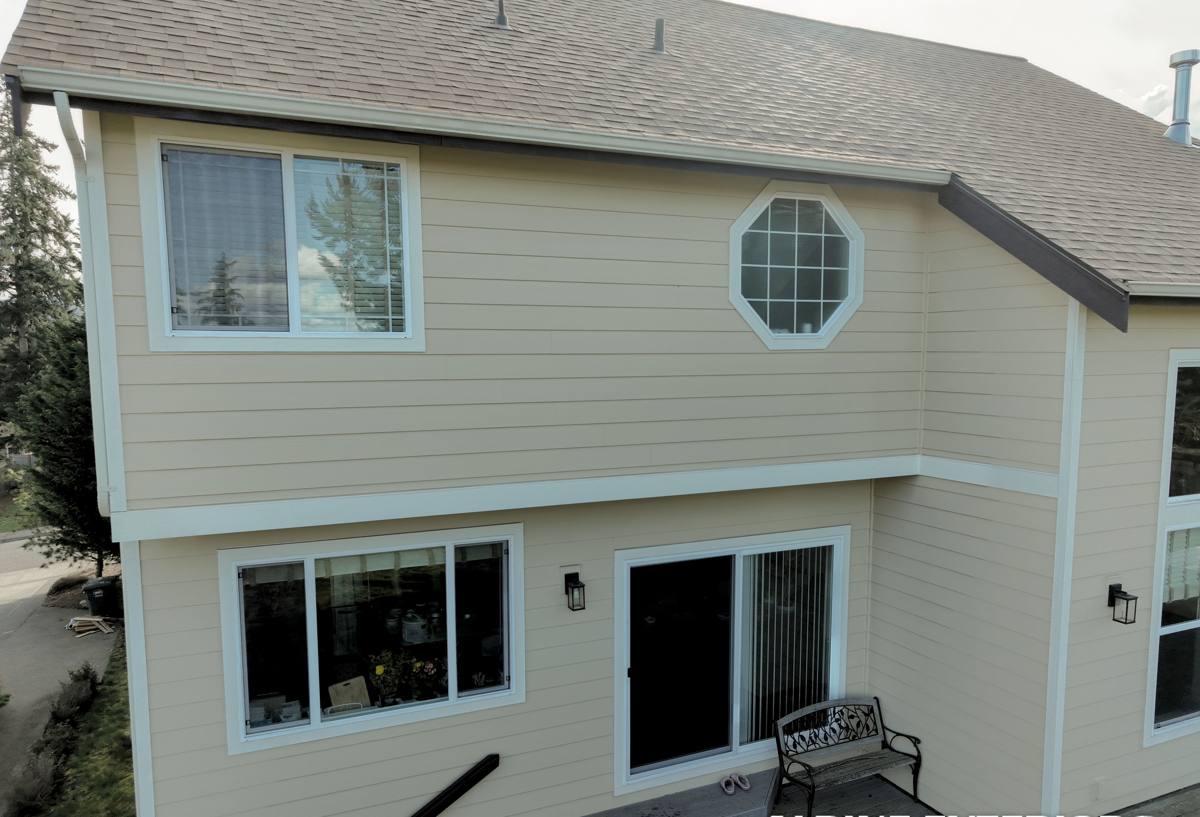
What Correct Siding Installation Has to Account For Here
A proper install on a barrier island home isn't just nailing panels to studs faster or slower — it's a set of decisions made at every layer of the wall assembly, specifically because of where the house sits.
Moisture management behind the cladding
Wind-driven rain doesn't just hit siding, it gets forced into any gap, seam, or fastener hole that isn't properly sealed or flashed. A correctly built assembly includes a continuous weather-resistant barrier, properly lapped and taped seams, correct flashing at every window, door, and penetration, and a drainage plane that lets any moisture that does get behind the siding find its way back out instead of sitting against the sheathing.
Fastening for sustained coastal wind pressure
Florida's building code sets wind-pressure and fastening requirements that get stricter the closer a home sits to open water, and Belleair Beach is about as close as it gets in this county. That means correct fastener type, spacing, and embedment matter more here than on an inland job — under-fastened siding is one of the more common things we find when we're called out to fix someone else's work.
Corrosion-resistant hardware, every time
Standard fasteners and trim hardware corrode faster in salt air. Stainless or coated corrosion-resistant fasteners cost more up front, but on a barrier island install they're not optional — they're the difference between hardware that lasts as long as the siding and hardware that starts staining and failing within a few years.
Clearance and drainage at the base of the wall
Proper standoff from grade, decks, and hardscape, along with a correctly installed weep screed or drainage detail at the bottom of the wall, keeps splash-back, standing water, and blowing sand from sitting against the bottom course of siding — which is where we see the earliest failures on homes near the water.
Why This Company Installs Only James Hardie Fiber Cement
We made a decision years ago to install one product system and install it correctly, rather than offer several products and cut corners on any of them. For a barrier island climate specifically, James Hardie fiber cement is the product we trust to hold up.
Fiber cement doesn't rot, and it isn't a food source for insects — that alone removes two of the failure modes we see most often with wood-based and engineered-wood siding near the coast. It's also non-combustible, which matters to a lot of homeowners and to insurers. And Hardie's factory-applied ColorPlus finish is baked on and warranted separately from the substrate, which means the finish is engineered to resist UV fading and moisture intrusion at the surface — the two things that hit hardest and most constantly on a barrier island.
HZ5 engineering for this climate
Hardie manufactures regional HZ product formulations specifically because a house in a dry inland climate and a house on a Gulf barrier island need different performance from the same style of siding. The HZ5 line is engineered for the moisture exposure and humidity levels found in this part of Florida, which is the specification we install on Belleair Beach homes.
A warranty structure that's actually transferable
Hardie backs its siding with a strong limited warranty, and the ColorPlus finish carries its own separate finish warranty. Both are transferable to a subsequent owner within the terms of the warranty, which matters on a barrier island where resale value and buyer confidence in the exterior are part of what you're paying to protect.
What We Won't Install, and Why
Vinyl siding is inexpensive and easy to install, but it softens and can deform in sustained high heat, and its seams and panel-to-panel fit are more vulnerable to wind-driven rain intrusion than a properly installed fiber cement system — a real liability a few hundred feet from open water. Engineered wood products like LP SmartSide perform reasonably well in a lot of climates, but they're wood-based at the core, meaning moisture intrusion at a cut edge, fastener hole, or failed seal can lead to swelling and deterioration faster than fiber cement in a high-humidity, salt-air environment. Cedar and primed spruce look good on day one, but they demand an ongoing maintenance commitment — recoating, resealing, and moisture monitoring — that most homeowners underestimate until they're a few years in. None of these are bad products in every setting. They're just not what we're willing to warranty our labor on a few hundred feet from the Gulf.
Comparing Siding Options for Barrier Island Exposure
| Material | Salt Air / Moisture Behavior | Wind & Fastening | Maintenance | Typical Lifespan |
|---|---|---|---|---|
| James Hardie Fiber Cement (HZ5) | Non-combustible, does not rot; ColorPlus finish resists UV and moisture at the surface | Engineered for high wind-pressure fastening schedules | Low — occasional wash, no recoating needed on ColorPlus | Decades, with transferable warranty coverage |
| Vinyl Siding | Can soften, warp, or fade under sustained heat and UV | Panel/seam system more prone to wind-driven rain intrusion | Low upfront, but early replacement is common near the coast | Shorter in high-UV, high-wind coastal exposure |
| Engineered Wood (e.g. LP SmartSide) | Wood-based core is vulnerable to swelling if moisture reaches cut edges or fasteners | Standard fastening; edge sealing is critical and easy to miss | Moderate — edge sealing and inspection needed | Shorter than fiber cement if moisture gets in |
| Cedar / Primed Spruce | Natural wood; absorbs moisture and salt exposure without regular sealing | Standard fastening; more sensitive to installation quality | High — periodic recoating and sealing required | Highly dependent on maintenance follow-through |
Our Installation Process for Belleair Beach Homes
- On-site assessment of the current wall assembly, existing siding condition, and any moisture or fastener damage from prior installs
- Removal of old siding and inspection of the sheathing underneath for hidden rot, corrosion, or water intrusion before anything new goes on
- Repair of any compromised sheathing or framing — covering over a damaged wall never happens on our jobs
- Installation of a continuous weather-resistant barrier with correctly lapped and sealed seams
- Flashing of every window, door, and wall penetration before a single piece of siding goes up
- Installation of James Hardie HZ5 siding to manufacturer fastening specifications for this wind zone, using corrosion-resistant fasteners throughout
- Trim, caulking, and finish detailing at all transitions, corners, and terminations
- Final walkthrough so you can see the completed work and ask questions before we consider the job done
Signs a Barrier Island Home Needs Siding Work Now
Because Belleair Beach exposure accelerates wear, the warning signs often show up earlier than homeowners expect. Watch for soft spots or visible warping in existing siding, staining or streaking around fasteners or seams, chalking or heavy fading beyond what's normal for the age of the siding, and any bubbling or peeling near window and door trim. Any of these, caught early, is a repair. Left alone on a barrier island, they tend to become a full replacement faster than they would a few miles inland.
What to Ask Before Hiring a Siding Crew for This Area
- Have you installed siding on other homes on this barrier island, or only inland Pinellas County jobs?
- What fastener and flashing specs do you use for coastal wind exposure, specifically?
- Which James Hardie HZ product line and profile are you specifying, and why that one for this house?
- What does your warranty cover — labor, materials, or both — and for how long?
- Will you inspect and repair sheathing before installing new siding, or just cover what's there?
- Can you walk me through your moisture barrier and seam-sealing approach before work starts?
Why Local Experience on This Island Matters
A crew that already works Belleair Beach knows the wind exposure isn't theoretical — it's what shapes fastening schedules, flashing details, and material choices on every job here. That familiarity also extends to Pinellas County's permitting process and inspection expectations for coastal work, so a job here moves through approval without surprises. We're a Seminole-based crew that treats Belleair Beach as home turf, not an unfamiliar stop on the far side of the county.
If you're weighing a siding replacement or repair on a Belleair Beach home, we're glad to take a look and give you a straightforward, no-pressure estimate — just fill out the form below to get started.