 Seminole Siding
 New-Construction Windows in Belleair Bluffs: Why the Install Method Matters
Belleair Bluffs sits on a narrow strip of high ground between the Intracoastal Waterway and Clearwater Harbor, which means almost every home here gets salt-laden air moving through it year-round, plus the full brunt of whatever comes off the Gulf during storm season. When we talk about "new-construction windows," we're talking about a specific installation method — windows set into a stud-framed rough opening with a nailing or mounting flange, sealed and flashed before stucco, siding, or brick veneer goes on. That's different from a retrofit or pocket replacement, where a new window gets fitted inside an existing frame that stays in place. New homes, additions, and full gut-to-the-studs remodels in Belleair Bluffs almost always call for the new-construction approach, and it's the only method that lets us build a genuinely correct water and wind barrier from scratch.
Getting this right matters more here than in most parts of the country. Pinellas County sits in a High-Velocity Hurricane Zone-adjacent wind region under the Florida Building Code, and Belleair Bluffs' exposure to open water pushes wind-driven rain into wall assemblies that a sloppy install will never keep out. We've worked enough homes in this immediate area to know which details get skipped when a crew is unfamiliar with local code enforcement and inspection expectations — and which details actually keep a house dry through a decade of storms.
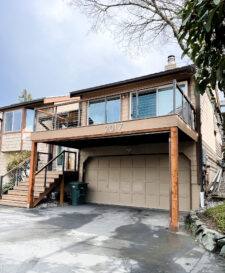
What Belleair Bluffs' Climate Demands From a New-Construction Window
Wind Load and Impact Rating
Every new-construction window installed here needs a Florida Product Approval (FL#) rated for the design pressure calculated for that specific house — based on its height, roof geometry, and exposure category. Waterfront and near-waterfront lots in Belleair Bluffs frequently land in higher exposure categories than homes a mile inland in Seminole, which pushes up the required pressure rating and often triggers the need for impact-rated glass rather than separate shutters. We pull the actual wind load calc for the address rather than guessing from a neighbor's permit.
UV Exposure
Florida sun is hard on window components year-round, not just in summer. Vinyl frames, weatherstripping, and low-E coatings all degrade at different rates depending on quality — cheap vinyl chalks and warps, and poor-quality low-E coatings can haze or delaminate. We spec glass packages with a proven low-E coating and a solar heat gain coefficient suited to the window's orientation, since a west-facing opening on a Belleair Bluffs lot takes a very different UV and heat load than a shaded north-facing one.
Wind-Driven Rain and Salt Air
Wind-driven rain doesn't just test the window unit — it tests the flashing, sealant, and the transition between the window and the wall assembly. Salt air accelerates corrosion on cheap fasteners and low-grade hardware. We use stainless or coated fasteners and marine-appropriate sealants on every install this close to the water, because standard interior-grade hardware corrodes and stains stucco or siding within a few seasons out here.
What a Correct New-Construction Install Actually Involves
- Rough opening checked square, level, and sized correctly to the window's actual manufactured dimensions — not just the plan dimension
- Sill pan flashing installed to shed any water that gets past the window back out of the wall, sloped correctly toward the exterior
- Self-adhered flashing tape at the sides and head, lapped shingle-style (bottom-up) so water always drains outward, never into the wall cavity
- Backer rod and a compatible, paintable sealant at the frame perimeter, sized to the actual gap — not just a bead smeared over a mismatched joint
- Nailing flange fastened per the manufacturer's approved pattern and fastener spacing, not "however many the crew felt like driving"
- Shims set at load-bearing points so the frame doesn't rack or bow under wind pressure, checked again after fastening
- Weep paths and drainage confirmed open, not accidentally sealed shut by sloppy caulking
- Final operation check — sash swings, locks, and any egress hardware function smoothly before we call it done
Skip any one of these and the window itself doesn't matter — a $1,200 impact-rated unit installed with the wrong flashing sequence will leak just as fast as a builder-grade one. Most of the water intrusion problems we get called out to inspect in this area trace back to flashing and sealant mistakes, not a defective window.
Coordinating With Your Build Timeline
New-construction windows have to land on the schedule at the right moment — after the rough opening framing is complete and inspected, but before house wrap, stucco lath, or siding closes in the opening. If we're brought in too late, or the general contractor's timeline shifts without communicating to us, windows get rushed in around already-installed exterior finishes, which is exactly how corners get cut on flashing. We work directly with GCs and homeowners acting as their own contractor to lock in the install window at the right framing stage, and we build in time for the county inspection that typically happens before finishes go on.
Permitting and Inspection in Pinellas County
New-construction window installs in Belleair Bluffs go through Pinellas County or the relevant local building department's permit and inspection process, tied to the wind load and product approval documentation for each opening. We handle the product approval paperwork and schedule inspections at the correct framing stage — buried flashing that never gets inspected is a common source of disputes later, so we don't cover anything up before it's been signed off.
Choosing Frame Material and Glass for This Location
| Factor | What to weigh for a Belleair Bluffs new-construction opening |
|---|---|
| Frame material | Vinyl and fiberglass both hold up well against salt air; aluminum needs a marine-grade finish or it will pit and corrode faster this close to the water |
| Glass package | Impact-rated laminated glass is standard for most openings here given wind exposure; confirm the specific design pressure rating matches the opening, not just a generic "impact" label |
| Hardware finish | Stainless steel or a marine-rated coated finish resists salt corrosion; standard zinc-plated hardware will show rust staining within a couple of years |
| Sealant type | UV-stable, paintable sealant rated for the frame material — mismatched sealant/frame chemistry causes adhesion failure and reopens leak paths |
| Orientation | West and south exposures on open lots benefit from a lower SHGC glass package to cut summer heat gain; shaded or north-facing openings have more flexibility |
Common Corners Cut on New-Construction Window Jobs
We see the same shortcuts repeatedly when we're called in to fix or inspect someone else's work in this part of Pinellas County:
- Flashing tape applied in the wrong order (top piece under the side pieces instead of over), which funnels water directly into the wall cavity instead of away from it
- Caulk used as a substitute for proper flashing rather than as a secondary seal on top of it
- Fasteners driven through the flange at random spacing instead of the manufacturer's tested pattern, which can void the product approval and weaken wind resistance
- Weep holes sealed shut by accident during stucco or paint work, trapping moisture inside the frame
- Standard-grade hardware and fasteners used on a waterfront-adjacent opening, leading to early corrosion and staining
None of these show up as a problem on install day. They show up as a stained ceiling, a soft spot in drywall, or a window that won't latch right two or three years later — usually after the labor warranty from whoever did the rush job has expired.
Why a Crew That Already Works Belleair Bluffs Matters
Belleair Bluffs is a small, tightly-packed community, and the building department, inspectors, and even the typical lot conditions here are consistent from job to job — narrow setbacks, mature landscaping close to the house, and exposure categories that don't match what a crew used to inland Seminole work is expecting. A crew that's done new-construction window installs in this specific pocket of Pinellas County already knows the wind load expectations, the inspection sequencing the local building department wants to see, and how much extra care the salt air demands on fasteners and sealants. That's fewer surprises, fewer redo trips, and a job that passes inspection the first time instead of getting flagged for a flashing detail nobody thought would matter.
Our Process for a New-Construction Window Job
- Site visit to review the rough openings, framing plan, and exposure conditions for the specific lot
- Wind load and product approval selection matched to that address, not a generic spec
- Material and glass package recommendation based on orientation and budget, with honest tradeoffs explained
- Written quote covering product, labor, flashing materials, and permitting
- Install scheduled to land at the correct framing stage, coordinated with your GC or timeline
- Flashing, shimming, and fastening done to manufacturer spec, photographed before it's covered by finishes
- Inspection scheduled and passed before house wrap or stucco closes in the opening
- Final walkthrough — every sash, lock, and screen checked before we call the job complete
What This Typically Costs
New-construction window pricing depends on opening size, glass and frame selection, and how many openings are on the job — a single addition window is a very different scope than outfitting a full new build. In broad terms, impact-rated new-construction windows in this market run from around a thousand dollars per opening for standard sizes up into the several-thousand-dollar range for large or specialty shapes, before labor and flashing materials. We won't give a real number until we've seen the actual openings and wind load requirements, because guessing on a job this dependent on code compliance does homeowners a disservice.
If you're building, adding on, or replacing openings down to the studs in Belleair Bluffs, we're happy to walk the site and give you a straight, no-pressure estimate using the form below.