 Seminole Siding
 What Belleair's Coastal Exposure Does to Siding Over Time
Belleair sits close enough to open water that its homes take a different kind of beating than houses further inland. The same setting that makes the area desirable also means siding here is working harder every single day. Hurricane-force winds during the active season drive rain sideways into seams and laps that were never designed to handle water moving that direction. Between storms, intense year-round Florida UV bakes painted and coated surfaces, breaking down finishes faster than manufacturers' warranties often assume. And underneath all of that, salt-laden air off the Gulf slowly attacks fasteners, trim, and any exposed edge where a coating has thinned.
None of this means Belleair siding is doomed to fail early — it means siding here needs to be installed and repaired with that exposure in mind from the start. A repair that would hold up fine on a house twenty miles inland can fail again within a season or two on a home this close to the coast if it's not done correctly. That's the standard we hold every Belleair repair to.
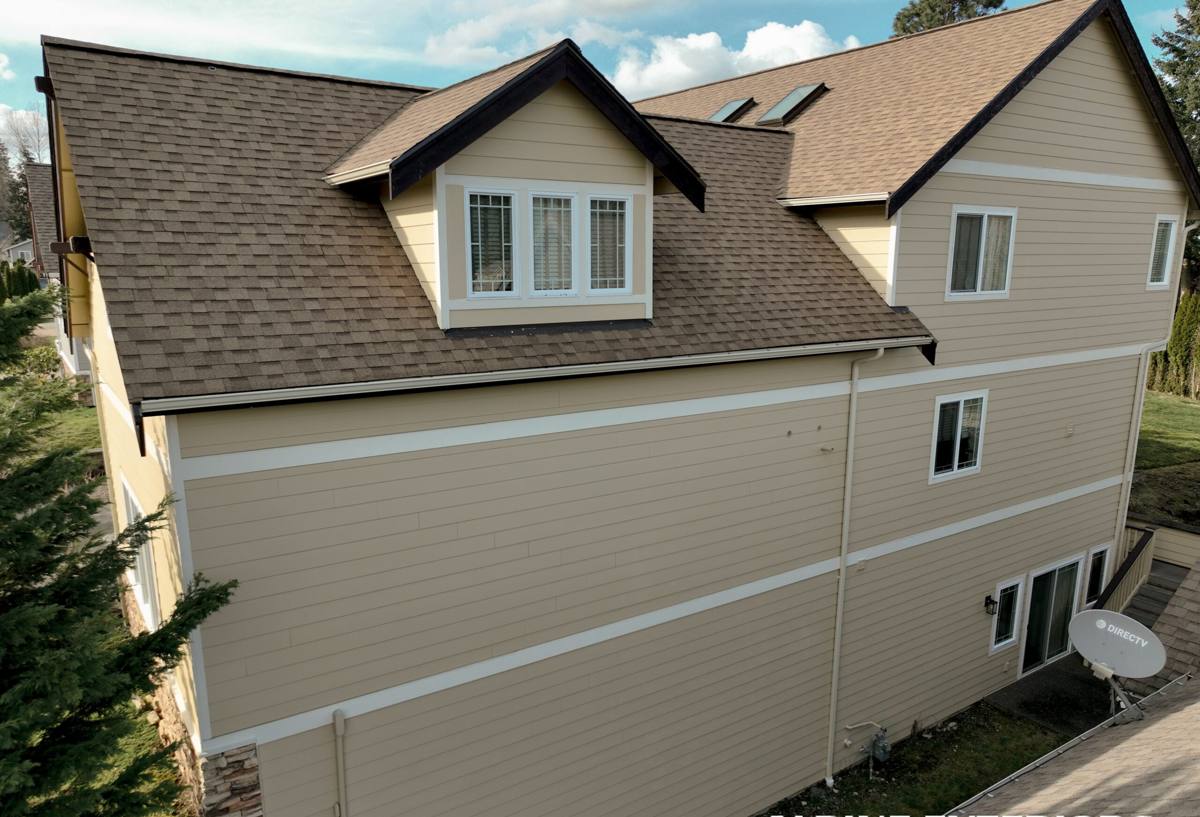
Recognizing When Belleair Siding Needs Repair
Storm and Wind Damage
After any significant wind event, it's worth walking the exterior and looking for lifted or loose boards, cracked panels, popped fasteners, and gaps that have opened up at corners or trim. Wind-driven rain doesn't need a large opening to get behind siding — a hairline gap is often enough, and the damage that follows shows up weeks or months later as staining or soft wall sheathing rather than immediately.
Sun and Heat Damage
Chalking, fading, and finish breakdown on south- and west-facing walls are the most visible sign of UV fatigue. Less obvious is heat cycling — siding that expands and contracts through Florida's daily temperature swings can work fasteners loose over years, even without a single storm involved.
Moisture and Water Intrusion
Wind-driven rain doesn't fall straight down, so the places that leak first are usually the ones designed for vertical rain: horizontal trim, window and door head flashing, and butt joints between boards. Bubbling paint, dark streaking, or a soft spot when you press on the wall are all signs water has been getting behind the siding, not just running down the face of it.
Salt Air Corrosion and Fastener Failure
Rusted or corroding nail heads, streaks bleeding down from fasteners, and trim that's begun to separate from the wall are classic salt-air symptoms. Once fasteners start to go, the boards they're holding are no longer secured to spec, which is a structural issue as much as a cosmetic one.
What a Proper Siding Repair Actually Involves
Diagnosing the Real Cause
A repair that only addresses the visible symptom — a cracked board, a stained wall — without figuring out why it happened tends to fail again. Before we touch anything, we trace the damage back to its source: is water entering at a flashing detail, a caulk joint that's failed, a fastener pattern that was never right, or wind that simply overpowered an aging attachment? The fix has to match the actual cause, not just the symptom.
Matching Material and Finish
Patching in a mismatched board or a visibly different sheen is a common shortcut that leaves a repair looking obviously bolted-on. We work to match profile, reveal, and finish as closely as the existing siding allows, so a repaired section reads as part of the wall rather than a patch on it.
Restoring the Water Management System
Siding is a system, not just a decorative surface — house wrap, flashing, kick-out details at rooflines, and properly lapped joints all work together to keep water moving away from the wall assembly. A repair that replaces the visible board but skips the water-resistive barrier or flashing underneath it is only a cosmetic fix, and it won't hold up to the next wind-driven storm.
Fastening and Flashing to Code
Correct nailing pattern, fastener type, and spacing matter more in a high-wind coastal zone than almost anywhere else, and Pinellas County's wind-load requirements reflect that. We fasten and flash every repair to meet that standard, not just to whatever held the original installation together.
How Your Siding Material Affects the Repair
We install only James Hardie fiber cement siding — we don't install vinyl, LP SmartSide, Cemplank, Allura, or primed wood. That standard shapes how we approach a repair, and we're upfront about it. If your home already has James Hardie siding, repairs are usually the most straightforward: damaged boards can be cut out and replaced with matching profile and, where the color is a factory ColorPlus finish, a close color match is achievable because the finish is manufactured, not field-mixed.
If your Belleair home has a different siding material and the damage is limited — a section of trim, an isolated cracked board — we'll be honest about what a like-for-like patch can and can't accomplish, and we'll tell you plainly if we think a small repair is a reasonable short-term fix versus papering over a bigger problem. Where damage is extensive enough that we'd be replacing whole sections or walls, our recommendation is James Hardie fiber cement, because it's the product we trust to hold up to Belleair's wind, sun, and salt exposure over the long run — not because it's the only thing we know how to install.
Common Belleair Repair Scenarios
| Situation | Likely Cause | Typical Repair Approach |
|---|---|---|
| Cracked or split boards after a storm | Wind-driven impact or flexing beyond the material's limit | Remove and replace affected boards, check fastening on adjacent sections |
| Staining or soft wall below a window | Failed head flashing or caulk joint | Re-flash the opening, replace compromised sheathing if found, reinstall siding |
| Rust streaks from fastener heads | Salt-air corrosion of original fasteners | Replace with corrosion-resistant fasteners rated for coastal use |
| Faded or chalky finish on sun-facing walls | UV breakdown of paint or coating | Evaluate whether refinishing is viable or boards need replacement |
| Gaps opening at corners or trim | Heat-cycle movement or original installation error | Re-seat trim, correct fastening, reseal with appropriate sealant |
Our Repair Process, Start to Finish
Every repair starts with a full walk-around, not just a look at the spot you called about — damage from wind and moisture rarely stays confined to one area, and it's common to find a second issue while investigating the first.
- Inspection and diagnosis — we identify not just what's damaged but why, checking flashing, fastening, and the water-resistive barrier where it's exposed.
- Written scope and estimate — you'll know what we found, what we recommend, and what it costs before any work starts.
- Material matching — we source siding and finish that fits your existing exterior as closely as possible.
- Repair execution — damaged material comes out, underlying issues get corrected, and new siding goes in fastened and flashed to spec.
- Final walkthrough — we review the completed work with you before considering the job done.
Repair or Replace? Weighing the Decision
Not every damaged wall needs a full re-side, and not every issue is a quick patch. The honest answer depends on a few factors we walk through with every homeowner.
| Factor | Favors Repair | Favors Replacement |
|---|---|---|
| Extent of damage | Isolated to one or two sections | Spread across multiple walls or elevations |
| Age and condition of remaining siding | Siding is younger and otherwise sound | Siding is near or past its expected service life |
| Underlying moisture damage | Water-resistive barrier and sheathing are intact | Rot or sustained moisture intrusion found behind siding |
| Material availability | A close match to existing siding is available | Original product is discontinued or a match isn't achievable |
We'll always give you a straight recommendation based on what we actually find, not a default push toward the bigger job.
Why a Crew That Already Works in Belleair Matters
Coastal wind-load and flashing requirements aren't optional details — they're what keeps a repair from becoming next season's callback. A crew that regularly works Belleair and the surrounding Seminole and Pinellas County area already knows what this exposure does to different siding materials over a few years, which details tend to fail first, and how local permitting and inspection expectations apply to exterior repair work. That familiarity shows up in fewer surprises during the job and a repair that's built for the climate it actually has to survive, not a generic inland standard.
Before You Hire: What to Look For
- Ask whether the contractor will diagnose the underlying cause, not just patch the visible damage
- Confirm they carry current licensing and insurance appropriate for exterior work in Florida
- Get a written scope that specifies fastening, flashing, and material details, not just "repair siding"
- Ask how they'll match color and profile to your existing siding
- Ask directly which siding materials and brands they install and why
- Request a clear, itemized estimate before any work begins
If you're seeing storm damage, sun-faded panels, or signs of water intrusion on your Belleair home, we're happy to take a look and give you a straightforward assessment. Reach out for a free, no-pressure estimate using the form below.