 Seminole Siding
 Board & Batten on a Barrier Island: What's Different
Treasure Island sits on a barrier island in Pinellas County, which means every exterior material on a home here is doing double duty: it has to look good and it has to survive conditions that inland Florida homes simply don't deal with at the same intensity. Salt-laden air moves off the Gulf and Intracoastal side constantly, humidity stays high most of the year, UV exposure is relentless, and when a storm comes through, wind-driven rain gets forced sideways into every seam, joint, and fastener point on a wall. Board and batten siding — with its vertical boards and raised battens covering the seams — is a popular look for coastal and cottage-style homes in this area, but that same profile has more joints and more exposed edges than lap siding. Done right, it holds up. Done with the wrong material or sloppy installation, it's one of the first things to fail on a barrier island home.
This page is specifically about board and batten siding for homes in Treasure Island. We're not going to give you a generic rundown of the siding — we're going to walk through what this particular profile needs to survive this particular environment, and what separates a job that lasts decades from one that starts failing in year three or four.
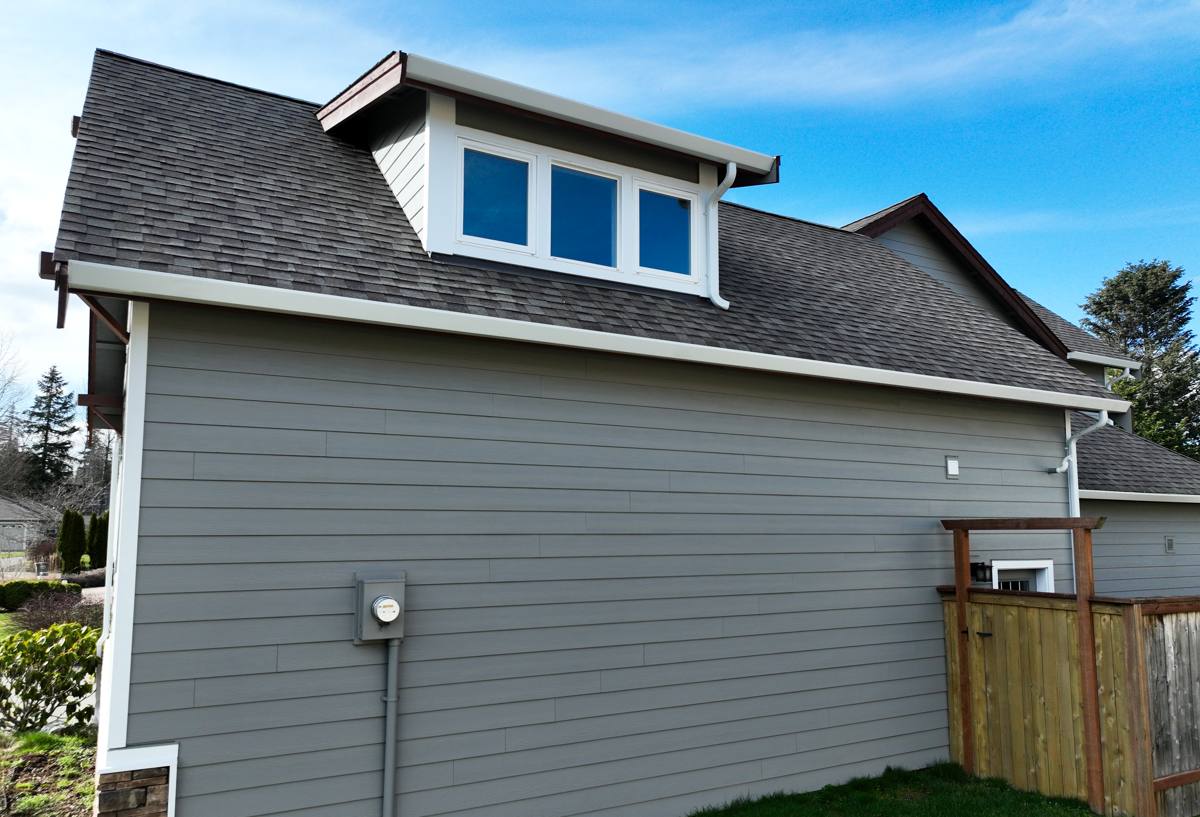
Why Board & Batten Is a Natural Fit for This Area's Homes
A lot of the housing stock in and around Treasure Island leans coastal cottage, Old Florida, or beach bungalow in character, and board and batten fits that look naturally — clean vertical lines, strong shadow lines from the battens, and a texture that reads as substantial without being fussy. It also works well as an accent on gable ends, dormers, or a front elevation paired with horizontal lap siding elsewhere on the house, which is a common way homeowners here use it to break up a large wall plane or highlight an entry.
The aesthetic appeal isn't the problem. The problem, historically, has been material choice. Traditional wood board and batten looks great for a few years and then starts absorbing moisture at the battens and board edges — exactly the spots where salt air and wind-driven rain concentrate. That's the piece we address by only installing one material system, which we'll get into below.
Why We Only Install James Hardie Fiber Cement for This Profile
We don't install vinyl board and batten, LP SmartSide, primed spruce, cedar, Cemplank, or Allura on any home we work on — including here in Treasure Island — and board and batten is actually one of the clearest examples of why.
Wood-based battens and boards (real cedar or engineered wood products like LP SmartSide) rely on a factory or field-applied coating to keep moisture out, and that coating is under constant attack in this climate — UV breaks it down, salt air accelerates weathering, and any nick or gap at a cut edge or fastener becomes an entry point for moisture. Once moisture gets behind wood-based siding on a barrier island, it doesn't dry out quickly, and that's when you start seeing swelling, soft spots, and eventually rot at the bottom of boards and around battens.
Vinyl board and batten is low-maintenance and inexpensive, but it's a thin, flexible material that isn't rated for the higher wind speeds this coastline can see, and it doesn't hold paint if a homeowner ever wants to change the color — the color is baked into the material itself and fades unevenly over time under constant sun.
James Hardie fiber cement is a cement-and-cellulose composite. It doesn't absorb water the way wood does, it's non-combustible, and it's engineered specifically for high-humidity, high-UV coastal climates through Hardie's HZ10 product line — which is the specification built for zones like the Gulf Coast of Florida. The factory-applied ColorPlus finish is baked on and warranted separately from the substrate, so it holds color and resists the fading and peeling that plagues field-painted wood siding in direct coastal sun. That combination — a substrate that doesn't rot and a finish that doesn't need repainting every few years — is why it's the only material we put on a house, board and batten included.
What This Means in Practice
In board and batten form, Hardie boards and battens are manufactured, primed, and finished at the factory to consistent thickness and moisture content — there's no on-site painting to protect raw wood, no waiting for a coating to cure before it's exposed to rain, and no variability from board to board. That consistency matters more on a vertical profile with lots of seams than it does on standard lap siding.
What a Correct Board & Batten Installation Involves
Board and batten has more failure points than lap siding by design — every batten seam is a place water can try to get behind the wall if it's not detailed correctly. On a barrier island home, we treat every one of these details as non-negotiable:
- Proper drainage plane: a weather-resistant barrier behind the siding, installed with correct laps and sealed penetrations, so any moisture that does get past the surface has a path to drain and dry out.
- Rainscreen or furring where called for: an air gap behind the boards lets moisture evaporate instead of sitting trapped against the wall sheathing — especially important with the humidity levels typical here.
- Correct fastener spec: corrosion-resistant fasteners driven to Hardie's published pattern and embedment depth, not just "close enough," because under-driven or over-driven fasteners are a common cause of early siding failure in coastal wind events.
- Batten spacing and fastening per manufacturer spec: battens have to be fastened into structural framing at the correct spacing to perform in high-wind conditions, not just cosmetically centered over the seams.
- Flashing at every penetration: windows, doors, hose bibs, light fixtures, and vents all need proper flashing integrated with the drainage plane before boards go up.
- Sealed and caulked joints using coastal-rated sealant: at trim, corners, and terminations, using a sealant rated to stay flexible and adhered under the UV and salt exposure this area sees.
- Correct clearance at grade and hard surfaces: siding held up off the ground, decks, and driveways per code so wind-driven rain and standing water don't wick into the bottom boards.
Skipping any one of these is how a board and batten job looks fine for a year or two and then starts showing problems at the seams — which is usually the first sign of an installation issue rather than a product issue.
Our Process for a Treasure Island Board & Batten Project
1. On-Site Assessment
We walk the home, check the current siding and substrate condition, note any moisture damage or sheathing issues that need to be addressed before new siding goes up, and talk through where board and batten makes sense — full elevations, gable accents, or a mixed approach with lap siding.
2. Detailed Estimate and Product Selection
We spec out the Hardie board and batten profile, trim, and ColorPlus color, and give you a written estimate that accounts for the actual condition of your walls, not just square footage.
3. Substrate Prep
Any damaged sheathing or framing gets repaired before anything else happens. New siding over compromised substrate just hides a problem — it doesn't fix it.
4. Weather Barrier and Flashing Installation
We install the drainage plane, integrate flashing at every penetration, and set up the rainscreen where the wall assembly calls for it, before a single board goes on.
5. Board and Batten Installation
Boards and battens go up to Hardie's fastening and spacing specifications, with attention to every corner, seam, and transition — the details that determine whether this holds up through hurricane season after hurricane season.
6. Final Walkthrough
We inspect the finished work with you, check caulking and trim lines, and make sure everything meets both our standard and yours before we call the job done.
Comparing Board & Batten Material Options for This Climate
| Material | Moisture Behavior in Salt Air | Wind/Impact Durability | Maintenance | Typical Longevity |
|---|---|---|---|---|
| James Hardie fiber cement | Doesn't absorb/swell; engineered for humid coastal climates (HZ10) | Rated for high-wind installations when installed to spec | Low — factory finish, occasional wash and caulk check | Decades with correct install and upkeep |
| Real wood (cedar) | Absorbs moisture at seams and battens; needs coating maintained | Moderate; splits and warps over time | High — repainting/resealing on a recurring cycle | Shorter without diligent maintenance |
| Engineered wood (LP SmartSide) | Coating and treated substrate can fail at cut edges/moisture exposure | Moderate | Moderate — coating touch-up needed | Variable, coating-dependent |
| Vinyl board and batten | Doesn't absorb water but can warp/deform from heat and isn't sealed at seams | Lower wind rating; can crack or blow off in high winds | Low, but color fades and can't be repainted | Shorter in high-UV/high-wind coastal zones |
Maintaining Board & Batten Siding on a Barrier Island Home
- Rinse siding periodically to remove salt residue, especially on Gulf- and Intracoastal-facing walls.
- Inspect caulking at battens, trim, and penetrations once or twice a year and after major storms.
- Keep sprinklers and irrigation from spraying directly on siding, which accelerates mineral buildup and staining.
- Trim vegetation back from walls so airflow can keep the siding and battens dry.
- Check clearance at grade after landscaping work — mulch or soil piled against the bottom boards traps moisture.
- Have any impact damage from debris or storms inspected and repaired promptly rather than left exposed.
Why Hiring a Crew That Already Works This Island Matters
Treasure Island's building requirements reflect its exposure — wind design pressures, flood zone considerations, and inspection expectations here are stricter than they are a few miles inland, and Pinellas County permitting has specific requirements for exterior work on barrier island properties. A crew that installs board and batten regularly on this island already knows the wind load specs that apply, already has a working relationship with local permitting, and has seen firsthand how a board and batten installation performs here after a few storm seasons — not just how it looks on installation day. That experience shows up in the small decisions: fastener choice, flashing details, batten spacing, and knowing which corners of a home take the worst of the wind-driven rain and need extra attention.
If you're weighing board and batten siding for a home in Treasure Island, we'll walk your property, talk through what the current siding is doing right or wrong, and give you a straightforward, no-pressure estimate for a James Hardie board and batten installation built for this coastline. There's a form below — reach out and we'll set up a time to take a look.