 Seminole Siding
 Composite Decking Built for Largo's Climate
Largo sits close enough to Tampa Bay and the Gulf that homeowners deal with the same punishing mix every other Pinellas County community faces: long stretches of intense UV, heavy afternoon rain that shows up fast in summer, salt-laden air moving in off the water, and the occasional hurricane-force wind event that tests every fastener on the structure. A deck in this environment isn't a weekend project you set and forget. It's an outdoor structure that lives outside year-round, in weather that's harder on wood and hardware than almost anywhere else in the country.
Composite decking exists specifically to handle that kind of exposure better than traditional lumber, but "composite" isn't one product — it's a category with real differences in core material, capping, and how a board behaves once it's fastened down in Florida humidity. We install composite decking across Largo and the surrounding area, and this page covers what actually matters for a deck built here: material choice, structural prep, fastening, drainage, and the maintenance a homeowner should realistically expect.
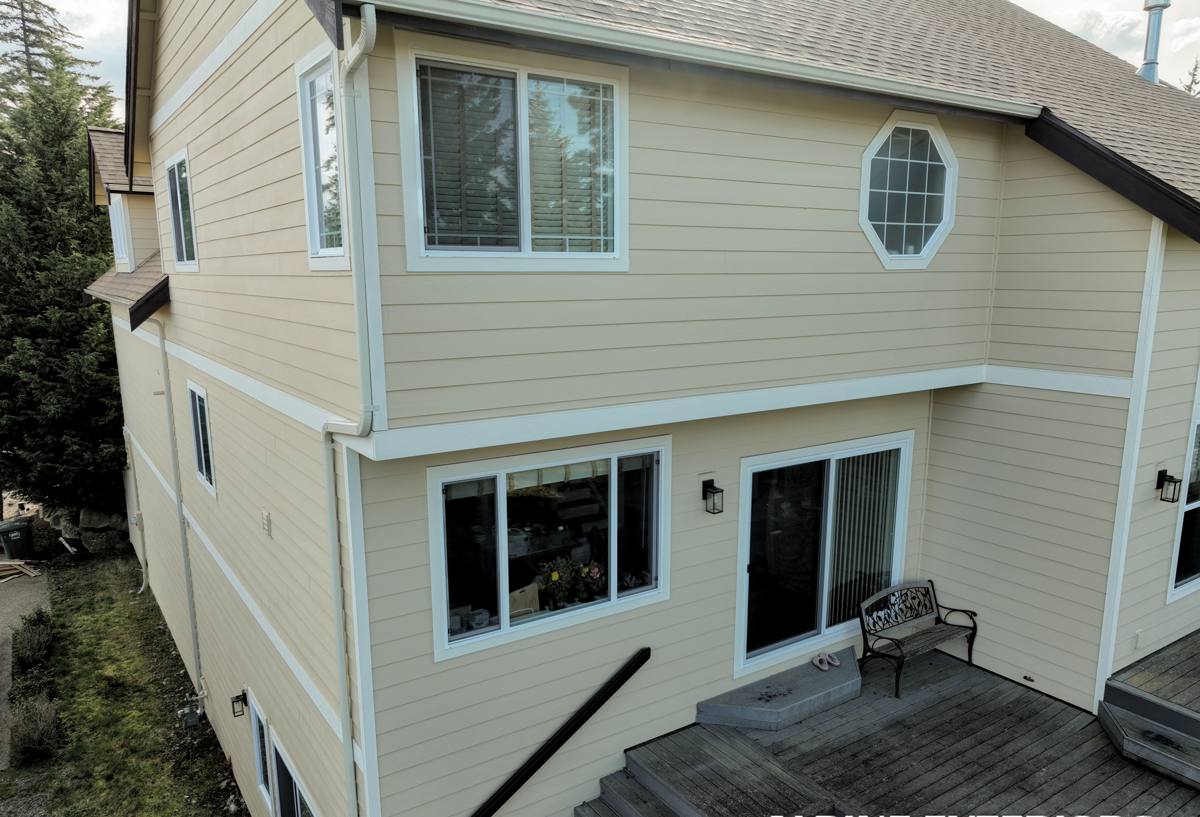
Why Standard Wood Decking Struggles Here
Pressure-treated pine is still common on older Largo homes, and it can work, but it asks a lot of the homeowner. Pinellas County's humidity keeps wood decking damp for large parts of the year, which accelerates the checking, splintering, and fastener corrosion that eventually make a deck feel unsafe underfoot. UV exposure grays and dries the surface fibers, and the wet-dry cycle from Florida's summer storm pattern is what actually breaks wood down faster than sun alone. None of that is a defect in the lumber — it's just what happens to a cellulose-based product left outdoors in a subtropical climate without constant upkeep.
Composite decking was developed to reduce that maintenance burden. The better products resist moisture absorption, don't require annual sealing, and hold their color longer under UV. That's the honest case for composite in a market like Largo — not that wood is bad, but that composite trades a higher material cost for dramatically lower ongoing maintenance in exactly the conditions this area produces every summer.
What "Correct" Composite Decking Looks Like
Substructure First
The composite boards get the attention, but the frame underneath is what determines whether the deck lasts. In Largo's ground conditions, that means:
- Ledger board flashed and fastened correctly where the deck attaches to the house, with proper water diversion so runoff can't get behind siding or into the rim joist
- Joist spacing tightened to the composite manufacturer's spec — most composite boards need closer joist spacing than solid wood, especially on diagonal or picture-frame layouts
- Structural fasteners and hardware rated for coastal/high-corrosion environments, not standard galvanized
- Post footings sized and set to local frost-free, wind-load requirements — Pinellas County wind exposure categories matter for anything attached to the house
- Ventilation gaps maintained under the deck so moisture doesn't sit trapped against the framing
A composite deck installed over an undersized or poorly fastened frame will still fail — the boards just delay the visible symptoms. This is the part of the job that doesn't show up in photos but is the actual difference between a deck that's solid in ten years and one that isn't.
Fastening and Board Layout
Composite boards expand and contract with temperature more than people expect, and Largo's swing between cool winter mornings and hot, humid afternoons is real. We leave manufacturer-specified gapping between boards and around any fixed obstructions (posts, walls, planters) so the deck has room to move without buckling or pulling fasteners loose. Hidden fastener clip systems are worth the extra labor on most jobs — they keep the deck surface free of screw heads that can back out or corrode, and they give a cleaner look that holds up over time.
Salt Air, Wind, and Storm Considerations Specific to Largo
Homes on or near the water anywhere in this part of Pinellas County are dealing with salt-laden air even a few miles inland, and it accelerates corrosion on anything ferrous. That's why hardware selection matters as much as board selection — stainless or coated fasteners rated for coastal exposure aren't an upsell, they're the difference between hardware that lasts and hardware that starts staining and weakening within a few seasons.
Wind is the other factor. Hurricane-force gusts put real uplift and racking load on an attached deck, particularly around the ledger connection and any railing posts. Railings need to be through-bolted into properly blocked framing, not just screwed to composite fascia. We build every deck to hold up under the wind loads this region actually sees, not the minimum that gets a permit signed off.
Choosing Between Composite Product Tiers
Composite decking spans a wide range of price and performance. The table below is a general guide to what separates the tiers — not a specific brand recommendation, since the right product depends on budget, sun exposure, and how the deck will be used.
| Tier | Core Construction | Typical Behavior in FL Climate | Maintenance |
|---|---|---|---|
| Entry-level composite (uncapped or lightly capped) | Wood-plastic blend, minimal or no protective cap | More prone to moisture absorption and fading; can mold in shaded, humid spots | Periodic cleaning required; shorter realistic lifespan here |
| Mid-range capped composite | Wood-plastic core with a polymer cap on most or all sides | Good UV and moisture resistance for most Largo yards | Occasional wash-down; no sealing needed |
| Premium capped composite / PVC-composite hybrid | Fully encapsulated core, higher-density formulation | Best resistance to heat, humidity, and salt air; holds color longest | Lowest maintenance; best long-term value in coastal exposure |
Our standard is to steer homeowners away from uncapped, budget composite in this specific climate — not because it's a bad product everywhere, but because Pinellas County's combination of heat, humidity, and afternoon rain is close to a worst-case scenario for anything that isn't fully protected against moisture intrusion. That's an honest trade-off conversation, not a knock on any manufacturer.
Color, Heat, and Comfort Underfoot
Darker composite boards look great in photos but run noticeably hotter underfoot in direct Florida sun — a real consideration for a deck that'll get used barefoot in July. Lighter and mid-tone colors stay more comfortable through the hottest part of the day, and most manufacturers now offer streaked, multi-tonal colors that hide dirt, pollen, and everyday wear better than a solid dark color does. We walk through actual samples on-site so homeowners can see how a color reads in their own yard's light before committing.
Our Installation Process
- On-site evaluation: We assess the existing structure (if replacing an old deck), grade and drainage around the footprint, sun exposure, and how the space will actually be used.
- Structural plan: Joist layout, footing placement, and hardware spec get set to current wind and load requirements before any material is ordered.
- Permitting: We handle the permit process with Pinellas County/City of Largo as required for the scope of work.
- Framing and inspection: Substructure goes in first and gets inspected before decking is installed — this is where problems are caught, not after boards are down.
- Composite installation: Boards are laid with correct gapping, hidden fasteners where specified, and clean transitions at stairs, railings, and the house connection.
- Final walkthrough: We check fastening, gapping, railing security, and finish details with the homeowner before calling the job complete.
Maintenance Reality Check
Composite is lower-maintenance than wood, not maintenance-free. A realistic care routine in this climate looks like:
- Rinse or sweep off pollen, leaves, and organic debris regularly — trapped organic matter is what causes surface mold in humid climates, not the board material itself
- Wash with mild soap and water a few times a year, more often in shaded or low-airflow areas
- Check railing hardware and fastener points annually for corrosion, especially on homes closer to the water
- Keep planters and furniture feet from trapping moisture directly against the board surface
- Confirm under-deck ventilation stays clear of debris that can hold moisture against the framing
Why Hire a Crew That Already Works in Largo
Deck failures in this area are rarely about the composite boards themselves — they're almost always about a substructure that wasn't built for local wind and moisture conditions, or hardware that wasn't rated for salt air. A crew that installs decks across Seminole, Largo, and the rest of Pinellas County on a regular basis already knows the wind exposure categories, the permitting expectations, and which fastener and framing choices actually hold up here versus which ones look fine for the first year and then don't. That local repetition is what keeps a deck structurally sound a decade in, not just good-looking on install day.
If you're weighing a new composite deck or replacing an aging wood one, we're happy to walk the site, talk through product tiers honestly, and give you a straightforward estimate — no pressure, no upsell. The form below gets you a free estimate for your Largo property.