 Seminole Siding
 Why Decks Wear Out Faster on Indian Shores
Indian Shores sits on a narrow barrier island in Pinellas County, with saltwater on both sides — the Gulf of Mexico to the west and the Intracoastal Waterway to the east. That location is part of what makes the area beautiful, and part of what makes it hard on a deck. Salt-laden air moves across the island constantly, not just during storms, and it settles on every exposed surface, fastener, and connector a deck has. Add in intense year-round Florida UV and the wind-driven rain that comes with almost every serious summer storm, and you have a combination that ages an ordinary deck well before its time.
A deck built to a generic, inland specification usually doesn't hold up here the way it would forty minutes east. Fasteners corrode from the inside of the wood outward, where you can't see it. Railing posts loosen. Boards cup, silver, and split. None of that means Indian Shores homes can't have a great deck — it means the deck has to be built for this exposure from the ground up, not patched together with materials meant for a drier, calmer climate.
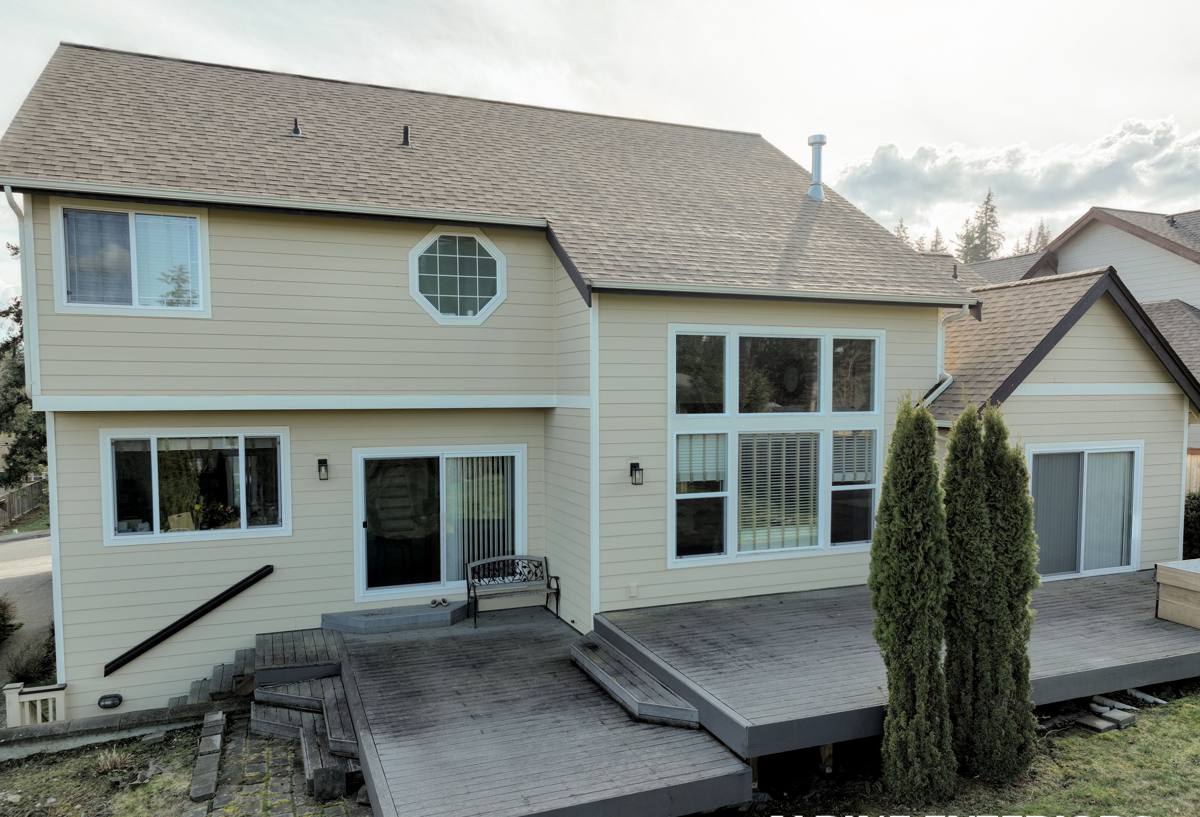
What Salt Air, UV, and Storm Wind Actually Do to a Deck
Salt Air and Corrosion
Salt is an electrolyte. It accelerates corrosion in any metal it touches, and a deck is full of metal — joist hangers, structural screws, post bases, railing brackets, bolts. On a standard build using mill-galvanized hardware, that corrosion can start within a few years on a barrier island, well before the wood itself is due for replacement. Once a hanger or bracket corrodes, it loses holding strength quietly, with no visible warning until something moves or fails.
UV Exposure and Material Breakdown
Florida sun is strong nearly every day of the year, and a deck has no shade of its own. UV breaks down the lignin in wood fibers, which is what causes graying and surface roughness, and it degrades the resins and colorants in composite and PVC decking over time as well. Every decking material handles UV differently, and that difference matters more here than it would in a climate with a real winter to slow the process down.
Wind-Driven Rain and Hidden Rot
Afternoon storms in this part of Pinellas County rarely fall straight down — wind pushes rain sideways, driving it up under railings, behind ledger boards, and into any gap where flashing was skipped or done poorly. That's how a deck develops rot in framing members that never look wet from the top. The ledger board, where the deck attaches to the house, is the single most common place this shows up, and it's also the connection that matters most structurally.
Hurricane-Force Wind Loads
Beyond daily wear, a deck on Indian Shores has to be engineered for real wind events. Florida Building Code wind-load requirements are not the same as a national baseline code, and a barrier island location sits at the higher end of that range. Post connections, railing attachment, and joist-to-ledger connections all need hardware and fastening patterns sized for uplift and lateral load, not just vertical weight.
Signs Your Deck Needs Replacement, Not Another Repair
Not every problem means a full tear-out. But on a coastal deck, certain signs point to structural issues that a board swap or a fresh coat of stain won't fix:
- Soft, spongy, or spring-feeling decking underfoot, especially near the house or stair landing
- Rust streaks below joist hangers, post bases, or bolt heads
- A railing post that wiggles at the base even after you tighten the visible hardware
- Gaps or separation where the deck meets the house siding or ledger board
- Wood that's gone gray and fibrous, with splinters lifting on the surface
- Fasteners that are visibly corroded, backed out, or leaving black or rust-colored stains
- A deck that's more than 15-20 years old and has never had its structural connections inspected
- Any noticeable movement or bounce when several people are standing on it at once
If you're seeing more than one or two of these, especially the structural ones, it's worth getting the framing looked at before deciding between repair and replacement.
What a Correctly Built Replacement Deck Includes
A deck that's going to hold up on this island needs to be built differently below the decking boards than a standard inland deck, even if it looks similar from the top. The framing, hardware, and attachment details are where a coastal-grade deck earns its longevity.
| Component | Standard Inland Approach | What We Build for Indian Shores |
|---|---|---|
| Ledger attachment | Lag screws, basic flashing | Through-bolted where possible, continuous flashing and moisture barrier tape at the house connection |
| Fasteners and hardware | Standard galvanized | Corrosion-resistant stainless or heavy-coated hardware rated for coastal/marine exposure |
| Post bases | Embedded or surface-mount, mixed materials | Elevated, non-corrosive post bases that keep post end grain off standing water |
| Joist hangers | Mill galvanized | Coastal-rated coating or stainless, matched to fastener type to avoid galvanic reaction |
| Railing connections | Code minimum | Reinforced for Florida wind-load requirements, checked against current code height and baluster spacing |
The theme across all of these is the same: on a barrier island, the connections and hardware fail long before quality decking boards do. Building the frame right is what determines whether the deck is still solid in fifteen years, not just good-looking in the first two.
Choosing a Decking Surface for Indian Shores
There's no single "best" decking material for every home here — it depends on budget, how much upkeep you're willing to do, and how close the deck sits to open salt water and direct sun. Here's how the common options actually compare in this environment, honestly, without the marketing spin.
| Material | How It Handles This Climate | Upkeep | Relative Cost |
|---|---|---|---|
| Pressure-treated wood | Affordable and repairable, but needs regular sealing to resist UV graying and moisture cycling | Higher — sealing every 1-2 years | Lowest upfront |
| Capped composite | Resists UV fading and moisture better than wood; quality varies significantly by brand and product line | Low — occasional cleaning | Mid to upper |
| PVC decking | Fully synthetic, handles humidity and salt exposure well, no wood fibers to rot | Lowest | Highest upfront |
We're honest with homeowners that "maintenance-free" is a marketing phrase, not a guarantee — every material on this list benefits from periodic cleaning to keep salt film and organic buildup from working into the surface. What changes between materials is how much active maintenance they demand and how they age under UV and salt exposure over ten-plus years, not whether they need any care at all.
Permits, Codes, and Wind-Load Requirements
Deck replacement in Pinellas County is a permitted job, not a weekend project you can skip paperwork on. Depending on the scope, that typically involves a building permit, an engineered or code-compliant framing plan for the ledger and footing layout, and inspections at key stages of construction. Because Indian Shores sits in a coastal wind zone, the Florida Building Code's wind-load provisions apply in full, which affects everything from post spacing to how the railing is anchored. Skipping or shortcutting this process doesn't just risk a fine — it can leave you with a deck that won't pass inspection at resale, or worse, one that's genuinely under-built for the wind it will eventually see.
Our Deck Replacement Process
- On-site evaluation. We assess the existing deck's framing, ledger connection, and any hidden moisture or corrosion damage, not just the surface condition.
- Plan and material selection. We walk through decking and hardware options based on your budget, how the deck is used, and its exposure to sun and salt spray.
- Permitting. We handle the permit application and any required drawings for Pinellas County and the applicable building code.
- Demolition and structural rebuild. Full tear-out of the old deck, with the ledger, footings, and framing rebuilt to current code and coastal-hardware standards.
- Decking, railing, and finish work. Installation of the chosen decking material and code-compliant railing system, with fastening details matched to the hardware and material.
- Inspection and final walk-through. We coordinate the required inspections and walk the finished deck with you before calling the job complete.
Why Hire a Crew That Already Works Indian Shores
A contractor who mostly builds decks a few miles inland isn't necessarily thinking about galvanic corrosion between dissimilar metals, or why the ledger flashing detail matters more here than it does on a house with no salt exposure. Those aren't exotic problems — they're just specific to barrier island and immediate-coastal work, and they show up as callbacks two or three years down the line if they're missed the first time. Working regularly in Seminole and along this part of Pinellas County means we're specifying hardware, fasteners, and flashing details with this exposure in mind from the first conversation, not learning it on your project.
It also means we're familiar with the county permitting process for this area and the practical realities of building on an island lot — access, staging materials, and working around the tighter footprints common to Gulf-front and canal-front properties.
Getting Started
If your deck is showing its age, feels less solid than it used to, or you're planning ahead for a replacement rather than reacting to a failure, we're glad to take a look and give you a straight assessment of what it needs. Use the form below to request a free, no-pressure estimate for your Indian Shores property — there's no obligation, and we'll tell you honestly whether you're looking at a repair or a full replacement.