 Seminole Siding
 Why Kenneth City Siding Takes a Different Kind of Beating
Kenneth City is a small, tightly packed community wrapped almost entirely by Seminole and unincorporated Pinellas County, and it shares the same exposure every home in this part of the Gulf coast deals with: intense sun nearly every day of the year, tropical downpours that come in sideways on a stiff onshore breeze, and salt-laden air drifting in off the water. None of that is unique to any one street or subdivision here — it's the baseline for every exterior wall in the area — but it adds up differently depending on what material is actually on the wall.
Wood-based siding swells, splits, and rots where moisture gets trapped. Vinyl softens and warps in sustained heat and can crack in a wind event. Cheaper composite panels that look fine on a spec sheet often can't hold a factory finish through a Florida summer without chalking or fading within a few years. Fiber cement doesn't eliminate every one of these risks, but it's built from a different starting point — a cement, sand, and cellulose fiber formulation that doesn't absorb water the way wood does, doesn't soften in heat the way vinyl does, and holds paint and factory finishes far longer than most alternatives. That's the whole reason it's become the standard material for homes in this climate, and it's the only siding material we install.
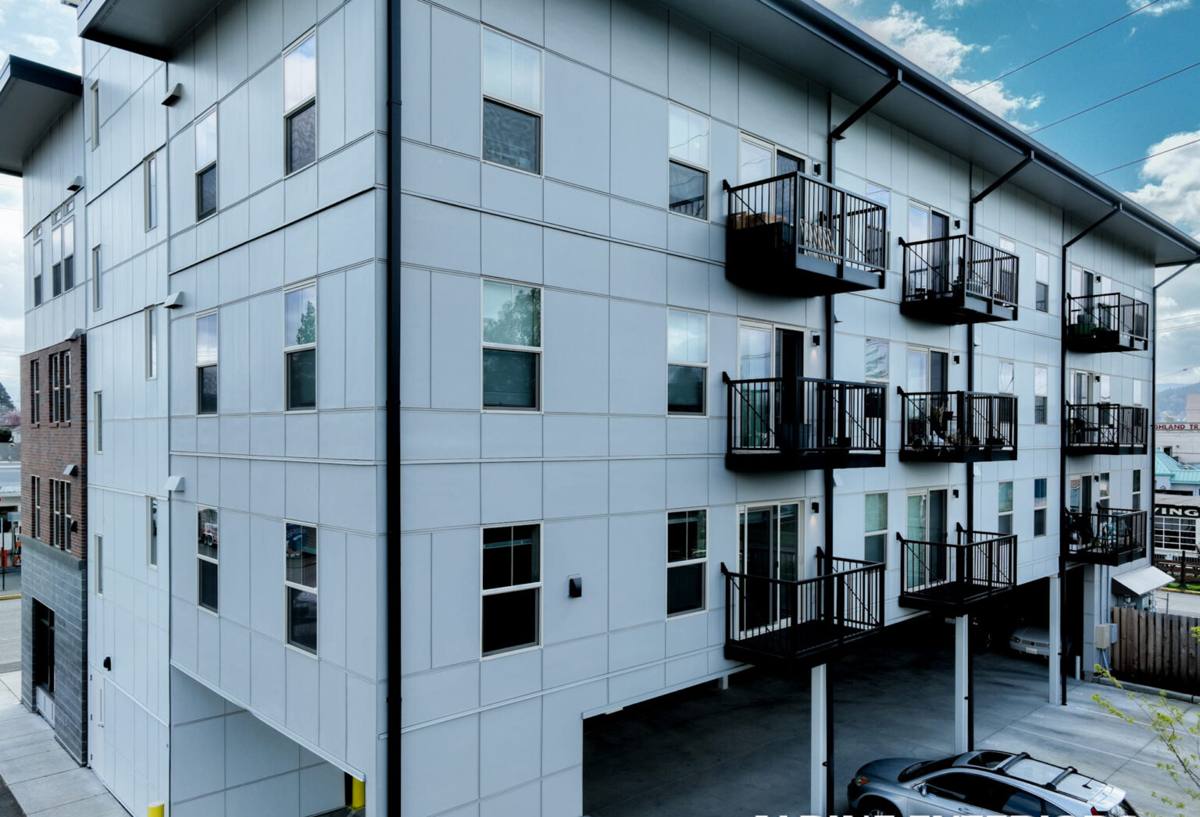
What Kenneth City Homes Actually Need From Their Siding
A siding job here has to answer to four separate stresses at once, not just one:
- Wind load: Florida's building code requires siding assemblies to be engineered and fastened for the wind speeds mapped for this part of Pinellas County — that's a fastening schedule question, not a cosmetic one.
- UV exposure: Year-round sun breaks down cheap coatings and unstabilized substrates faster than almost anywhere else in the continental US.
- Wind-driven rain: Storms here don't just fall, they push — water gets forced sideways and upward under laps and around penetrations if the water-resistive barrier and flashing details aren't right.
- Salt air: Even a few miles inland from the Gulf, airborne salt accelerates corrosion on fasteners, trim, and anything metal that isn't rated for coastal exposure.
Any one of these a siding product can survive on its own. All four at once, over 20-plus years, is what separates a correct installation from one that just looks correct on installation day.
Why We Install James Hardie and Nothing Else
We standardized on James Hardie fiber cement siding specifically because it's engineered around climates like this one. Hardie's HZ5 product line is formulated for hot, humid, storm-exposed regions — it resists moisture intrusion better than the general-market version of the same product line sold in drier climates, and it carries a warranty that reflects that engineering. The ColorPlus factory finish is baked on under controlled conditions rather than sprayed on site, which means it holds color and resists UV fade and salt-air chalking far longer than a field-applied paint job.
We don't install LP SmartSide, vinyl, or other fiber cement brands, and that's a deliberate standard, not a sales pitch. Non-Hardie composite and engineered-wood products vary widely in how they handle the moisture and UV load specific to the Gulf coast, and we'd rather stand behind one system we know performs here than juggle installation specs and warranty terms across several product lines. If a homeowner wants a different product, we're upfront that it's not something we do — we'd rather say that plainly than install something we can't fully stand behind.
Fiber Cement vs. Other Common Siding Materials
| Material | Wind Performance | UV / Fade Resistance | Moisture Behavior | Typical Lifespan Here |
|---|---|---|---|---|
| James Hardie fiber cement | Engineered fastening schedule, non-combustible | Factory ColorPlus finish, minimal fade | Doesn't absorb water like wood; needs correct flashing | 30+ years to first repaint need |
| Vinyl siding | Can deform or blow off in high wind | Fades and chalks faster in constant sun | Doesn't rot, but traps moisture behind it if installed loose | 15-25 years before visible wear |
| Untreated/primed wood | Adequate if fastened correctly | Coating breaks down quickly in UV | Absorbs water, prone to rot near grade and penetrations | 7-15 years before major maintenance |
| Engineered wood composite | Varies by manufacturer spec | Varies; some fade or chalk in heat | Edge-swell risk if cut edges aren't sealed | Varies widely by brand |
What a Correct Installation Actually Involves
The material is only half the equation. Most fiber cement failures we're called to inspect trace back to installation shortcuts, not a bad product. A correct job on a Kenneth City home includes:
Substrate and Moisture Barrier
Old siding comes off down to the sheathing so we can actually see what's underneath — soft spots, prior water damage, or rot don't get covered up, they get addressed. A code-compliant water-resistive barrier goes on before a single piece of siding, lapped correctly so water sheds outward and down, never sideways into a seam.
Flashing and Penetrations
Every window, door, hose bib, and vent penetration is a place wind-driven rain will try to get behind the siding. Proper flashing at these points is not optional trim work — it's the actual water management system. This is where corner-cutting shows up years later as hidden rot, and it's the detail we spend the most time on.
Fastening for Wind
Hardie panels and planks have specific fastener type, spacing, and embedment requirements that shift depending on the wind exposure category of the site. We fasten to the schedule required for this area, not a generic minimum, and we use fasteners rated to resist the corrosion that comes with salt air.
Clearances and Finishing
Siding needs proper clearance from grade, roof lines, and decks so it isn't sitting in standing water or trapped moisture. Cut edges get factory-matched sealant so the exposed fiber cement isn't left absorbing water where it was field-cut.
Our Process, Start to Finish
- On-site assessment: We walk the exterior, check the current siding and sheathing condition, and measure wind exposure and elevation details specific to the property.
- Written scope and estimate: You get a clear breakdown of what's being removed, what's being replaced, and what product and color line is being used — no vague allowances.
- Tear-off and sheathing inspection: Old material comes off, and any damaged sheathing is flagged and addressed before covering it back up.
- Weather barrier and flashing installation: The water management layer goes in first and gets inspected before siding starts.
- Hardie installation: Panels or planks go on to the fastening schedule for this site's wind exposure, with trim and penetrations detailed as we go.
- Final walkthrough: We review the finished job with you, cleanup included, before calling it done.
Why Hiring a Crew That Already Works This Area Matters
A siding crew that mostly works inland or in a different wind zone will sometimes under-spec the fastening schedule or skip flashing details that don't matter as much where they usually work. A crew that regularly works Seminole, Kenneth City, and the surrounding Pinellas County communities already knows the wind exposure categories that apply here, has already pulled permits with the local building department, and has already seen what wind-driven rain does to a poorly flashed corner after a few storm seasons. That familiarity isn't a marketing line — it changes what gets built into the wall before the siding ever goes on.
It also matters for warranty follow-through. James Hardie's transferable warranty coverage depends on correct installation to their published specs. A local crew that installs Hardie regularly in this exact climate is far more likely to get those details right the first time, and is still around locally if a warranty question ever comes up years later.
Maintenance and What to Expect Long-Term
Fiber cement is low-maintenance, not no-maintenance. A short annual routine keeps a Hardie installation performing the way it's designed to:
- Rinse the exterior periodically to clear off salt residue and airborne grime, especially on sides facing prevailing wind.
- Walk the perimeter after major storms and check caulking at trim joints, windows, and penetrations for cracking or separation.
- Keep irrigation heads and sprinklers from spraying directly on siding — constant wetting shortens the life of any exterior finish.
- Trim vegetation back from the siding so leaves and moisture aren't held against a wall section.
- Repaint on the manufacturer's recommended cycle if you choose a field-applied finish rather than staying with a factory ColorPlus color.
Warranty and What It Actually Covers
James Hardie backs its fiber cement products with a non-prorated limited warranty that transfers to a new owner if the home sells, which matters to buyers evaluating an exterior in a coastal market. ColorPlus finishes carry their own finish warranty covering fade and coating performance separately from the substrate. Warranty terms are specific about installation to Hardie's published instructions, which is another reason correct installation isn't a detail to shortcut — it's what keeps the coverage intact if it's ever needed.
If your Kenneth City home is due for new siding, or you want a straight answer on what your current exterior actually needs, we're happy to take a look and put together a written estimate — no pressure, no obligation. The form below gets you on our schedule.