 Seminole Siding
 Madeira Beach Asks More of Siding Than Most Homes Ever See
Madeira Beach sits right on the Gulf, which means its homes take on a combination of stresses that inland Pinellas County properties simply don't deal with in the same intensity. Salt-laden air moves through every day, not just during storms. UV exposure runs strong nearly year-round. Wind-driven rain finds its way into every seam and gap a builder left loose. And when a tropical system pushes through, hurricane-force gusts test every fastener, joint, and panel on the house at once. Siding on a barrier island property isn't cosmetic — it's a working weather barrier that has to hold up to all four of these forces simultaneously, for decades, without babying.
That's the lens we bring to every Madeira Beach siding project. It's also why we don't treat "siding replacement" as a one-size-fits-all service. What goes on a Madeira Beach home, and how it's installed, is different from what we'd spec a few miles inland in Seminole.
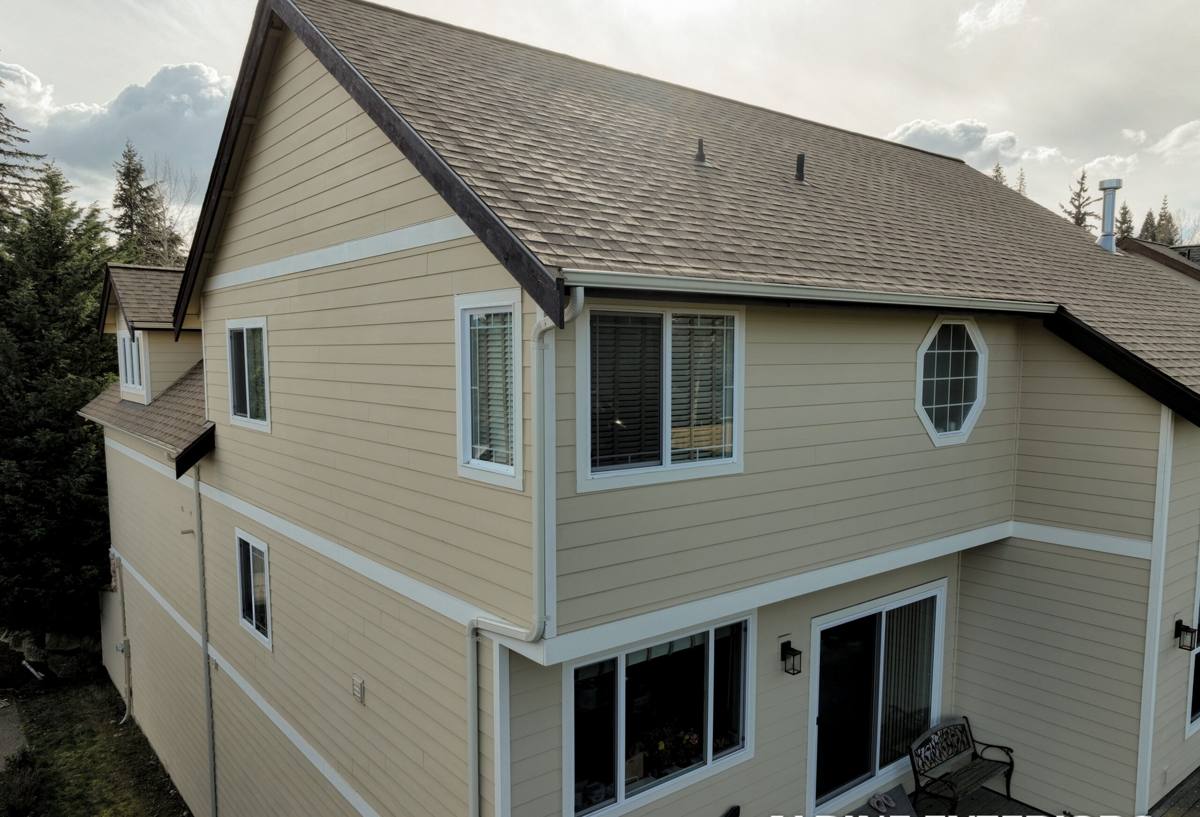
Why We Install Only James Hardie Fiber Cement
We made a decision as a company to install James Hardie fiber cement siding exclusively — not vinyl, not LP SmartSide, not cedar or primed spruce. That's not a marketing angle; it's a standard we hold because of what we've seen these products do (and not do) over time in coastal exposure. Vinyl softens and can distort in sustained high heat and direct sun, and it has physical limits in extreme wind events. Wood and wood-based products need consistent maintenance to keep moisture out, and a missed year or two near salt air adds up fast. James Hardie's fiber cement is non-combustible, doesn't provide a food source for pests or rot organisms, and holds paint and factory finish far more stably across big temperature and humidity swings.
None of this means other products can't work somewhere — it means we've decided we're not the crew to install them, because we'd rather stand behind one system we trust completely than offer several we have reservations about.
HZ5: The Part of the Hardie System Built for This Exact Climate
James Hardie engineers its siding by climate zone, and the HZ5 formulation is the one specified for hot, humid, high-moisture regions like the Gulf Coast of Florida. It's engineered with different moisture-management properties than the HZ10 product used in colder, freeze-thaw climates further north. For a Madeira Beach home, that distinction actually matters — HZ5 boards are formulated to resist the kind of sustained humidity and moisture cycling that comes with living a few blocks from open water, rather than the freeze-thaw cracking that's a non-issue here.
This is one of the reasons "any Hardie install" isn't automatically a correct Hardie install. The product has to be the right variant for the zone, and it has to be installed the way the manufacturer's specifications call for in that zone — which brings us to installation itself.
Getting the Product Line Right
Hardie offers several profiles — lap siding in a few reveal widths, board-and-batten vertical panels, and shingle-style panels — plus a range of factory colors. For Madeira Beach homes, the right choice usually comes down to the home's architectural style, HOA or neighborhood expectations, and how much of the facade sees direct afternoon sun, since darker colors absorb more heat and UV load over time.
What a Correct Installation Actually Involves This Close to the Water
Fiber cement siding is only as good as the installation behind it. Near the Gulf, a handful of details matter more than they would inland, because the margin for error against wind-driven rain and storm-force gusts is thinner.
The Weather-Resistive Barrier
Before a single plank goes up, the house needs a continuous, properly lapped weather barrier with flashing integrated at every window, door, and penetration. This is the layer that actually stops water intrusion — the siding is the second line of defense, not the first. Skipping or rushing this step is the single most common cause of hidden moisture problems behind siding, coastal or not.
Fastening and Gapping
James Hardie specifies exact fastener types, spacing, and placement, along with minimum gaps at butt joints, corners, and around trim to allow for expansion and to keep water from bridging into the wall assembly. In a high-wind zone, correct fastener schedule isn't optional — it's what keeps panels attached in a serious wind event instead of becoming airborne debris.
Caulking and Joint Treatment
Every joint that's supposed to be sealed needs the right sealant, applied correctly — not just for looks, but because wind-driven rain will find any gap that's caulked thin or skipped. We also make sure the bottom starter course and any trim transitions are detailed so water sheds away from the wall rather than pooling or wicking behind it.
ColorPlus Factory Finish vs. Field Painting in Salt Air
James Hardie's ColorPlus finish is baked on at the factory in a controlled process, which gives it more consistent adhesion and UV resistance than a field-applied paint job over standard primed board. In a salt air environment, that matters because field-applied paint is more prone to early fading and touch-up needs when it's dealing with salt deposits plus constant UV — exactly the combination Madeira Beach sees daily. ColorPlus comes with its own dedicated finish warranty, separate from the substrate warranty, and it also means less time spent by the homeowner on repainting cycles.
We default to ColorPlus on coastal jobs for this reason. Primed board is still available for homeowners who want a fully custom color match, but it comes with a maintenance conversation up front, not after the fact.
Our Process for a Madeira Beach Siding Project
- Site assessment — we walk the exterior, check the existing substrate and sheathing condition, and look for any signs of prior moisture intrusion before quoting anything.
- Moisture and substrate check — especially important on older Madeira Beach homes, since what's underneath the old siding determines whether repairs are needed before new siding goes on.
- Tear-off and disposal — full removal of the old siding and proper haul-away, not siding-over-siding.
- Weather barrier and flashing install — the step that actually keeps water out, done before any Hardie product touches the wall.
- Hardie panel installation to manufacturer spec — correct HZ5 product, fastener schedule, gapping, and joint treatment as detailed above.
- Trim, caulking, and final detailing — corners, transitions, and penetrations sealed correctly.
- Final walkthrough — we go over the finished job with the homeowner before calling it done.
What Drives Cost on a Coastal Hardie Project
Every home is different, but the factors below are the ones that consistently move the number on a Madeira Beach job:
| Factor | Why It Matters |
|---|---|
| Home size and wall complexity | More corners, dormers, and trim transitions mean more labor and material cuts |
| Condition of the substrate | Hidden moisture damage found during tear-off requires repair before new siding goes on |
| Product profile and color | Lap, board-and-batten, and shingle profiles price differently; ColorPlus vs. primed affects long-term cost too |
| Accessibility | Multi-story sections, tight lot lines, or limited staging area affect labor time |
| Trim and accent work | Fascia, soffit, and trim replacement alongside siding adds scope but keeps the whole exterior consistent |
Maintenance Checklist for Homeowners Near the Water
James Hardie siding is low-maintenance compared to wood or vinyl, but "low-maintenance" isn't "no-maintenance," especially this close to salt air. A simple annual routine keeps a correctly installed system performing for the long haul:
- Rinse the exterior with a garden hose a few times a year to clear salt deposits, especially on Gulf-facing walls
- Walk the perimeter after major storms and check for loose trim, gapped caulk, or displaced panels
- Keep an eye on caulked joints around windows, doors, and corners — recaulk before a gap becomes a leak path
- Trim back landscaping so plants aren't holding moisture against the siding
- Have a professional inspection every couple of years, or after any named storm that directly affected the area
Why It Matters That We Already Work This Coastline
A crew that mostly works inland jobs can install Hardie siding competently and still miss the details that matter specifically on a barrier island. Wind-load expectations, salt exposure, and the realities of working on narrow beach-community lots are things you learn by doing them repeatedly, not by reading a spec sheet once. We work throughout Seminole and the surrounding Pinellas County coastline, including Madeira Beach, and that regular exposure to this specific climate is exactly why we hold to one product system and one installation standard rather than cutting corners to match a lower bid.
If you're weighing a siding replacement on a Madeira Beach home, we're glad to walk the exterior with you, look at what's actually going on behind the current siding, and give you a straight answer on what it needs. Reach out for a free, no-pressure estimate — the form below gets you started.