 Seminole Siding
 Deck Repair Built for Pinellas Park's Climate
A deck in Pinellas Park works harder than a deck almost anywhere else in the country. It sits outside through months of intense subtropical UV, gets soaked by wind-driven summer storms, and pulls in salt-laden air off the Gulf that settles into every joint, fastener, and board gap. None of that shows up as damage overnight. It shows up two or three years later as soft boards, rust-streaked screws, wobbly rail posts, and ledger connections that were never properly flashed to begin with. Our deck repair work in this neighborhood is built around that reality — we're not just patching what's visible, we're checking the parts of the structure that fail first in this climate and often get ignored until they're a safety problem.
Pinellas Park sits inland from the immediate coastline but still well within reach of salt air and the same wind and rain patterns that hit the rest of Pinellas County. Homes here see the same UV exposure, the same tropical downpours, and the same humidity swings that stress wood fiber, fastener coatings, and connector hardware. Whether your deck is wood, composite, or a mix of both, the repair approach has to account for how this specific environment attacks each material differently.
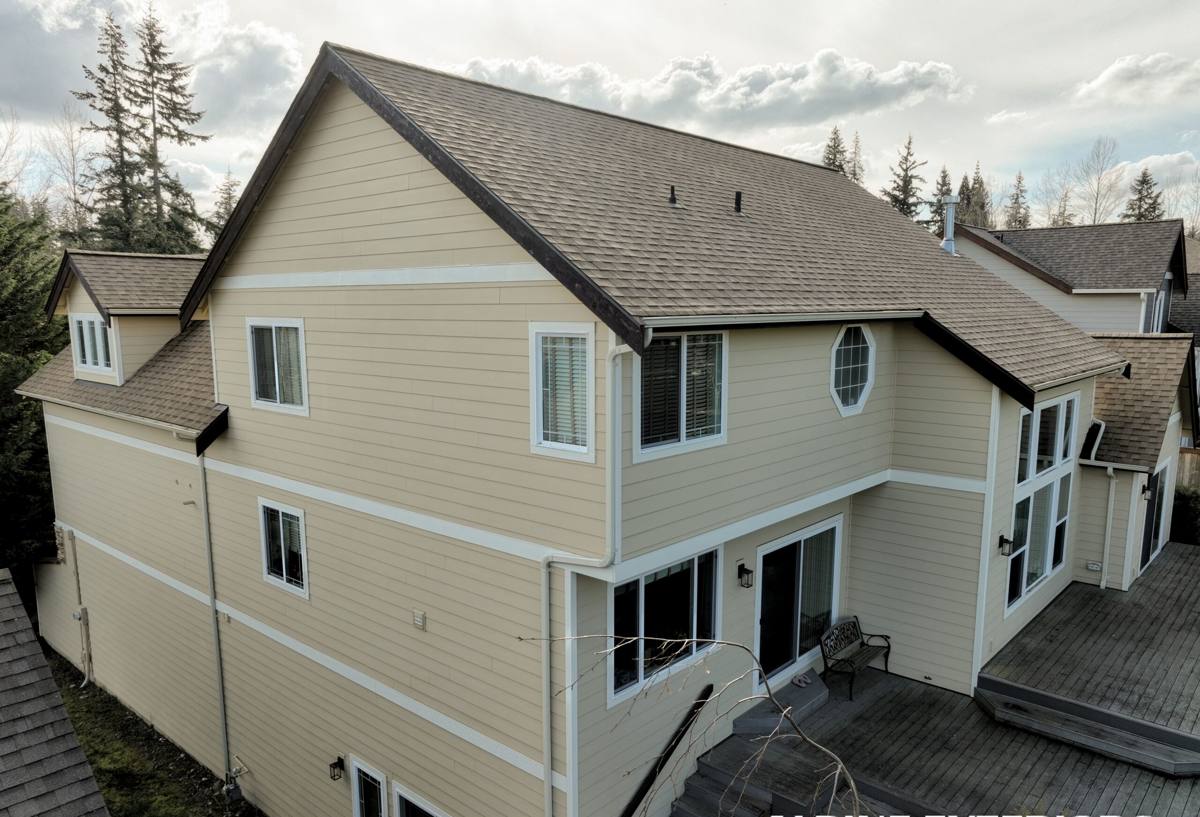
What Pinellas Park Homes Actually Need From a Deck Repair
Most deck repair calls in this area fall into a few recurring categories. Understanding which one you're dealing with matters, because the fix — and the cost — is very different depending on what's actually failing.
Common Problem Areas We See Locally
- Ledger board attachment: Where the deck ties into the house is the single most important structural connection on the whole deck, and it's also the area most exposed to water intrusion if flashing was skipped or installed wrong originally.
- Fastener corrosion: Salt air speeds up corrosion on screws, joist hangers, and bolts, especially anything that isn't rated for coastal exposure. Rust streaks bleeding out of a board are a sign the fastener underneath is failing.
- Soft or spongy decking: Wood-fiber decking that stays wet too long after storms starts to break down from the inside. By the time it feels soft underfoot, the damage is already advanced.
- Loose or leaning rail posts: Post connections take direct wind load during storms, and repeated gusts loosen them gradually even when nothing looks obviously wrong.
- Cracked or delaminating composite boards: Composite doesn't rot, but constant UV and heat cycling can still cause surface cracking, fading, or edge delamination on older or lower-grade product.
- Sun-damaged fasteners and caps: UV breaks down plastic fastener caps and plugs faster here than in milder climates, leaving exposed screw heads that then corrode.
What a Correct Deck Repair Actually Involves
A repair that only replaces what's visibly broken often misses the reason it broke in the first place. We approach every deck repair with the same order of operations, whether the job is a single board or a full rebuild of the substructure.
1. Structural Inspection First
Before we touch a single board, we check the framing underneath: joists, beams, posts, and — most importantly — the ledger connection to the house. Surface repairs on top of a compromised structure are a waste of money and, worse, a safety risk.
2. Moisture and Rot Mapping
We probe suspect areas rather than guessing from appearance alone. Wood that looks fine on the surface can be soft an inch below. We identify the actual boundary of damaged material so we're not replacing more than necessary, or leaving compromised wood in place.
3. Hardware Assessment
Every fastener, hanger, and connector gets evaluated for corrosion. In this environment, we typically recommend upgrading to stainless steel or coated hardware rated for coastal/high-moisture exposure, even if the original build didn't use it — cheap fasteners are one of the most common reasons decks fail early here.
4. Flashing and Water Management
Water management gets fixed, not just covered over. If the ledger board flashing is missing, damaged, or was never installed correctly, that gets corrected as part of the repair, not treated as a separate future project.
5. Rebuild With Matching or Upgraded Material
Depending on the deck's age and the homeowner's goals, we either match the existing material or recommend an upgrade to something more resistant to Florida's climate. We'll walk through the honest trade-offs of each option rather than pushing a single product.
Repair vs. Replacement: How We Help You Decide
Not every deck problem needs a full rebuild, but a deck that's been patched repeatedly over the years without addressing the underlying structure often reaches a point where repair costs start rivaling replacement. Here's a general framework for how we evaluate that decision on site.
| Factor | Leans Toward Repair | Leans Toward Replacement |
|---|---|---|
| Framing condition | Joists and beams are sound, damage is isolated | Multiple structural members show rot or corrosion |
| Ledger connection | Properly flashed, no water intrusion history | Signs of chronic leaking or missing flashing |
| Age of deck | Under 10-12 years, built to current fastening standards | Older than that, or built before coastal-grade hardware was standard practice |
| Extent of damage | Limited to a few boards or one section | Spread across most of the deck surface |
| Prior repair history | First repair, no recurring issues | Same areas have needed fixing more than once |
We'll always give you a straight answer on which side of that line your deck falls on, including the broad cost range for each path, before any work starts.
Wood vs. Composite: What We'll Tell You Honestly
Homeowners in Pinellas Park often ask whether to repair with the same wood species or switch to composite when boards need replacing. Both have a place, and the right call depends on budget, maintenance appetite, and how the deck is used.
Pressure-treated or naturally rot-resistant wood costs less upfront and is easy to spot-repair board by board, but it needs regular sealing or staining in this climate to hold up against UV and moisture — skip that maintenance for a couple seasons and you're back to the same soft-board problem. Composite decking costs more initially and doesn't need sealing, but it's less forgiving of poor substructure ventilation, and lower-grade composite can still fade or show surface wear under constant Florida sun. Our job is to lay out those trade-offs plainly rather than steer you toward whatever's easiest for us to install.
Our Deck Repair Process
- On-site inspection: We walk the full deck, probe suspect boards and posts, and check the ledger and framing before quoting anything.
- Written scope and estimate: You get a clear breakdown of what's failing, why, and what it takes to fix it correctly — no vague "we'll see once we open it up" pricing.
- Material selection: We discuss matching versus upgrading materials and hardware based on your budget and how long you want the fix to last.
- Repair execution: Damaged material comes out, structure gets corrected where needed, and new material goes in with coastal-rated fasteners and proper flashing.
- Final walkthrough: We check every repaired area with you before calling the job done, including the parts you can't easily see once decking is back on.
Simple Maintenance Checklist for Pinellas Park Decks
A few habits go a long way toward stretching the time between repairs in this climate.
- Sweep debris and standing water off the deck surface after storms rather than letting it sit
- Check for soft spots by walking the deck barefoot every few months — your feet catch what your eyes miss
- Look at fastener heads for rust streaking at least once a year
- Keep gutters and downspouts clear so runoff isn't dumping extra water near the ledger connection
- Re-seal or re-stain wood decking on the schedule recommended for the product, not just when it looks faded
- Trim back vegetation touching the deck to reduce trapped moisture and shade that keeps boards damp longer
Why a Crew That Already Works Pinellas Park Matters
Deck repair isn't a one-size-fits-all trade. A crew that mostly works inland, drier climates will default to assumptions about fastener life, flashing needs, and material choices that don't hold up here. Working regularly throughout Pinellas County means we're not guessing about how a ledger connection holds up after a few hurricane seasons, or which fastener grades actually last against salt air instead of just looking fine on the shelf. That local pattern recognition is what separates a repair that lasts from one you'll be paying for again in two years.
If your deck has soft spots, rust stains, loose rails, or you just haven't had it looked at in a while, we're happy to come take an honest look. There's no cost and no pressure for a straightforward inspection and estimate — the form below is the easiest way to get one scheduled.