 Seminole Siding
 Redington's Barrier Island Climate Puts Extra Load on Siding
Redington sits on the barrier island stretch of Pinellas County, just west of Seminole and close enough to the Gulf that salt-laden air is a daily fact of life, not an occasional nuisance. Siding here doesn't just need to look good — it needs to survive conditions that inland Florida homes rarely see in the same combination. Hurricane-force wind gusts, near-constant UV exposure, wind-driven rain that gets pushed sideways into wall assemblies, and airborne salt that accelerates corrosion on fasteners and trim all stack on top of each other. A siding product or installation that's adequate forty minutes inland can fail years early a few blocks from the water.
This isn't scare talk — it's the reason siding replacement decisions in Redington deserve more scrutiny than a simple "match the old color" swap. The material, the fasteners, the flashing details, and the crew's familiarity with barrier island exposure all matter more here than they do elsewhere in Seminole and greater Pinellas County.
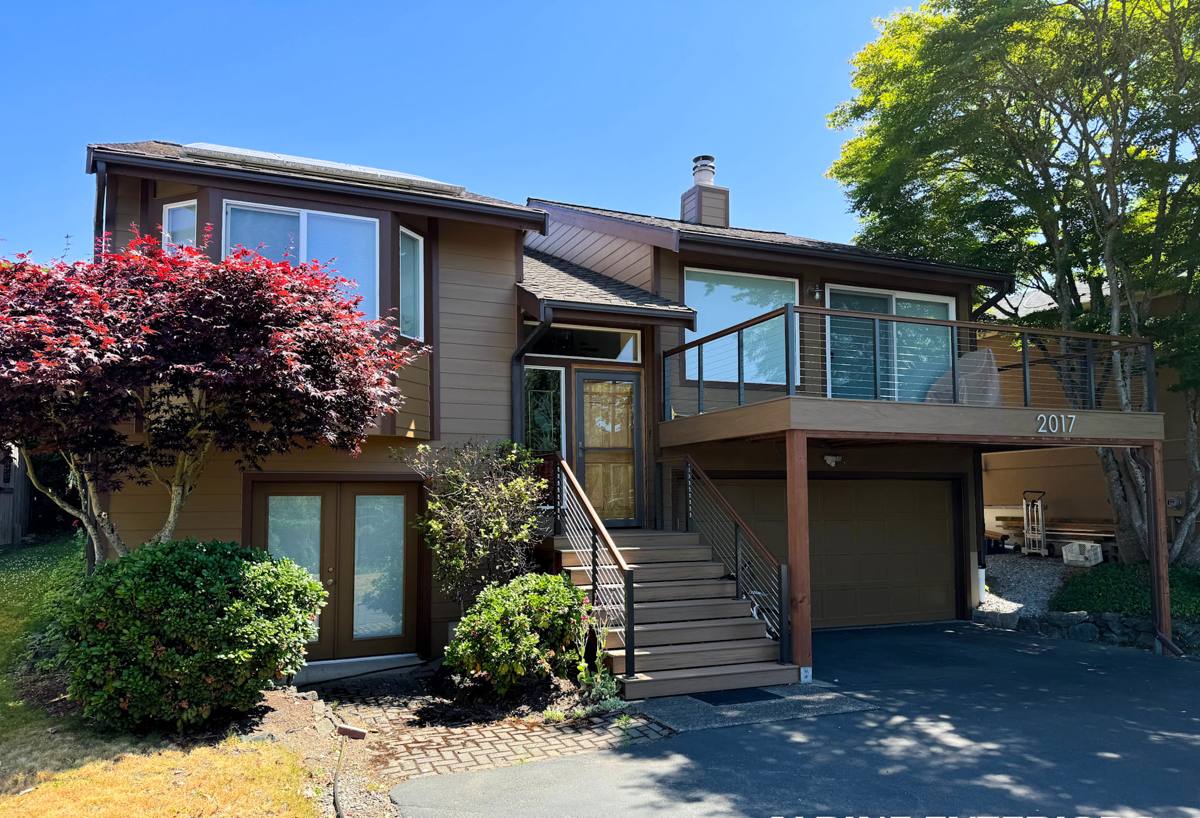
What Correct Siding Replacement Involves in This Environment
Siding replacement is really two jobs happening at once: removing what's failed, and rebuilding the wall assembly so the next installation actually lasts. Skipping the second part is the single most common reason siding fails early on Gulf-facing homes.
Tear-Off and Substrate Inspection
Once old siding comes off, the sheathing underneath tells the real story. Years of hidden moisture intrusion — often invisible from the outside — can leave soft spots, rot, or corroded framing behind old siding that looked fine right up until removal. A correct replacement stops here and repairs or replaces any compromised substrate before a single new panel goes up. Covering damaged sheathing with new siding just hides the problem for a few more years.
Weather-Resistive Barrier and Flashing
Behind every properly installed siding system is a weather-resistive barrier and a flashing plan around windows, doors, and penetrations that directs water back out, not into the wall cavity. In a wind-driven rain climate like Redington's, this layer does as much work as the siding itself. Seams, laps, and terminations all need to be sequenced correctly — water management is a system, not a single product.
Fastening for Wind Zone Requirements
Pinellas County's coastal areas fall within Florida's wind-borne debris region, which means fastening schedules, nail patterns, and edge clearances aren't optional details — they're what keeps siding attached when gusts spike during a storm. Corrosion-resistant fasteners matter just as much as fastener spacing; standard fasteners can corrode and lose holding strength well before the siding itself wears out in a salt-air environment.
Why We Install Only James Hardie Fiber Cement
We install James Hardie fiber cement siding exclusively. Not because it's the only decent product on the market, but because after years of coastal Florida work, it's the one system we're comfortable standing behind on homes exposed to this level of wind, sun, and salt. We don't install vinyl, LP SmartSide, Cemplank, Allura, or primed wood siding — each has real trade-offs in this climate that we're not willing to install and then have to explain to a homeowner five years later.
HZ5 Impact-Rated Line for Hurricane Wind Zones
James Hardie engineers specific product lines for different climate exposures, and their HZ5 line is built for high-wind, hurricane-prone regions like coastal Pinellas County. Fiber cement itself is non-combustible and doesn't warp, rot, or attract termites the way wood-based products can, and it holds up to sustained UV exposure without the chalking and fading that plagues some painted or vinyl products after a few Florida summers.
ColorPlus Factory Finish vs Field-Painted Products
James Hardie's ColorPlus finish is baked on in a factory-controlled process, which gives it far more consistent UV and fade resistance than siding that's primed and field-painted after installation. That matters directly in Redington: intense, near-constant sun is one of the fastest ways to break down a field-applied finish, and repainting siding on a coastal home is a recurring cost most owners would rather avoid. ColorPlus is backed by its own finish warranty separate from the substrate warranty, which is part of why we consider it the stronger long-term choice over site-painted alternatives.
Signs Your Redington Home Needs Replacement, Not Repair
Not every siding problem calls for a full replacement, but on coastal homes, it's easy to underestimate how far damage has spread beneath the surface. Watch for:
- Soft, spongy, or bubbling areas anywhere on the siding surface
- Visible cracking, warping, or buckling panels, especially on sun- and wind-exposed elevations
- Rust streaking or stained fasteners bleeding through the paint
- Paint that's chalking, peeling, or fading unevenly across the wall
- Gaps opening up at seams, corners, or trim boards
- Musty smells or visible staining on interior walls that back up to exterior siding
- Siding that flexes or feels hollow when pressed, a sign of trapped moisture behind it
- Multiple past repairs to the same section rather than a single clean fix
If you're seeing two or more of these on a home that's taken direct salt air and storm exposure for a decade or more, a full replacement is usually the more honest recommendation than another round of patching.
Our Siding Replacement Process, Step by Step
- On-site inspection. We assess the current siding, look for substrate damage, and check flashing and moisture history around windows, doors, and roof-to-wall transitions.
- Written estimate. You get a clear scope of work and pricing before anything is scheduled — no vague allowances.
- Tear-off. Old siding and trim come off down to the sheathing so we can see exactly what we're working with.
- Substrate repair. Any rotted, water-damaged, or corroded framing and sheathing gets replaced before moving forward.
- Weather barrier and flashing installation. New house wrap, window and door flashing, and penetration sealing go in per manufacturer specification.
- James Hardie installation. Panels, fasteners, and trim are installed to James Hardie's fastening schedule and clearance requirements for coastal wind zones.
- Final detailing and cleanup. Caulking, touch-up, and site cleanup close out the job, followed by a walkthrough with you.
Cost Factors for Siding Replacement Near the Gulf
Every Redington siding job is a little different, but the same handful of variables tend to drive the price up or down. Understanding them ahead of time makes it easier to evaluate an estimate.
| Factor | Why It Matters Here |
|---|---|
| Substrate condition | Hidden rot or water damage behind old siding adds repair scope that can't be quoted until tear-off |
| Home size and elevation count | More wall area and more corners, gables, and dormers mean more labor and trim work |
| Siding profile and accessories | Lap width, trim style, and soffit or fascia work all shift material and labor cost |
| Existing moisture barrier condition | A failed weather-resistive barrier means replacing that layer, not just the siding on top of it |
| Access and site conditions | Tight lot lines, landscaping, and second-story reach affect labor time |
| Color and finish selection | Factory-applied ColorPlus finishes vary slightly by color line and coverage needs |
We walk through these factors on-site before writing an estimate, so you know what's driving the number rather than getting a flat square-footage guess.
Why a Crew That Already Works Redington Matters
Barrier island and coastal construction in Pinellas County comes with its own permitting expectations and wind-load considerations that differ from siding work further inland. A crew that regularly works in and around Redington and greater Seminole already understands local permitting steps, typical inspection expectations, and the kind of exposure these homes face — so there's less guesswork and fewer surprises mid-project. That familiarity also shows up in smaller ways: knowing how salt air affects fastener selection over time, recognizing early substrate damage patterns common to Gulf-facing walls, and sequencing work around the area's weather patterns rather than a generic statewide schedule.
Hiring locally also means accountability doesn't disappear once the job wraps. A crew based in the area and doing repeat work in Seminole and its surrounding communities has a direct stake in doing the job right the first time.
After Installation: Caring for Hardie Siding in a Salt-Air Climate
James Hardie fiber cement is low-maintenance compared to most alternatives, but "low-maintenance" isn't "no-maintenance" this close to the Gulf. A periodic rinse to clear accumulated salt residue, a visual check of caulking at seams and trim after storm season, and prompt attention to any impact damage will keep the system performing the way it's designed to. None of this is heavy upkeep — it's a fraction of what field-painted or wood-based siding demands in the same environment.
Get a Straightforward Estimate
If your Redington home's siding is showing its age or storm wear, we're happy to take a look and give you an honest read on repair versus replacement — no pressure, no inflated scope. Fill out the form below to schedule a free estimate.