 Seminole Siding
 What Ridgecrest Homes Need From a Deck That Inland Decks Don't
Ridgecrest sits inside Seminole, in Pinellas County — close enough to the Gulf beaches that salt-laden air reaches every yard here, even on the streets a few miles from open water. That matters more than most homeowners realize when it comes to a deck. Pinellas is a peninsula; there's no truly "inland" lot here in the way there is in most of the country, which means every exterior structure, decks included, is dealing with some combination of salt exposure, intense year-round UV, and wind-driven rain almost every day it stands.
A deck built to a generic national spec can look fine for a year or two and still fail early here — fasteners corroding under the boards where nobody sees it, a ledger connection that was never properly flashed, framing that starts to soften from moisture it was never sealed against. Composite decking, built correctly for this specific set of conditions, holds up the way homeowners expect it to. This page covers what that actually takes: the materials, the build details, the permitting, and why a crew that already works Ridgecrest gets those details right the first time.
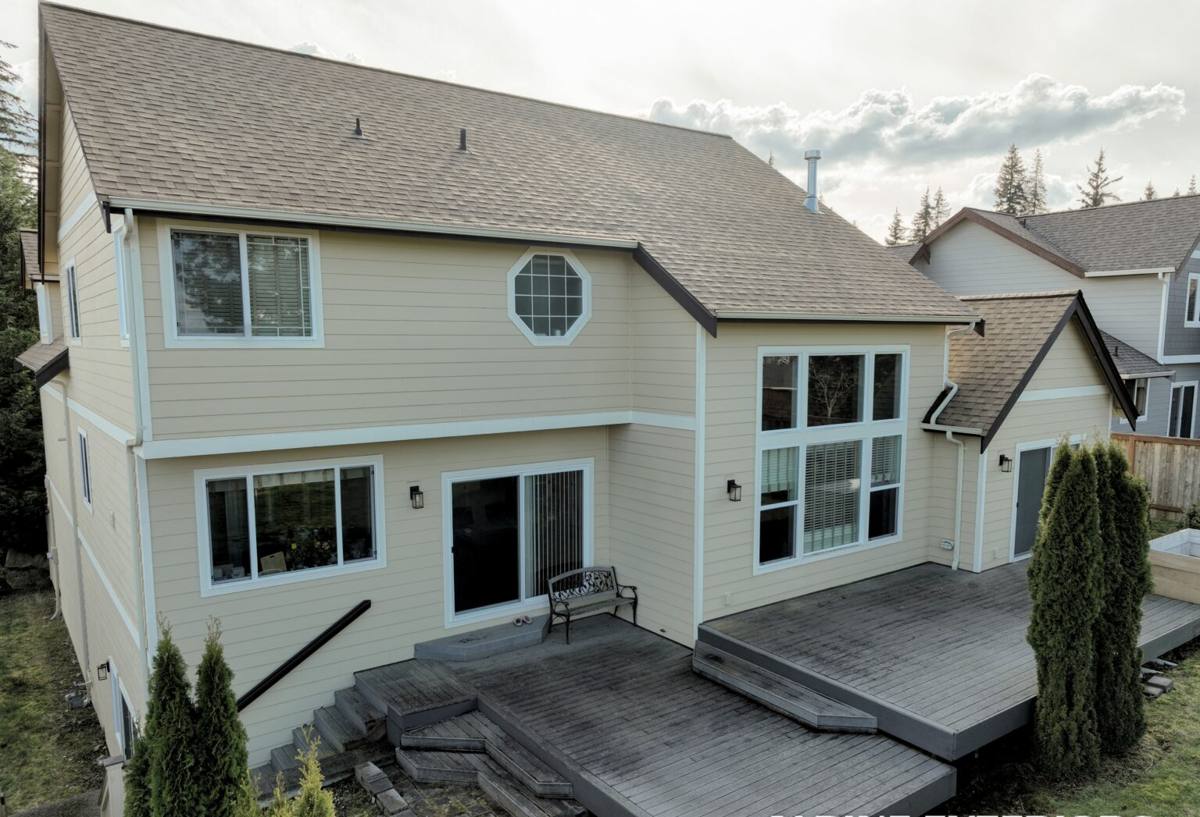
The Climate Factors That Actually Drive the Build
Salt Air, Even This Far Off the Coast
Salt doesn't stop at the beach. Onshore wind carries it inland across the whole Pinellas peninsula, and it settles continuously on exposed metal — fasteners, brackets, railing hardware — not just during storms. A standard-grade fastener corroding under a deck board loses holding strength long before there's any visible sign of a problem, which is why fastener spec isn't a place to save money on a deck out here.
UV Load That Doesn't Let Up
Florida gets some of the most intense, sustained UV exposure in the country, and a deck surface takes it directly, most of the day, most of the year, with no wall or roofline to shade it. UV breaks down unstabilized plastics and finishes over time, fades color unevenly, and on lower-quality or dark-colored boards drives surface temperatures high enough to matter for anyone walking on it barefoot in July. Cap quality and color both affect how much of that damage actually reaches the material underneath.
Wind-Driven Rain and Hurricane-Force Gusts
Hurricane season is a design condition here, not an occasional risk to plan around loosely. Framing, ledger attachment, and railing systems all need to be sized and fastened for wind loads that a deck in a milder climate simply doesn't see. Wind-driven rain also pushes moisture under and around boards in ways ordinary rainfall doesn't, which is why drainage and airflow beneath the deck surface matter just as much as what happens on the walking surface.
Heat and Humidity Working on the Substructure
Pinellas County's combination of heat and humidity keeps the ground and the underside of a deck damp for long stretches, especially through summer's rainy season. That constant moisture is hard on untreated or poorly protected framing lumber, and it's usually the substructure — not the visible decking — that fails first when a deck was built with the wrong materials or without adequate ventilation underneath.
What a Correctly Built Composite Deck Includes
The Substructure Comes First
The composite boards get most of the attention because they're what you see, but the framing underneath is what determines whether the deck lasts fifteen years or five. For Ridgecrest builds we use pressure-treated lumber rated for the level of ground contact and moisture exposure the specific site has, size joists to the actual span rating of the composite product being installed — not a generic wood-framing spacing — and make sure there's real airflow and drainage underneath so water doesn't sit against the framing after a summer storm.
Fasteners and Hidden-Clip Systems
Every fastener on a Ridgecrest deck should be coastal-grade — stainless steel or a coating rated for sustained salt exposure, not standard hardware store hardware. Where the composite product allows it, we use hidden fastener clip systems on the deck surface, which reduces the amount of exposed metal on top of the deck and gives a cleaner finished look without sacrificing hold.
Ledger Attachment and Flashing
Where a deck ties into the house, the ledger board connection is one of the most common failure points in wind and wet conditions, and it's also one of the easiest details to get wrong. Correct flashing keeps wind-driven rain from working its way behind the ledger and into the house rim joist, which is a slow, hidden kind of damage that often isn't caught until it's already expensive.
Railings, Stairs, and Board Gapping
Railing posts and stair stringers need to be sized and fastened for local wind load requirements, not just for looks. Composite boards also need correct gapping between them for thermal expansion and drainage — composite moves with temperature differently than wood does, and getting that spacing wrong shows up later as buckling or boards that won't sit flat.
Composite Decking Compared to the Alternatives
| Material | How It Handles Salt Air & UV | Maintenance | Typical Lifespan Here |
|---|---|---|---|
| Capped composite | Strong — cap layer resists moisture absorption, staining, and UV fade | Occasional washing; no sealing or staining needed | Long-term, generally backed by a manufacturer warranty |
| Cellular PVC | Excellent — no wood fiber in the board to absorb moisture at all | Occasional washing; no sealing or staining needed | Long-term, usually at a higher upfront cost |
| Uncapped composite | Moderate — absorbs some moisture, more prone to fading and staining | Periodic cleaning to manage mold and mildew | Shorter than capped products in this climate |
| Pressure-treated wood | Weak against salt air over time — fasteners corrode faster, board absorbs moisture | Regular sealing or staining, typically annual | Shortest of the common options, with the most upkeep |
What Drives the Cost of a Ridgecrest Deck Project
There's no honest flat price for a composite deck without seeing the site, but the factors that move the number up or down are consistent from job to job. We'll walk through these specifically once we've looked at the property:
| Factor | Why It Matters |
|---|---|
| Deck size and shape | Square footage drives material cost directly; multiple levels, angles, or cutouts add labor |
| Board tier chosen | Entry-level capped composite, premium composite, and PVC all sit at different price points |
| Height and railing requirements | Elevated decks need more substantial railing systems and structural detailing than ground-level ones |
| Substructure condition | A full replacement of failed existing framing costs more than building on a sound structure |
| Site access | Tight side yards or limited equipment access can add labor time |
| Permitting scope | Larger or elevated decks may require more detailed engineering review before permits are issued |
Permitting and Wind Load in Pinellas County
New decks and most deck replacements in Seminole require a building permit, and Pinellas County's permitting process is built around Florida's wind-load and coastal construction standards, which apply broadly across the county rather than only to waterfront lots. That means railing height, guard spacing, structural connections, and footing depth all need to meet code, not just look right. We handle the permitting process as part of the job — pulling the permit, scheduling required inspections, and building to the standard that will actually pass, rather than leaving that paperwork and risk on the homeowner.
How Our Process Works
We start with a site visit to look at what's actually there: existing deck or framing condition if it's a replacement, grade and drainage around the area, sun exposure through the day, and how the space connects to the house. From that visit we walk through composite product options that fit the budget and how the deck will actually be used, whether that's a simple entertaining space, something built around a pool, or a smaller platform off a back door.
Once the scope and product are set, we handle permitting before any demolition or construction starts. The build itself follows the sequence covered above — substructure first, built for the site's real exposure, then the composite decking surface, railing, stairs, and any trim or fascia work. We finish with a walkthrough so you know exactly what upkeep the specific product you chose actually needs, since "low-maintenance" doesn't mean zero-maintenance.
Living With a Composite Deck in This Climate
Composite decking cuts the maintenance burden way down compared to wood, but it isn't maintenance-free, especially with the salt air and humidity Ridgecrest deals with. A little routine attention keeps it performing the way it should for the long haul:
- Rinse or wash the deck surface periodically to clear salt residue, pollen, and organic buildup before it can stain the cap layer
- Keep the gaps between boards clear of leaves and debris so water and airflow move through as the design intends
- Check railing posts and hardware once or twice a year for early corrosion or loosening, particularly after hurricane season
- Keep landscaping trimmed back from the deck edge so moisture and shade don't sit against the boards or block airflow underneath
- Look under the deck occasionally for standing water or soft framing, and address it right away — that's a structural issue, not a cosmetic one
- Avoid dragging heavy furniture or grills across the surface repeatedly, which can wear through the cap layer over time
Why It Matters That We Already Work Ridgecrest
A contractor who mostly builds in a different climate can still put together a deck that looks right, but Seminole and the surrounding Pinellas County area come with variables that don't show up as often elsewhere — wind load requirements tied to hurricane exposure, permitting standards specific to the county, salt air working on every fastener year-round, and older homes where the ledger connection and rim joist need extra attention before a new deck ever gets attached. Working this neighborhood regularly means we're not learning those requirements on your project. We already know what substructure holds up here, what fastener grade actually lasts, and how Pinellas County permitting works, because we've built to that standard before, on the same kind of homes and lots.
That familiarity also means a straighter conversation about your options — which composite lines have actually held up well against Gulf Coast sun and salt over years, not just what a manufacturer's brochure claims, and an honest read on what your specific deck needs versus what's simply an upsell.
Get a Straight Answer About Your Deck
Whether you're replacing a deck that's past its useful life, building new, or just want an honest assessment of what a composite deck would involve on your Ridgecrest property, we're glad to walk the site with you and lay out the real options. Reach out below for a free, no-pressure estimate.