 Seminole Siding
 Ridgecrest Homes Face a Tougher Climate Than the Siding on Them Was Built For
Ridgecrest is a established residential pocket of Seminole, tucked into Pinellas County a few miles from the Gulf. That location is great for living, but it's hard on a house exterior. Homes here take a steady combination of intense UV exposure nearly year-round, wind-driven rain that gets pushed sideways into wall assemblies during storms, salt-laden air moving in off the coast, and the real possibility of hurricane-force wind loads during the season. None of those factors are occasional in Pinellas County — they're constant, and they compound each other. UV breaks down surface coatings and makes materials brittle. Salt air accelerates corrosion of fasteners and trim. Wind-driven rain finds every gap in a poorly flashed installation and gets behind the cladding instead of running off it. Add storm-force wind and a marginal installation doesn't just look bad — it fails.
That's the backdrop for every siding decision a Ridgecrest homeowner makes. The product you choose and, just as important, how it's installed determine whether your siding is protecting the house for the next 20-30 years or quietly letting moisture and wind stress work behind it.
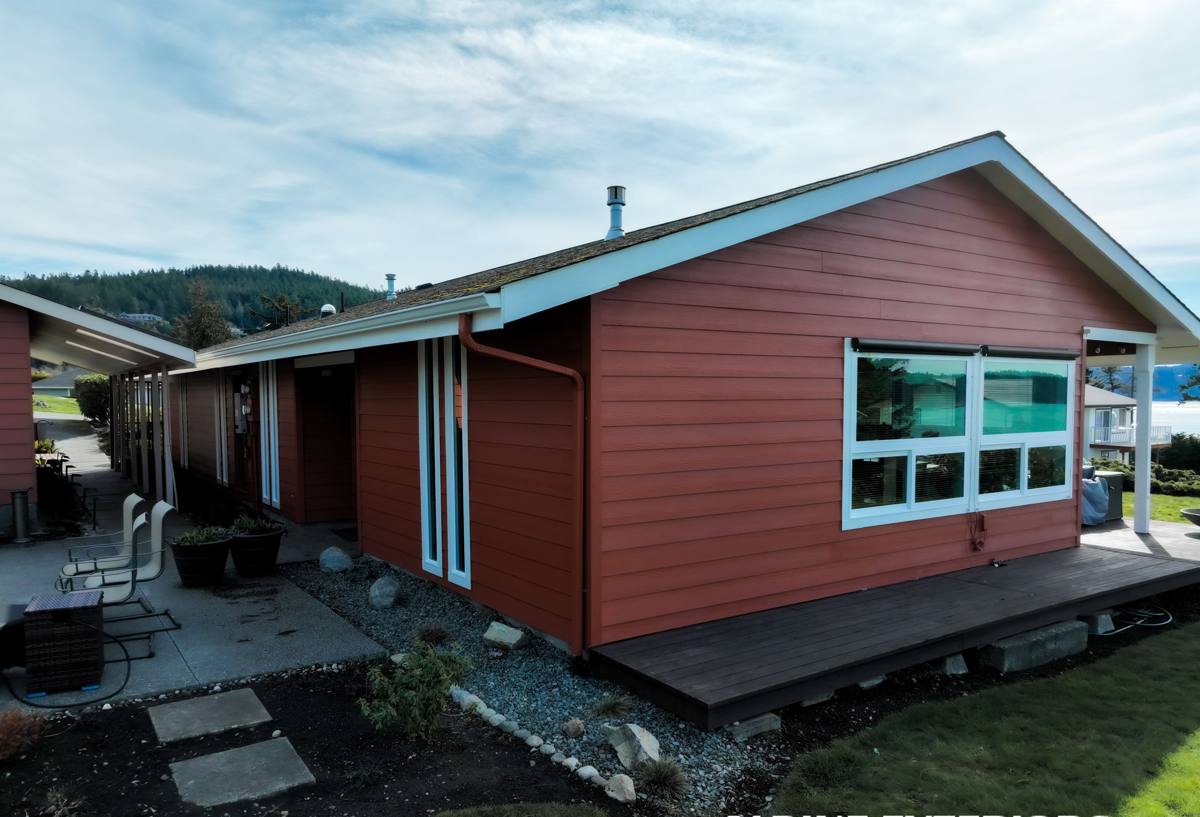
What "Correct" Siding Installation Actually Involves
Siding installation is often talked about like it's carpentry — measure, cut, nail. In a climate like Seminole's, that mindset is how houses end up with rot, mold, and buckled panels within a few years. A correct installation is a moisture-management system, not just a finish layer. That means:
Water Has to Have a Planned Path Out
Every seam, corner, window, and penetration needs flashing and a weather-resistant barrier installed in the right order — barrier first, then flashing lapped correctly, then siding — so any water that gets past the surface has somewhere to drain instead of pooling against the sheathing.
Fasteners Matter More Here Than Almost Anywhere
In a coastal air environment, the wrong fastener corrodes, streaks the siding, and eventually loses its grip. Corrosion-resistant fasteners, driven at the manufacturer's specified spacing and depth, are non-negotiable — not an upsell.
Gaps and Clearances Aren't Optional
Manufacturer specs call for specific gaps at trim, butt joints, and ground clearance. Skipping these to save time is one of the most common shortcuts we see on older installs, and it's usually the first thing that shows up as a problem during the next big storm.
Wind Load Isn't Theoretical in Pinellas County
Fastening patterns and clearances that might pass in a low-wind region aren't adequate here. Installation needs to account for the wind speeds this area is actually rated for, not a national minimum.
Why We Only Install James Hardie Fiber Cement
We install one siding system: James Hardie fiber cement. We don't offer vinyl, LP SmartSide, Cemplank, Allura, or wood siding like primed spruce or cedar, and that's a deliberate standard, not a lack of options.
Fiber cement is non-combustible and dimensionally stable, so it doesn't expand, contract, or warp with Florida's heat-humidity swings the way wood and some engineered wood products can. It doesn't degrade from sustained UV exposure the way lower-grade vinyl can, which matters when a house sits in direct Gulf-coast sun most of the year. Hardie's ColorPlus finish is baked on at the factory under controlled conditions, which gives a more consistent, longer-lasting color than field-applied paint and holds up better against salt air and UV than most site-painted alternatives.
Hardie also builds specific product lines engineered for humid, high-moisture climates like ours (their HZ5 formulation), which is a meaningful difference from a generic siding product not engineered for this region. Combined with a strong transferable warranty, that's why we standardized on it. We'd rather install one product exceptionally well, to spec, every time, than offer a menu of products where quality depends on which one a homeowner happens to pick.
To be fair to the alternatives: vinyl is cheaper up front and low-maintenance in mild climates, and engineered wood products can look good and install quickly. The trade-offs that matter here are moisture sensitivity, installation forgiveness, and how each product actually performs after a decade of Gulf-coast sun, salt, and storms — and that's where fiber cement, installed correctly, holds up better than the alternatives we chose not to carry.
Our Ridgecrest Installation Process
- On-site assessment. We look at your current siding condition, the sheathing underneath where accessible, existing moisture damage, window and door flashing, and how the house is oriented to prevailing wind and rain.
- Tear-off and substrate check. Old siding comes off and we inspect the sheathing before anything new goes up. Hidden rot or moisture damage gets addressed before it's covered again — covering a problem instead of fixing it is how houses end up with the same failure repeating in five years.
- Weather-resistant barrier and flashing. Installed and lapped per manufacturer spec, with particular attention to windows, doors, and any wall penetration.
- Hardie panel or lap siding installation. Fastened per James Hardie's published specs for this wind zone, with corrosion-resistant fasteners and correct gaps at every joint and trim piece.
- Trim, caulking, and final detailing. The places most installations get sloppy — corner boards, butt joints, penetrations — get the attention they need, because these are the spots that fail first if rushed.
- Final walk-through. We go over the finished work with you before calling the job done.
Signs Your Ridgecrest Home's Siding Needs Attention
- Visible warping, buckling, or gaps between siding panels
- Soft spots or discoloration near the bottom of walls or below windows
- Peeling or fading paint that keeps returning even after repainting
- Cracked or missing caulk at seams, corners, and trim
- A musty smell inside near exterior walls, which can indicate moisture behind the siding
- Visible rust streaking from fasteners
- Siding that flexes or feels hollow when pressed
Any one of these on its own might be minor. Several together, especially after a storm season, usually mean water has been getting behind the siding for a while.
What Drives Siding Installation Cost in Ridgecrest
| Factor | Why It Matters Here |
|---|---|
| Home size and wall complexity | More corners, gables, and dormers mean more cutting, flashing, and labor time |
| Current siding removal | Tear-off and disposal of old material adds labor, especially if multiple layers exist |
| Substrate repair | Rot or moisture damage found under old siding has to be repaired before new siding goes on |
| Siding profile and thickness | Lap siding, panel siding, and shake-style profiles have different material and labor costs |
| Trim and detail work | Corner boards, window trim, and fascia detailing add time but are critical to long-term performance |
| Fastening and flashing spec | Installing to the wind and moisture standard this area actually requires costs more than a minimum-code install, but it's what prevents callbacks |
We won't quote a number without seeing the house — anyone who does is guessing, and a guess doesn't account for what's actually under your current siding.
Why It Matters That We Already Work in Seminole
A crew that regularly works Pinellas County neighborhoods like Ridgecrest already knows what to look for: how salt air tends to concentrate corrosion in certain spots, how wind-driven rain typically finds its way into older flashing details, and what a home built to the area's older code often needs brought up to current wind standards. That local pattern recognition shortens the diagnostic phase of a job and reduces surprises mid-installation. It also means we're not learning Florida humidity and hurricane wind behavior on your house — we already build for it.
Questions Worth Asking Any Siding Contractor Before You Hire
- What siding products do you install, and why did you choose them?
- Are you a licensed and insured contractor in Florida?
- Do you follow the manufacturer's published wind-zone fastening specification, or a generic one?
- What happens if you find rot or moisture damage once the old siding comes off?
- Is your warranty from the manufacturer, from your company, or both — and what does each actually cover?
Maintenance After a Correct Installation
A properly installed Hardie siding job is low-maintenance, not zero-maintenance. Rinse it periodically to keep salt residue from building up, keep an eye on caulking at seams and trim every year or two, and repaint on the schedule your finish requires (ColorPlus finishes go far longer between repaints than field-applied paint). Catching a failed caulk joint or a ding in the finish early is a five-minute fix; ignored for a couple of storm seasons, it can become a moisture problem behind the wall.
If your Ridgecrest home's siding is showing its age, or you're planning ahead before the next storm season, we're happy to take a look and give you a straightforward, no-pressure estimate — no guesswork, no upsell to a product we don't stand behind.