 Seminole Siding
 Siding Repair in Pinellas Park Starts With an Honest Diagnosis
Pinellas Park sits inland from the barrier islands but still inside the same weather system that batters the rest of Pinellas County — the same hurricane-force winds, the same relentless year-round UV, the same wind-driven rain, and enough proximity to the Gulf and Tampa Bay that salt air still reaches homes here and does its slow work on siding, trim, and fasteners. Being a few miles off the water doesn't exempt a house from that exposure; it just changes the mix slightly, trading a bit less direct salt load for more open, sun-baked lots and streets with mature tree cover that add their own wear pattern of shade, moisture, and debris.
A siding repair call in Pinellas Park is rarely as simple as "patch the bad spot." The real job is figuring out whether what's visible on the surface is the whole problem or just where it happens to show first. This page covers what we actually find when we inspect siding in this area, how we decide between a targeted repair, a partial re-side, or a full replacement, and why our repairs — like our installations — are done exclusively in James Hardie fiber cement rather than mixed and matched with whatever happens to already be on the wall.
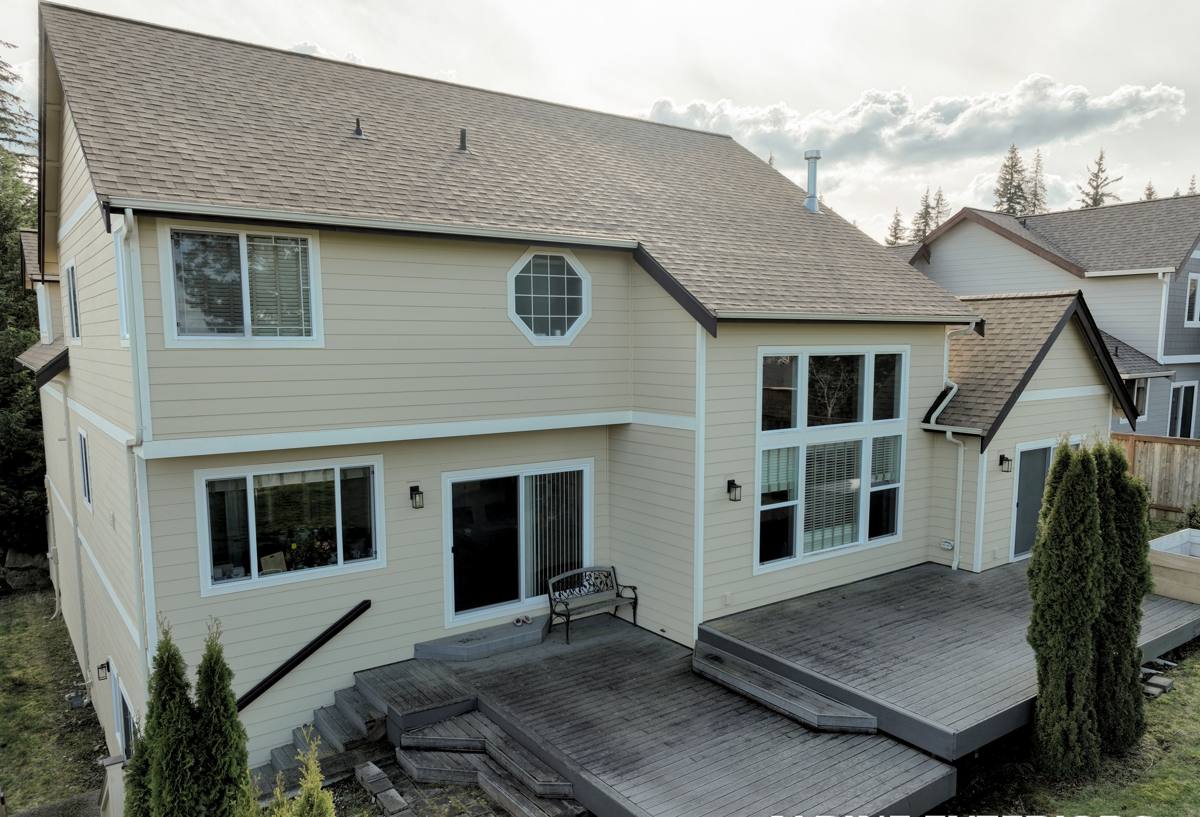
What's Actually Damaging Siding in Pinellas Park
UV Exposure
Central Florida's sun angle and long day length put more cumulative UV on exterior surfaces here than in most of the country, and Pinellas Park's mix of open lots and partially shaded streets means UV exposure varies a lot from one side of a house to the other — and often from one house to the next. On lower-grade paints and coatings, that UV load breaks down pigment binders over years, which is why south- and west-facing walls tend to chalk, fade, and crack well ahead of the shadier elevations of the same house.
Wind-Driven Rain
Straight-down rain is easy for almost any siding to shed. Rain pushed sideways by sustained tropical-storm or hurricane-force wind is a different problem — it finds its way behind butt joints, around fastener penetrations, and into trim intersections that stay bone-dry in an ordinary shower. Repair calls tend to cluster after storm season for exactly this reason: water that got in during one event doesn't always show itself until it's had weeks or months to work through the wall assembly.
Salt Air
Pinellas Park isn't beachfront, but it's close enough to the Gulf and Tampa Bay that airborne salt still settles on exterior surfaces over time, particularly on homes with more open exposure. Salt accelerates corrosion in exposed fasteners and metal trim and can affect certain coatings and sealants over years of contact. It's a slower, more cumulative process here than it is a few miles closer to the water, but it still factors into what fastener grade and finish quality we specify on a repair.
Humidity and Heat Cycling
Hot, humid days followed by warm, wet nights mean siding materials in Pinellas Park are almost always expanding, contracting, or holding onto some moisture rather than getting a real chance to dry out fully between rain events. That constant cycling is hard on any material that isn't dimensionally stable, and it's a big part of why we see wood-based and lower-grade siding products fail here faster than their published lifespans would suggest.
Cosmetic Wear vs. Structural Damage
Not every repair call in Pinellas Park needs the same response, and telling these two categories apart correctly is the first real job of an inspection — not the fastener replacement or the caulk gun.
| Symptom | Usually Cosmetic | Often Structural |
|---|---|---|
| Chalky, faded paint on sun-facing walls | Yes — UV wear on the finish | Only if the panel itself is also cracked or delaminating |
| Small hairline cracks at panel edges | Sometimes — surface only | If cracks run through the panel or track a fastener line |
| Soft or spongy spots near trim or bottom courses | No | Yes — moisture has reached the sheathing behind it |
| Buckled or bowed panels | Rarely | Usually — a fastening, clearance, or moisture issue underneath |
| Rust staining around fasteners | Cosmetic if isolated and shallow | Can indicate corroded fasteners losing holding strength |
| Gaps opening at seams or trim joints | No | Yes — an active entry point for wind-driven rain |
Cosmetic wear affects appearance and can usually be scheduled as routine maintenance. Structural damage means water or movement has already reached the wall assembly, and it needs attention before the next storm season adds to it, not after.
How We Diagnose a Repair Before Recommending Anything
An estimate that's actually worth something starts with a real inspection, not a guess from the driveway. On a typical Pinellas Park repair call, that includes:
- Checking suspect panels by hand for softness, movement, or give — not just looking at them from a few feet back
- Inspecting fastener condition and pattern, since improperly spaced or corroded fasteners are a common root cause of loose or buckled panels
- Looking behind trim and at butt joints for signs of past or active water intrusion
- Checking flashing at windows, doors, and roof-to-wall transitions, where a surprising number of siding problems actually start
- Assessing how much of the damage is isolated versus spread across multiple elevations, which changes whether a targeted repair makes sense
- Confirming what the existing siding actually is, since the right repair approach depends on the product already on the house
We walk through what we find plainly — what needs attention now, what can be monitored, and what's purely cosmetic — before we talk about scope or cost.
Repair, Partial Replacement, or Full Re-Side
A siding problem doesn't automatically mean a full re-side, and it doesn't always mean a quick patch will actually hold, either. The honest factors that drive this decision:
- How isolated the damage is. A handful of damaged panels on one elevation, caused by a specific event or a localized flashing failure, is usually a legitimate repair candidate.
- What's happening behind the siding. If sheathing or framing has already taken on moisture damage, patching the visible siding without addressing what's underneath just hides the problem temporarily.
- Age and condition of the rest of the wall. Siding nearing the end of its practical life may only have a few more repair cycles left before full replacement becomes the more sensible option financially.
- What the existing product actually is. Some siding products age in ways that make matching a repair to the surrounding wall difficult after enough time has passed, which changes the math on repair versus replace.
We'll tell you plainly which category a given repair falls into, including when a full re-side is genuinely the more cost-effective path rather than paying for repairs that won't hold.
Why Our Repairs Are James Hardie Only
Repairing an Existing James Hardie Wall
If your Pinellas Park home already has James Hardie siding, a correct repair means matching plank profile, exposure, and ColorPlus finish as closely as the product line allows, then installing new pieces to the same fastening, clearance, and joint-treatment specifications Hardie requires on new construction. A repair that skips those details might look fine on day one and still fail the same way the original installation did.
When the Existing Siding Isn't Hardie
We get repair calls on homes with vinyl, engineered wood, and other fiber cement brands, and we're upfront about what we will and won't do. For contained, cosmetic issues, a straightforward patch in the existing material sometimes makes sense, and we'll say so. But when the damage is a symptom of that product's known trade-offs — a wood-fiber product with a compromised edge seal, vinyl distorted or torn loose by wind, a fiber cement brand without the finish or moisture engineering we've standardized on — we'd rather tell you honestly that repeated patching is likely to keep failing than sell you a repair we don't believe will hold. In those cases, replacing the affected section or the full elevation with James Hardie is usually the more honest recommendation, not because we refuse to touch other products, but because we've seen what holds up in this climate and what doesn't.
What a Correct Hardie Repair Involves
Flashing and Moisture Barrier First
Before any new panel goes up, we check and correct the water-resistive barrier and flashing behind the damaged area. Installing new siding over a compromised moisture barrier just resets the clock on the same failure.
Fastener Type, Spacing, and Clearance
Replacement panels are fastened to James Hardie's published spec for our wind zone — correct fastener type, spacing, and penetration depth — with proper clearance maintained from grade, decks, and roof lines. These aren't optional details; they're what determines whether the repair survives the next storm season or needs redoing after it.
Matching the ColorPlus Finish
James Hardie's factory-applied ColorPlus finish is one of the reasons we standardized on the product, but it does mean color-matching a repair on an older wall takes some care, since factory finishes can shift slightly over years of UV exposure. We'll be upfront if an exact match isn't realistic and talk through the options — a close match on a less visible elevation, or repainting the affected section — before starting the work.
Sealed, Properly Lapped Joints
Every seam, joint, and trim intersection in the repaired area gets sealed and lapped correctly, the same as it would on a new installation. This is usually where a rushed repair job shows up as a callback within a year or two.
Maintenance That Protects a Repair
- Rinse siding periodically to clear salt residue, pollen, and organic buildup before it works into seams and fastener heads
- Keep sprinklers and irrigation from hitting siding directly on a regular schedule, since constant wetting shortens the life of any finish
- Trim back landscaping that shades siding against the wall or traps moisture at the bottom courses
- Check caulk lines at trim and window or door penetrations once or twice a year and re-caulk before gaps open into real entry points
- Address soft spots, buckling, or gaps right away — these are early signs of an active problem, not cosmetic ones
- Have siding walked and inspected after major storms, even if nothing looks obviously wrong from the ground
Why a Crew That Already Works Pinellas Park Matters
Siding repair quality comes down to details that don't show up in a driveway estimate — how flashing gets lapped back in, whether cut ends are sealed, whether fastener depth is right, whether a color match was handled honestly instead of glossed over. A crew that works Pinellas Park and the rest of Pinellas County regularly has already seen how these problems play out on this area's mix of home ages and construction styles, and knows what a wall assembly here typically looks like once the siding comes off.
It also matters for permitting. Pinellas County's wind zone requirements affect fastening schedules on repair work just as they do on new installations, and a contractor who pulls permits in this county regularly knows what's actually required rather than applying a generic standard that may not hold up to inspection.
Get an Honest Look at Your Siding
Whether you're dealing with one damaged section, a handful of soft spots you want checked before hurricane season, or you're just not sure if what you're seeing is cosmetic or something more, we're glad to walk the exterior and tell you plainly what we find — including when the honest answer is that a repair isn't worth doing and replacement makes more sense. Reach out below for a free, no-pressure estimate.