 Seminole Siding
 Siding Replacement Built for a Barrier Island Address
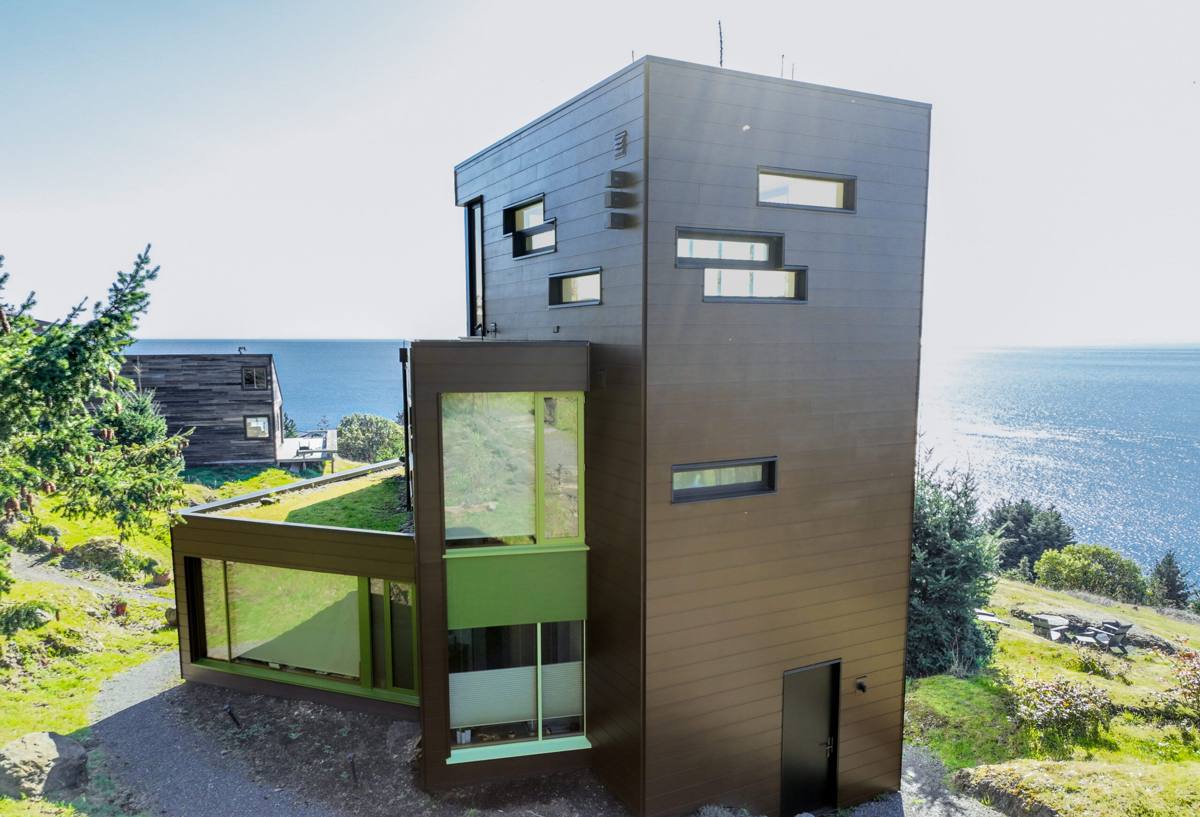
Belleair Beach sits directly on the Gulf of Mexico, and that location changes what a house needs from its exterior. Homes here don't just face "Florida weather" in the generic sense — they face it with almost nothing between the siding and open water. Salt spray rides the wind onto exterior walls year-round, UV exposure is more constant than in shaded inland neighborhoods, and wind-driven rain during storms hits at angles that regular siding installations are rarely detailed to handle. Add hurricane-force gusts during the active season, and it's easy to see why siding on this stretch of coastline tends to fail faster than the same product installed a few miles inland in Seminole or Largo.
A siding replacement here isn't just a cosmetic project. Done right, it's a chance to correct the moisture management, fastening, and material choices that weren't built for barrier island exposure in the first place.
Why Coastal Exposure Wears Siding Down Faster
Salt Air and Corrosion
Airborne salt doesn't just dull a finish — it accelerates corrosion on fasteners, trim accessories, and any metal components tucked behind or around the siding. Once fasteners start to corrode, they lose holding power, and panels that once sat flush start to work loose, cup, or telegraph nail heads through the surface.
UV Breakdown
Constant sun exposure on a Gulf-front lot fades paint and breaks down the surface resins in many siding materials faster than the same product would degrade in a shadier, inland yard. Chalking, color fade, and a rough, weathered texture show up years ahead of schedule on lower-grade products.
Wind-Driven Rain
Rain that comes in sideways during a squall or tropical system finds every gap in flashing, every under-lapped seam, and every place where caulk was asked to do a flashing detail's job. Once water gets behind the cladding, it doesn't dry out quickly in Florida's humidity — and that's when rot, mold, and sheathing damage start.
Hurricane-Force Wind Loads
Wind uplift on a barrier island is a real engineering load, not an abstraction. Siding, fastening schedules, and trim need to be installed to the wind zone the home actually sits in, not to a generic inland standard.
Signs a Belleair Beach Home Needs Siding Replacement, Not a Patch
- Soft, spongy, or visibly warped sections of siding, especially near ground level or under windows
- Paint that's chalking heavily or peeling in sheets rather than fine flaking
- Visible fastener corrosion, streaking, or popped nail heads
- Cracked, delaminating, or bubbling panels, particularly on Gulf-facing walls
- Gaps opening up at seams, corners, or trim joints
- A musty smell or soft drywall on interior walls that back up to exterior siding
- Repeated repainting that never seems to hold its finish more than a couple of years
Any one of these can sometimes be spot-repaired. Several at once, especially on a home that's taken a few storm seasons of direct salt exposure, usually means the underlying material and the original moisture detailing have both reached the end of their useful life.
What a Correct Siding Replacement Actually Involves
Tearing off old siding and nailing up new panels is the easy part to see — it's not the part that determines whether the job lasts. On a barrier island home, the details that don't show up in a quick estimate are the ones that matter most:
- Full tear-off and sheathing inspection — checking for rot, soft spots, or storm damage hidden behind the old siding before anything new goes up
- Correct weather-resistive barrier — a house wrap or water-resistive barrier suited to a high-humidity, high-salt environment, installed with proper overlaps
- Flashing at every penetration — windows, doors, hose bibs, light fixtures, and any other wall penetration need dedicated flashing, not just caulk
- Corrosion-resistant fasteners — matched to the coastal environment, not standard inland-grade fasteners
- Manufacturer-specified fastening pattern — nailing schedules that account for wind uplift, not just "close enough"
- Proper clearances — siding held off decks, patios, and grade to keep the bottom edge from sitting in standing water or constant moisture
- Factory-finished material — a finish baked on in a controlled environment holds up to UV and salt far longer than field-applied paint
Skip any one of these and the siding may look fine at handoff and still fail in three to five years — long before it should.
Why We Install Only James Hardie Fiber Cement
We don't install vinyl, LP SmartSide, primed wood, cedar, or other fiber cement brands. That's a deliberate standard, not a sales pitch, and it matters more on a Gulf-front property than almost anywhere else we work in Pinellas County.
Vinyl softens, warps, and becomes brittle under sustained heat and UV, and it isn't rated for the wind speeds a barrier island home can see in a real storm. Wood and wood-composite products need a maintained paint film to keep moisture out at all, and salt air combined with humidity is exactly the combination that breaks that film down fastest. James Hardie fiber cement is non-combustible, dimensionally stable in heat and humidity, and available in HZ5 formulations engineered specifically for high-moisture, humid climates like the Gulf Coast. Its ColorPlus factory finish is baked on and warrantied against fading and peeling, which matters enormously on a wall that faces direct sun and salt spray every day of the year. It's also backed by a strong transferable limited warranty — worth a lot on a home this exposed, where owners want to know the coverage follows the house.
Our Process for Belleair Beach Siding Replacement
- On-site assessment — we walk the exterior, check current siding condition, look for moisture intrusion, and evaluate the home's specific wind exposure
- Written scope and estimate — a clear breakdown of tear-off, sheathing repair allowances, moisture barrier, flashing, material, and labor
- Material selection — choosing the right James Hardie HZ product line, plank profile, and ColorPlus color for the home and its exposure
- Tear-off and substrate repair — removing existing siding and addressing any rot or damage found underneath before anything new is installed
- Moisture barrier and flashing installation — the step that determines how the job performs during the next tropical storm, not just how it looks on day one
- Siding installation to manufacturer spec — correct fastening schedule, clearances, and seams for the local wind zone
- Final walkthrough — reviewing the completed work with the homeowner before we consider the job finished
Cost Factors for Siding Replacement on a Gulf-Front Home
| Factor | Why It Affects Cost |
|---|---|
| Home size and wall area | More square footage means more material and labor hours |
| Number of stories | Multi-story or elevated coastal homes require more scaffolding, staging, and safety setup |
| Sheathing condition | Hidden rot or storm damage discovered during tear-off adds repair scope |
| Trim and architectural detail | Corners, dormers, and decorative trim take more time than flat, uninterrupted runs |
| Siding profile chosen | Lap, shingle, and panel styles vary in material and installation time |
| Existing siding removal | Multiple layers or difficult-to-remove old materials add labor |
| Access and site conditions | Tight beachfront lots, seawalls, and limited staging area can affect logistics |
We don't quote from a distance for a job like this — every barrier island home has its own exposure, layout, and history, and an accurate number requires seeing the walls in person.
Why a Crew That Already Works Belleair Beach Matters
A contractor who mostly works inland neighborhoods can still do competent work, but they're guessing at coastal detailing rather than applying it as routine. A crew that regularly works Gulf-front properties in Pinellas County already knows to spec corrosion-resistant fasteners without being asked, already understands the wind exposure categories that apply to barrier island construction, and already has a feel for how fast salt air and UV degrade lower-grade materials in this specific setting. That familiarity shows up in fewer callbacks and a job that's built for the environment it actually sits in, not a generic version of "Florida."
What to Ask Before You Sign a Siding Contract
- Do you install James Hardie fiber cement specifically, and which HZ product line do you recommend for a Gulf-front lot?
- What corrosion-resistant fastener type will you use, and is it specified for coastal environments?
- What weather-resistive barrier and flashing details will be used at windows, doors, and penetrations?
- Will you inspect and repair sheathing if rot is found during tear-off, and how is that priced?
- What does the manufacturer's warranty cover, and is it transferable if the home is sold?
- Do you carry liability insurance and workers' compensation, and can you provide proof?
A contractor who answers these clearly and specifically, without hedging, is the one who's actually done this work on homes like yours before.
Ready to Talk About Your Home
If your Belleair Beach home is showing signs of wear from salt air, sun, or storm exposure, we're happy to come take a look. We'll walk the exterior, tell you honestly what we see, and put together a clear, no-pressure estimate for James Hardie siding replacement built for this specific stretch of coastline. Fill out the form below to get started.