 Seminole Siding
 Belleair Beach Puts More Stress on a Wall Than Most of Pinellas County
Belleair Beach sits on a barrier island with open water on both sides, which means every siding material on a home there is working harder than the same material would a few miles inland. Wind loads run higher the closer you get to the Gulf. Salt air rides in on the breeze year-round and settles into anything porous or metallic. UV exposure is intense and constant. And wind-driven rain during storms doesn't just fall on a wall — it gets pushed sideways and upward, testing every seam, joint, and fastener. Board and batten siding, with its vertical boards and raised battens covering the seams, has a lot of exposed trim and joint lines compared to a plain lap profile. That's part of what makes it attractive — it has real shadow lines and texture — but it also means there are more places for a barrier island climate to find a weakness if the material or the installation is wrong for the job.
This page covers what board and batten siding needs to hold up on a Belleair Beach home, what a correct installation actually involves, and why the crew doing the work matters as much as the material itself.
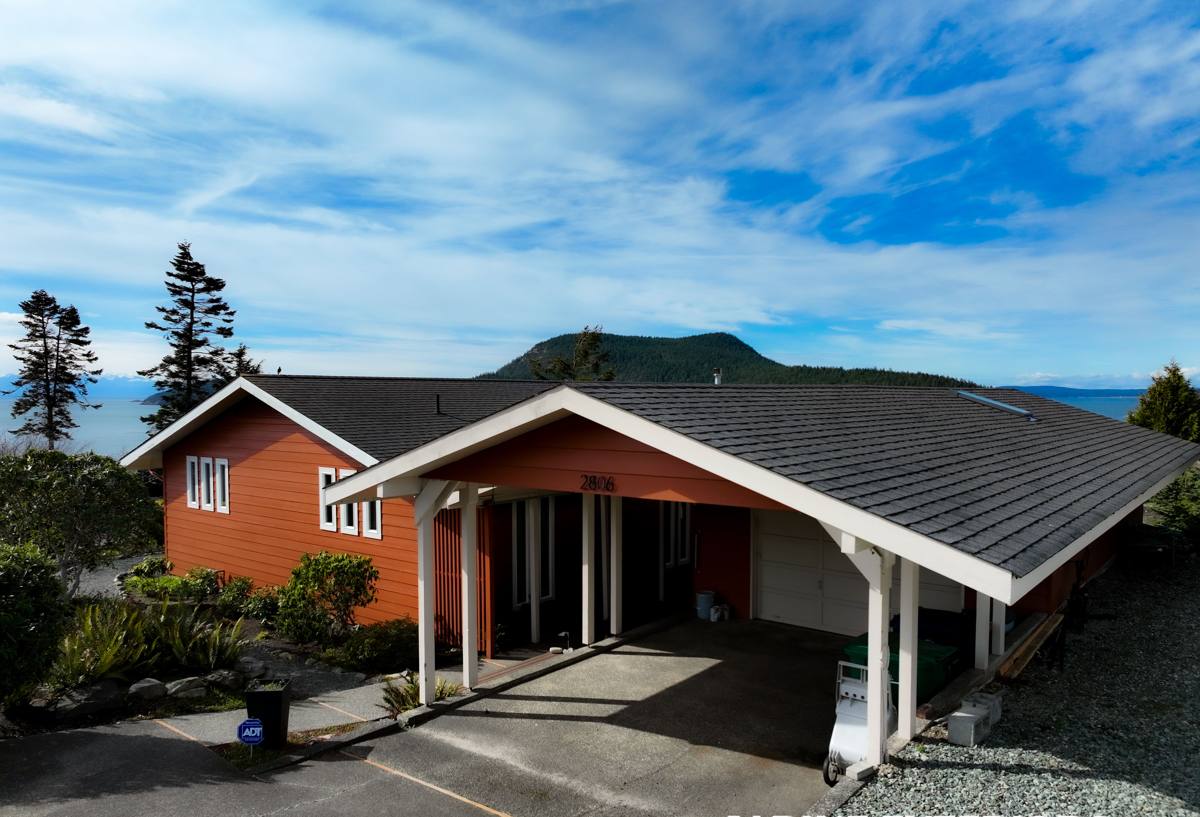
What Board and Batten Means in James Hardie Fiber Cement
We install James Hardie fiber cement exclusively, and board and batten is one of the styles we build with it — not a separate product, but a layout approach using Hardie's panel and trim systems together. In practice that means a vertical fiber cement panel (typically HardiePanel vertical siding) installed as the field, with HardieTrim battens fastened over the panel seams at a consistent spacing to create the classic board-and-batten look. Some homeowners in this style of coastal home prefer a V-groove reveal instead of true battens, which James Hardie also makes in its Artisan and panel lines. Either way, the material underneath is fiber cement: sand, cement, and cellulose fiber pressed and cured into a board that doesn't rot, doesn't attract termites, and doesn't burn.
The finish matters as much as the substrate. We use factory-applied ColorPlus finish rather than field-painted panels wherever possible. A factory finish is baked on under controlled conditions and carries its own warranty coverage against fading and peeling — which matters in a spot where UV exposure is relentless nearly every month of the year.
Why This Matters More Here Than in a Typical Subdivision
A board and batten wall on an inland home in a standard wind zone can tolerate a little more slack in fastener spacing or trim caulking before it becomes a problem. On a barrier island home in Belleair Beach, that same slack shows up faster — as a batten that starts to lift at a corner, a seam that lets water track behind the panel, or fastener heads that corrode and stain the face of the board within a few seasons. None of that is a flaw in fiber cement as a material. It's a flaw in installation that didn't account for where the house actually sits.
Engineering Board and Batten for Wind, Salt Air, and Wind-Driven Rain
Wind Load and Fastening
Design wind speed requirements climb as you move toward open water, and homes on the barrier island are typically permitted to a higher wind speed than the same style of home a few miles inland in Seminole. That changes real installation choices: fastener type, fastener spacing, and how battens are anchored through the field panel into structural framing rather than just into the panel itself. James Hardie publishes fastening schedules that vary by wind zone, and a board and batten installation on Belleair Beach should be built to the schedule for its actual exposure, not a generic default.
Moisture Management Behind the Panels
Vertical board and batten has more linear seams running up the wall than a horizontal lap profile, and every one of those seams is a potential path for wind-driven rain to get behind the cladding during a storm. Correct installation starts with a proper weather-resistant barrier over the sheathing, careful flashing at every window, door, and penetration, and — on a lot of coastal installations — a drainage gap (rainscreen) behind the panel so that any moisture that does get past the face can drain and dry out instead of sitting against the wall assembly. Skipping this step doesn't show up on day one. It shows up two or three years later as trapped moisture, and by then it's a repair job, not a maintenance item.
Salt Air and Fastener Corrosion
Salt air corrodes unprotected or under-rated metal fasteners and trim hardware faster on a barrier island than almost anywhere else in the county. We use corrosion-resistant fasteners appropriate for coastal exposure, and we keep cut edges and fastener heads sealed and touched up so raw fiber cement or bare metal isn't left exposed to salt-laden air. A rust streak bleeding down a white board and batten wall is one of the most common signs of a coastal installation that used the wrong hardware.
What a Correct Installation Involves, Start to Finish
Board and batten siding looks simple from the curb — clean vertical lines and even spacing — but getting that look to actually perform on a barrier island wall takes a specific sequence:
- Inspection and tear-off. We remove the existing siding and inspect the sheathing underneath for rot, water damage, or prior installation shortcuts before anything new goes up.
- Substrate repair. Any damaged sheathing gets replaced. Covering a compromised substrate with new siding just hides a problem that will resurface.
- Weather-resistant barrier and flashing. A continuous barrier goes over the sheathing, with proper flashing detail at every window, door, and wall penetration.
- Drainage plane, where called for. On coastal exposures we typically install furring or a rainscreen product to give incidental moisture a way to drain and the wall a way to dry.
- Panel layout and installation. Vertical field panels are installed plumb and fastened to the schedule appropriate for the home's wind zone, with proper gapping at joints per James Hardie's specifications.
- Batten placement. Battens are set at consistent, level spacing over the seams and fastened through to framing, not just into the panel.
- Sealing and finishing. Field-cut edges are sealed, joints are caulked with a product rated for the assembly, and any field-cut edges are touched up to match the factory finish.
- Final walk-through. We check reveal consistency, fastener coverage, and sealant lines before calling the job done.
Comparing Board and Batten Approaches for a Coastal Home
Board and batten is available in more than one material, and the differences matter a lot more on a barrier island than they would inland. Here's how the common approaches stack up for a Belleair Beach exposure:
| Approach | How It Handles Salt Air & Wind | Long-Term Maintenance |
|---|---|---|
| Vinyl board and batten panels | Can warp or become brittle under sustained UV and heat; not a structural fastening system in high wind | Low upfront upkeep, but limited service life and prone to visible fading in constant sun |
| Engineered wood board and batten | Vulnerable to moisture intrusion at seams and cut edges; needs a sound moisture barrier and disciplined caulking to hold up near open water | Requires consistent repainting and edge sealing to keep moisture out |
| James Hardie fiber cement panel and batten (what we install) | Non-combustible, resists moisture-driven swelling, and holds a factory ColorPlus finish engineered for UV and coastal exposure | Occasional rinsing and periodic caulk inspection; no repainting cycle with ColorPlus finish |
We standardized on James Hardie because, installed correctly, it's the option that best matches what a barrier island wall actually has to deal with year over year — not because every other material is unusable everywhere, but because we've seen what holds up in this specific environment and what doesn't.
Why the Crew Matters as Much as the Material
Belleair Beach isn't a place where a crew that mostly works inland subdivisions can just show up and apply their standard process. A few things are different here:
- Wind zone requirements are higher near open water, which changes fastening schedules and material specs from what's used a few miles inland.
- Parts of the barrier island can fall within Florida's Coastal Construction Control Line, which can affect what permitting looks like for exterior work — worth checking before work starts, not after.
- Access and staging are tighter on barrier island lots than on typical mainland properties, which affects how material deliveries and dumpsters get planned.
- Salt air corrosion on fasteners and trim hardware isn't something a crew learns to plan for until they've seen it happen on a callback.
A crew that already works Belleair Beach and the surrounding Pinellas County coastline has already worked through these details on other homes nearby. That experience shows up in fewer surprises during the permit process and a finished wall that's actually built for where it sits, not for a generic spec sheet.
Living With Board and Batten Siding on the Island
Fiber cement board and batten is low-maintenance compared to wood or vinyl, but "low-maintenance" doesn't mean "no maintenance," especially this close to the Gulf. A short, honest checklist for homeowners:
- Rinse the exterior periodically to clear accumulated salt residue, especially on walls facing open water.
- Walk the batten lines and trim joints once or twice a year and look for any caulking that's cracked, shrunk, or pulled away.
- Check fastener heads and any exposed trim hardware for early rust staining — it's easier to address early than after it streaks the finish.
- Keep an eye on sprinkler heads or irrigation that hits the base of the wall directly, since constant wetting at the bottom course accelerates wear.
- After any major storm, do a visual check for lifted battens, dented panels, or displaced trim before small damage becomes a moisture path.
Why We Only Install James Hardie
We don't install vinyl, LP SmartSide, Cemplank, Allura, or primed wood siding, and board and batten work on the barrier island is exactly why. We've standardized on James Hardie because it's non-combustible, holds up to moisture cycling better than wood-based alternatives when installed to spec, and comes with a factory finish and a transferable warranty built for exactly this kind of exposure. On a home that takes this much wind, sun, and salt air, we'd rather stand behind one system we know inside and out than offer a menu of products with different trade-offs we can't fully guarantee.
If you're weighing board and batten siding for a home in Belleair Beach, we're happy to take a look, walk the exterior with you, and put together a straightforward estimate — no pressure, no obligation. Use the form below to get started.