 Seminole Siding
 Why Fiber Cement Is the Right Call for a Clearwater Home
Clearwater sits on Pinellas County's Gulf Coast, and that location is exactly what makes siding decisions here different from most of the country. Homes here take on hurricane-force wind gusts for months out of the year, near year-round UV strong enough to break down anything not engineered to handle it, wind-driven rain that gets pushed sideways into seams and joints, and salt air rolling in off the Gulf and Tampa Bay that works on metal and finishes every single day, not just during storms. Siding here isn't just a look — it's the first line of defense on a building envelope that gets tested constantly.
Housing stock in and around Clearwater runs the full range, from older homes carrying their original siding decades past its prime to newer builds and homes that have already been through one re-side with a different product. Whatever the starting point, the underlying stress on the exterior is the same, whether the lot backs up to a canal, sits a few blocks off the water, or is set further inland with nothing to break up the wind. We install James Hardie fiber cement exclusively, and this page is specifically about what that means for a fiber cement siding project on a Clearwater-area home: what the climate demands, what a correct installation actually involves, how we run the job, and why it's worth hiring a crew that already knows this stretch of coastline rather than a company that treats it like anywhere else.
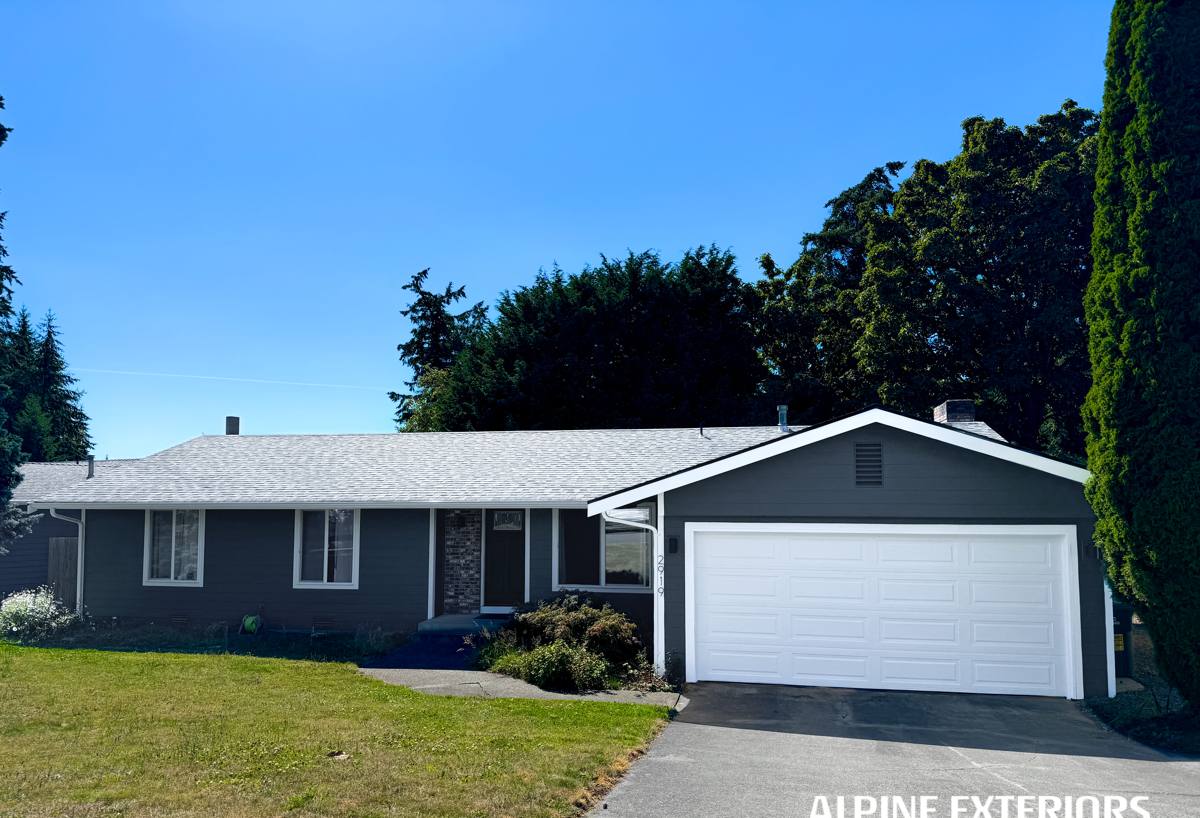
What Clearwater's Climate Asks of a Siding Material
Sun and UV
Florida's sun angle and day length put more cumulative UV exposure on a home's exterior each year than most of the country ever sees, and it's active close to twelve months a year rather than tapering off in the fall. On lower-grade coatings, that UV load breaks down pigment and binders over time, which is why so many homes show chalky, faded siding on their sun-facing walls years before the shaded side of the same house looks worn.
Wind-Driven Rain
Straight-down rain is easy for almost any siding to shed. Rain pushed sideways by sustained hurricane-force wind is a different problem entirely — it finds its way into butt joints, fastener holes, and trim intersections that would stay perfectly dry in a calm shower. Over a storm season or two, marginal flashing and aging caulk lines start showing water intrusion at exactly those points.
Salt Air
Clearwater's proximity to the Gulf means airborne salt settles on exterior surfaces continuously, not just on waterfront lots. Salt accelerates corrosion in exposed fasteners, flashing, and trim, and a corroding fastener loses holding strength and can open a small gap right where it penetrates the siding. It's a slow, cumulative process, which is exactly why it gets overlooked until it isn't.
Hurricane Wind Loads
Every joint, corner, and penetration in a home's siding gets loaded at once during a real wind event. Siding that isn't rigid, isn't fastened to spec, or wasn't engineered for coastal wind zones is where storm damage tends to start, and it's usually the installation detail — not the material alone — that decides whether a wall holds up.
The James Hardie System We Install
HardiePlank Lap Siding — Profiles and Reveals
Most Clearwater fiber cement projects use HardiePlank lap siding, installed as overlapping horizontal boards in a range of reveal widths and either a smooth or a woodgrain-textured face. The reveal — how much of each board shows once the next course overlaps it — changes the shadow lines and overall look of a home more than most homeowners expect, from a tighter, more traditional reveal to a wider, more modern one. We walk through those options during the estimate rather than defaulting to one look for every house.
HZ5 Engineering and ColorPlus Finish
James Hardie manufactures regional formulations rather than one product for the whole country. Siding sold and installed in our part of Florida is built to the HZ5 specification, engineered specifically for high-humidity, high-moisture climates — it's a different mix than what ships to a dry inland market, not a marketing label. Most of our installs also use Hardie's ColorPlus finish, which is baked on in multiple coats at the factory rather than sprayed or brushed on site. That matters in Clearwater specifically because a factory-cured finish holds its color under sustained UV and resists chipping far better than field-applied paint, which is the finish that's doing the most work against sun and salt exposure over the life of the siding.
What a Correct Fiber Cement Installation Involves
Fiber cement is only as good as the installation behind it. Lap siding in particular depends on a long list of details that never show up in a finished photo but determine how the wall performs over the next storm season and the next twenty years:
- A continuous, properly lapped water-resistive barrier installed before the first course goes up, with no gaps or reversed laps
- A level, correctly positioned starter strip so every course above it runs true
- Manufacturer-specified overlap on every lap joint, with joints staggered from course to course rather than stacked in a line
- Corrosion-resistant fasteners, sized and spaced to the manufacturer's HZ5 fastening schedule for our wind zone
- Flashing integrated at every window, door, and wall penetration, sequenced correctly with the water-resistive barrier so water sheds outward, not inward
- Sealed, factory-primed or touched-up cut edges wherever a board was field-cut
- Correct clearance between the bottom of the siding and grade, decking, paving, and roof lines, so the material isn't sitting in standing water or splash-back
- Caulking used only where Hardie's specifications call for it — not as a substitute for proper flashing or gapping elsewhere
Skipping any one of these is usually invisible on installation day and only shows up two, five, or ten years later, which is exactly why they're worth confirming before work starts, not after.
Our Process on a Clearwater Fiber Cement Project
Every project starts with a walk of the exterior, not a quote pulled from a square-footage number. We look at the condition of the existing siding, check for soft spots near windows, doors, and the bottom courses, and examine flashing at roof-to-wall transitions before anything comes off the wall. Clearwater has a mix of older original siding and homes that have already been through a re-side with a different product, and what we find during that first look shapes the rest of the job.
What a Typical Project Includes
- Exterior inspection and moisture check before any tear-off begins
- Removal of the existing siding and inspection of the sheathing underneath
- Repair or replacement of any damaged sheathing or framing found during tear-off
- Installation of a proper water-resistive barrier and correctly integrated flashing
- HardiePlank installation to manufacturer spec and local wind code, including starter strip, fastening, and joint treatment
- Trim, corner boards, and fascia work to match the chosen product line and reveal
- Final walkthrough covering caulking, touch-up needs, and care instructions
We don't sequence around a set number of days regardless of what tear-off reveals — if sheathing needs repair, that gets addressed and documented before siding goes back up, not covered over to keep the schedule on track.
Cost Factors for a Clearwater Fiber Cement Project
Fiber cement siding pricing varies enough from house to house that a flat number without an inspection isn't an honest one. These are the factors that actually move the price on a Clearwater project:
| Factor | Why It Matters | Typical Impact |
|---|---|---|
| Home size and number of stories | More wall area and more difficult access on multi-story homes both add labor | Moderate to high |
| Condition of existing sheathing | Rot or moisture damage found during tear-off needs repair before new siding goes up | Variable — depends what's found |
| Trim, corner, and detail work | Homes with more windows, dormers, and architectural detail need more cutting and flashing labor | Moderate |
| Product line and reveal selection | Different HardiePlank profiles and specialty accents carry different material costs | Low to moderate |
| Access and site conditions | Fencing, landscaping, tight lot lines, or difficult staging affect labor time | Low to moderate |
Why a Crew That Already Works in Clearwater Matters
A lot of what determines whether fiber cement siding performs well here comes down to details a homeowner can't see once the job is finished — how tightly flashing is lapped, how much clearance is left at the bottom course, whether cut ends are actually sealed, whether fasteners are set to the right depth instead of over- or under-driven. A crew that's installed siding on this stretch of Gulf Coast repeatedly has already seen how those details play out under real wind-driven rain and real salt exposure, not just in a training manual written for a national market.
It also matters for permitting. Pinellas County's wind zone requirements shape fastening schedules and product specifications, and a crew that pulls permits here regularly knows what local inspectors actually check for, rather than applying a generic standard written for a different climate entirely.
Living With Fiber Cement Siding After Installation
One of the practical advantages of a correctly installed Hardie system in this climate is what it doesn't ask of a homeowner afterward. There's no annual repaint-and-recaulk cycle to chase, and the boards aren't absorbing humidity or feeding rot between rain events the way wood-based siding can. Realistic upkeep looks like an occasional rinse to clear salt residue and grime, especially on walls that catch onshore wind, a visual check after major storms for anything that looks loose or shifted, and keeping sprinklers and landscaping from spraying directly onto the base of the wall. Touch-up should be the exception, needed only where physical damage occurs, not a routine chore.
If you're weighing a re-side for a Clearwater-area home, dealing with siding that's showing its age, or just want a straight answer about whether fiber cement is the right call for your property, we're happy to walk the exterior with you and put together a free, no-pressure estimate using the form below.