 Seminole Siding
 Why Decking on Belleair Beach Isn't a Generic Job
Belleair Beach sits on a narrow barrier island with the Gulf on one side and the Intracoastal Waterway on the other, which means almost every home here deals with direct salt spray, near-constant onshore wind, and full-strength Florida sun with no tree canopy to soften any of it. A deck built to a standard inland spec — the kind that works fine a few miles east in Seminole or Largo — will often show fastener corrosion, fading, and substructure problems years before a deck built specifically for this kind of exposure would.
That's the difference we're talking about on this page: not "composite decking" in general, but composite decking done the way it needs to be done for a barrier island house in Pinellas County, where hurricane-force wind events are a real design load and salt air is a daily maintenance factor, not an occasional one.
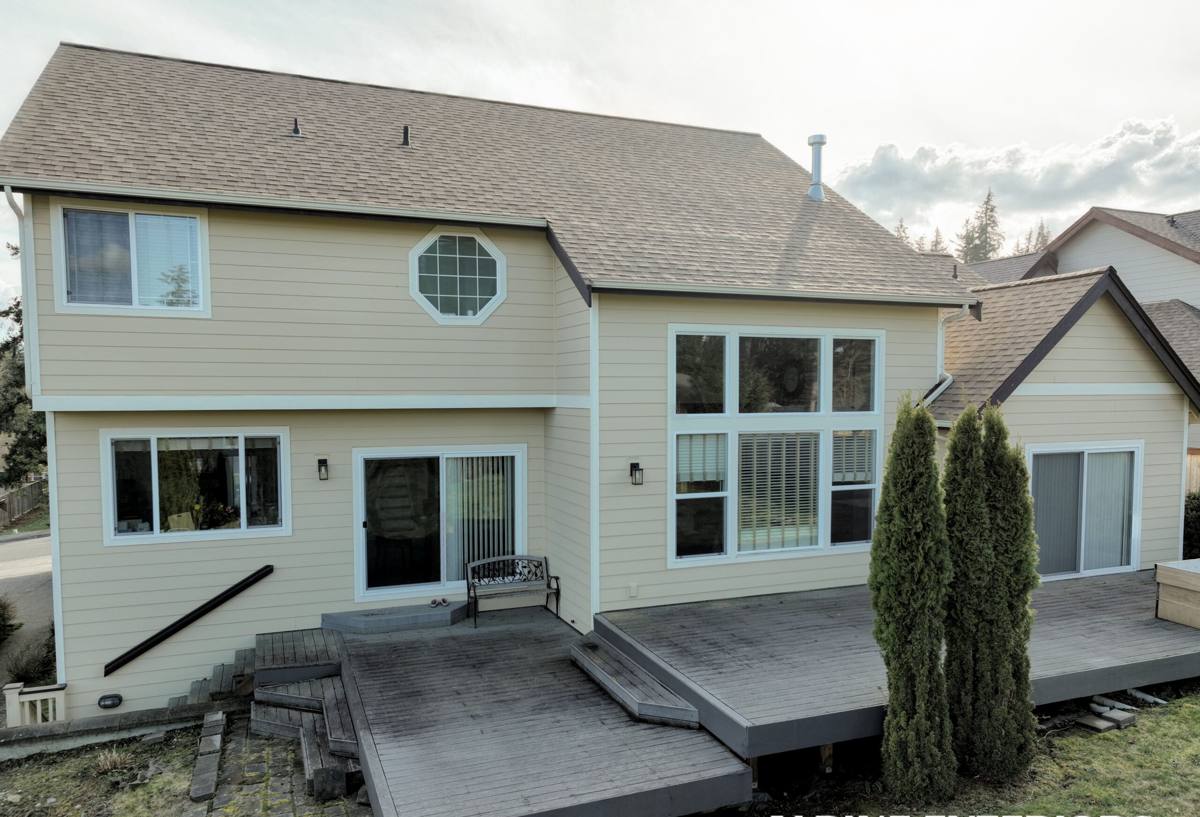
What Belleair Beach Homes Actually Need From a Deck
Before we talk about boards and colors, it's worth being clear about the actual performance requirements for this location:
- Corrosion resistance in every fastener, bracket, and connector — not just the visible boards
- UV stability strong enough to hold color and surface integrity under year-round, high-angle Gulf coast sun
- Moisture tolerance in the decking material itself and in everything underneath it, since wind-driven rain gets pushed sideways under rails and around framing far more than it would inland
- Wind-rated attachment for boards, railings, and ledger connections that meets Pinellas County's coastal wind requirements
- Low ongoing maintenance, since salt residue builds up on any outdoor surface here whether or not the deck ever gets rained on
Composite decking, installed correctly, checks all five boxes better than most alternatives — but "installed correctly" is doing a lot of work in that sentence, and it's where most of the long-term problems we get called out to fix actually originate.
Composite Decking, Plainly Explained
Modern composite decking is a manufactured board made from wood fiber and recycled plastic, and the boards you'll find worth considering for a coastal application fall into two categories:
Capped Composite
A composite core wrapped in a hard polymer shell on all four sides. The cap is what actually resists moisture intrusion, staining, and UV fading — it's the part doing the work in a salt-air environment. This is what we recommend for the overwhelming majority of Belleair Beach decks.
Uncapped Composite
Older-generation composite with no protective shell — the wood fiber in the core is more exposed to moisture cycling. It's a lower upfront cost, and in a dry inland yard it can perform adequately for years. On a barrier island, we don't consider it the right call, and we'll tell you so directly rather than sell you the cheaper option and let the salt air sort it out.
Comparing Your Realistic Options
| Material | Salt Air / Moisture Behavior | UV / Fade Resistance | Maintenance | Typical Warranty Structure |
|---|---|---|---|---|
| Pressure-Treated Wood | Absorbs moisture, prone to warping and fastener corrosion staining | Fades and grays within 1-2 seasons without upkeep | Annual sealing/staining recommended | Limited, often structural-only |
| Uncapped Composite | Core can absorb moisture over time; more sensitive at cut ends | Moderate, some color drift | Periodic cleaning | Moderate length, prorated |
| Capped Composite | Shell resists moisture intrusion and salt residue | Strong, engineered for sun-heavy climates | Occasional wash-down | Longer, often full replacement for early defects |
| PVC Decking | Fully synthetic, essentially moisture-inert | Strong, though surface can run hotter underfoot | Very low | Long, varies by brand |
We install capped composite as our standard recommendation for Belleair Beach because it gives you the moisture and salt performance closest to PVC, but with the wood-grain look and underfoot feel most homeowners actually want on a residential deck.
What a Correct Installation Actually Involves
The board you choose matters less than most homeowners assume — what matters more is everything underneath and around it. This is where a barrier island deck either lasts or doesn't.
Substructure and Ledger
The framing has to be rated for the wind uplift and load requirements that apply on the island, and the ledger board connection to the house needs proper flashing so wind-driven rain doesn't work its way behind the siding or into the rim joist over time.
Joist Protection
Composite boards are moisture-resistant, but standard framing lumber underneath isn't. We wrap or tape joists to keep water off the wood framing, which matters more here than inland because salt-laden rain doesn't just run off — it sits in humid, salty air longer between rain events.
Fastening System
Hidden fastener clip systems are standard on quality composite decks, but the clips and screws themselves need to be rated for coastal/marine exposure. Standard zinc-coated hardware will corrode and stain the decking around it within a couple of seasons in this environment — we use fastener grades built for the exposure, not the ones that are simply cheapest to stock.
Ventilation and Drainage
Decks built low to grade or with poor airflow underneath trap moisture and salt residue against the framing. We account for proper ventilation gaps and drainage slope so the structure can dry out between weather events instead of staying damp.
Railings and Hardware
Railing posts and their anchoring take direct wind load in a hurricane event, so post spacing and anchoring have to meet code — this isn't a place to cut corners for appearance's sake.
Our Process, Start to Finish
- On-site assessment — we look at existing framing (if any), grade, drainage, and exposure direction relative to the Gulf and prevailing wind
- Material selection — we walk you through board and color options with the trade-offs explained honestly, not just the upsell
- Permitting — decking work on Belleair Beach typically requires permitting through the town/county, and on some lots may involve coastal construction considerations depending on elevation and setback from the water; we handle this rather than leaving it to you
- Demo and framing — old decking removed if applicable, substructure built or reinforced to current wind-load requirements
- Installation — joist protection, corrosion-rated fasteners, hidden clip systems, and proper board spacing for drainage and expansion
- Railings and trim — installed to code with anchoring appropriate for coastal wind exposure
- Final walkthrough — we go over basic care with you before we consider the job done
The Hardware Question Homeowners Rarely Ask
Most homeowners shopping for a new deck focus entirely on the board — the color, the texture, the brand. On Belleair Beach, the hardware underneath is just as important to the deck's lifespan. Standard fasteners rated for general residential use will corrode faster here than they would even a few miles inland, and once a fastener starts to corrode it can stain the surrounding composite and eventually loosen the board. We spec fastener and connector hardware rated for direct coastal exposure as a baseline, not an upgrade — it's part of what "built for Belleair Beach" actually means in practice.
Keeping a Composite Deck Looking Right in This Climate
Composite decking is low-maintenance compared to wood, but "low-maintenance" doesn't mean "no maintenance" in a salt-air environment. A simple seasonal routine goes a long way:
- Rinse or wash down the deck surface periodically to remove salt residue before it builds up, especially after wind events
- Sweep off leaf and debris buildup so moisture doesn't sit in one spot against the board surface
- Check railings and fastener heads once or twice a year for early signs of corrosion staining
- Keep gutters and downspouts near the deck clear so runoff isn't concentrated onto or under the decking
- Trim back vegetation that traps humidity against the deck edge or substructure
Why Local Experience on This Specific Island Matters
Belleair Beach isn't just "coastal Florida" in a general sense — it's a barrier island with its own permitting nuances, its own wind and flood considerations depending on lot elevation, and a level of salt exposure that's more intense than most of Pinellas County even a short drive inland. A crew that mostly builds decks in subdivisions a few miles from the water can still do fine general carpentry, but they may not default to marine-grade hardware, proper joist protection, or wind-rated railing anchoring unless they're used to being held to that standard on every job.
We work in Seminole and across Pinellas County, including barrier island properties like those on Belleair Beach, and we build every coastal deck to the same exposure standard regardless of which street it's on. That consistency — not a marketing claim, just a habit built from doing this work in this climate repeatedly — is the actual reason it matters who you hire for this job.
Getting Started
If you're weighing a new composite deck or a replacement for an aging one on Belleair Beach, we're happy to come take a look, walk the site, and give you a straightforward, no-pressure estimate — including an honest read on what your specific exposure and lot conditions call for. Use the form below to request a free estimate.