 Seminole Siding
 Belleair Bluffs is a small residential community tucked into Pinellas County between the Intracoastal Waterway and the surrounding Seminole and Largo area, and its roofs carry the same load as everything else in this part of the Gulf Coast: hurricane-force wind several months a year, intense year-round UV, wind-driven rain that finds every weak seam, and salt air that never stops working on a building. A roof here isn't just shedding water — it's the single system most responsible for keeping wind and water out of the house during the exact months when both are most likely to show up at once. When a Belleair Bluffs roof is nearing the end of its life, replacing it correctly matters more than in a milder climate, because the margin for a shortcut is smaller.
What Pinellas County's Climate Actually Does to a Roof
Every roofing material sold today is rated to handle some combination of sun, water, and wind. What separates a roof that performs for its full rated life from one that fails early is how well the installation accounts for the specific stresses of this part of Florida.
Hurricane-Force Wind
Wind doesn't just push on a roof — it pulls. Uplift forces concentrate at the ridge, the eaves, and the corners, which is exactly where a marginal nailing pattern or under-spec'd fastener schedule shows up first. A roof that looks fine in a light storm can lose shingles, tiles, or entire sections of underlayment in a direct hurricane-force event if the fastening and edge details weren't done to spec the first time.
Year-Round UV
Florida's sun angle and day length put more cumulative UV exposure on a roof surface each year than most of the country sees. On asphalt shingles, that UV load breaks down the asphalt binder and drives off the granules that protect it, which is why a shingle roof here can show real wear years before an identical roof in a cooler, cloudier climate. Underlayment and sealants degrade the same way if they're ever left exposed longer than they should be during installation.
Wind-Driven Rain
Straight-down rain is easy for almost any roof to handle. Rain pushed sideways by 40, 50, or 60+ mph wind is a different problem — it drives up under shingle tabs, through marginal flashing at penetrations, and along valleys and ridge lines that would stay dry in a calm storm. Roofs that leak specifically during named storms, rather than during routine rain, usually have a wind-driven-rain problem at a flashing detail rather than a simple material failure.
Salt Air
Being close to the Intracoastal means airborne salt settles on every exposed surface in this area, roofs included. Salt accelerates corrosion on exposed fasteners, metal flashing, and drip edge, and it's a slow, cumulative process rather than a dramatic one. It's part of why fastener and flashing material selection matters more here than it would on a roof twenty miles inland.
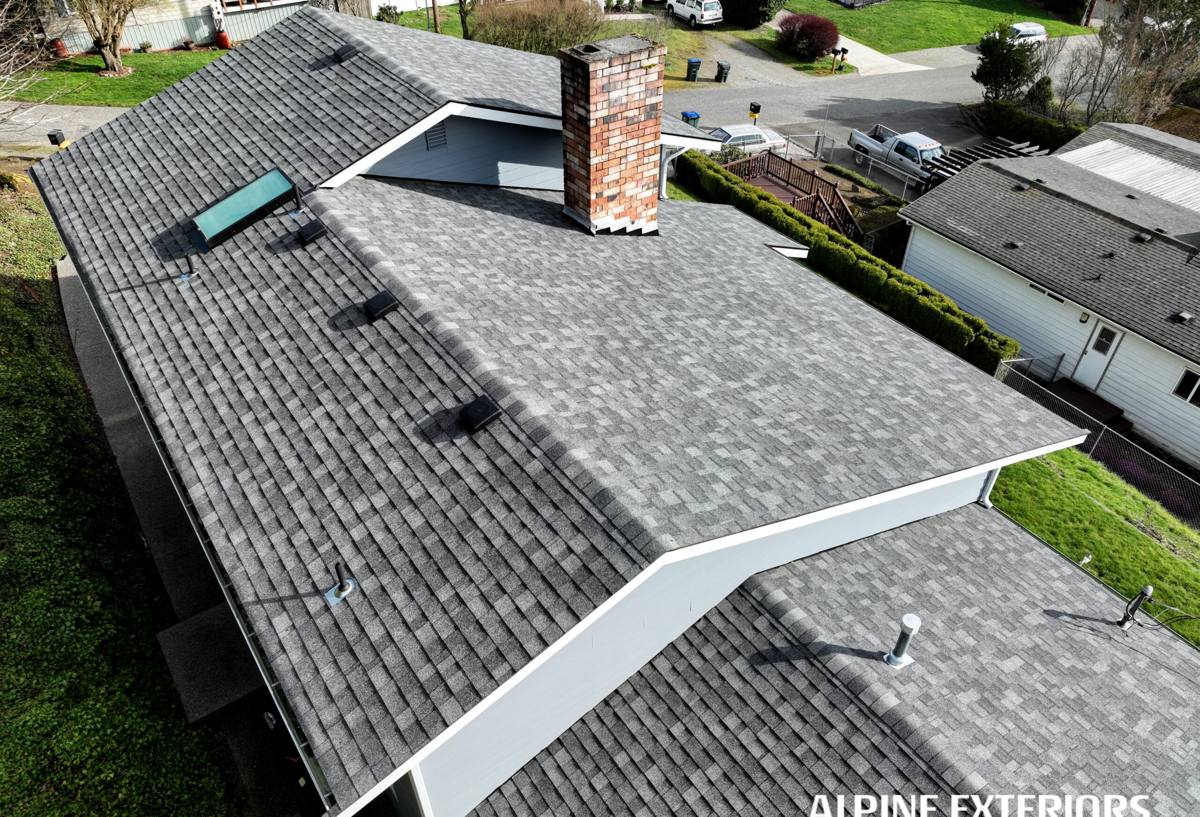
Signs a Belleair Bluffs Roof Needs Replacement, Not Another Repair
Not every roofing problem calls for a full replacement, and an honest contractor will tell you when a targeted repair is the right call. But certain signs point toward a roof that's past the point where patching makes financial sense.
- Granule loss heavy enough that shingles look patchy, dark, or uneven from the ground
- Curling, cracking, or cupping shingles, especially on sun-facing slopes
- Repeated leaks in different spots after each storm season, rather than one isolated leak
- Visible sagging anywhere in the roof deck, which points to a structural issue underneath
- Missing or lifted shingles/tiles after wind events, even when the rest of the roof looks intact
- Rust streaks or failing sealant at flashing, vents, and roof-to-wall transitions
- A roof older than its material's expected service life with no major work on record
- Daylight visible through the roof deck from inside the attic
One or two of these on their own might mean a repair is enough. Several at once, or a roof already past the age where its materials are rated to perform, usually means replacement is the more honest recommendation — and the more cost-effective one over time, since repeated repairs on an aging roof rarely add up to less than one correct replacement.
Roofing Material Options for This Climate
There isn't one "best" roofing material for every Belleair Bluffs home — the right choice depends on the roof's slope, the home's structure, the budget, and how the homeowner weighs upfront cost against long-term maintenance. What we won't do is recommend a material based on what's cheapest to install rather than what actually fits the house and the climate.
| Factor | Architectural Asphalt Shingle | Metal | Tile |
|---|---|---|---|
| Wind performance | Good when installed to a proper fastening schedule and wind rating | Excellent when panels and seams are correctly fastened and sealed | Good, but individual tiles can be dislodged if fastening or adhesive is marginal |
| UV/heat behavior | Granule loss and binder breakdown over time under constant sun | Reflects heat well, finish can fade slowly over decades | Very stable under UV, color is baked into the material |
| Salt air exposure | Generally stable; fastener and flashing quality matter most | Coating and metal type matter a great deal near the coast | Very stable; underlying fasteners and flashing still need attention |
| Typical service life | Roughly 20-30 years depending on product grade and installation | Often 40-plus years with proper installation and maintenance | Often 40-plus years for the tile itself; underlayment needs replacement sooner |
| Upfront cost | Lowest of the three | Mid to higher, depending on panel type | Highest, and structure must be able to support the weight |
Whatever material a homeowner chooses, the underlayment and flashing details underneath it do most of the actual work of keeping water out during a wind-driven rain event — the visible roofing material sheds the bulk of the water, but the systems beneath it handle everything that gets past the surface.
What a Correct Roof Replacement Actually Involves
A roof replacement is more than swapping old material for new. Done correctly, it addresses everything from the deck up, not just the top layer that's visible from the street.
Tear-Off and Deck Inspection
Full tear-off lets us see the roof deck itself, not just guess at its condition from above. Soft, delaminated, or water-stained decking gets found and repaired at this stage — covering over a compromised deck with new material just hides a problem that will resurface, often as a leak that's harder to diagnose because the new roofing is intact and the damage is underneath it.
Underlayment
The underlayment is the roof's backup water barrier, and in a climate with this much wind-driven rain, it's not a place to cut corners. We install underlayment rated for the specific product and slope going on top of it, with proper overlap and sealing at seams, valleys, and penetrations.
Flashing
Flashing at chimneys, vents, skylights, and roof-to-wall transitions is where most roof leaks actually originate, not in the field of the roof itself. Correct flashing means the right material, the right lap sequence with the underlayment and roofing material, and sealant used as a backup — not as the primary line of defense.
Fastening and Wind Rating
Pinellas County's wind zone requirements set minimum standards for fastening schedules and product wind ratings, and we install to those specifications rather than a generic national baseline. That includes nail or screw pattern, fastener length and type, and, where applicable, adhesive or clip requirements for the specific product and roof geometry.
Ventilation
A roof that can't breathe traps heat and moisture in the attic, which shortens the life of the roofing material from underneath and can increase cooling costs. Proper intake and exhaust ventilation gets checked and corrected as part of a full replacement, not treated as an optional add-on.
Our Process, Start to Finish
- On-site inspection of the current roof, deck condition where visible, attic ventilation, and any interior signs of past leaks
- A straightforward written estimate covering material options, scope of work, and what happens if hidden deck damage is found
- Permitting through the appropriate local jurisdiction, with work done to Pinellas County's current wind zone and building code requirements
- Full tear-off, deck inspection, and repair of any damaged sheathing or framing before new material goes on
- Installation of underlayment, flashing, and the chosen roofing material to manufacturer specification
- Ventilation check and correction where needed
- Final walkthrough covering what was done, warranty documentation, and basic care going forward
Why a Crew That Already Works Belleair Bluffs Matters
Roofing quality is determined by details that don't show up in a photo after the job is done — how flashing is lapped, whether the fastening schedule actually matches the wind zone, whether ventilation was corrected or just left as-is. A crew that works Pinellas County regularly has already seen how those details play out on this housing stock, under these storm conditions, and knows what local permitting offices actually require rather than applying an out-of-state standard. That local familiarity also means faster scheduling around storm season, when demand for roofing work spikes across the county and crews without local roots often can't get to a job for weeks.
It matters for the paperwork side too. Wind mitigation documentation from a properly permitted, code-compliant roof replacement can affect homeowners insurance premiums, and a contractor who does this work routinely in the area knows what documentation insurers typically ask for.
What Affects the Cost of a Roof Replacement
Every roof is priced individually, but the same handful of factors drive most of the variation from one Belleair Bluffs home to the next:
- Roof size and complexity — square footage, number of slopes, valleys, and penetrations all add labor time
- Material choice — asphalt shingle, metal, and tile carry different material and installation costs
- Current deck condition — hidden rot or delamination found during tear-off adds repair cost that can't be fully known until the old roof is off
- Roof pitch and access — steep or hard-to-access roofs take longer and require more safety setup
- Number of layers being removed — tearing off multiple existing layers costs more than a single-layer tear-off
- Ventilation and flashing corrections — bringing older ventilation or flashing details up to current standards adds scope beyond a like-for-like swap
We'll walk through each of these specifically during an estimate rather than quoting a single number without explaining what's driving it.
Ready for an Honest Look at Your Roof
If you're in Belleair Bluffs and wondering whether your roof needs a repair or a full replacement, we're happy to come take a look, explain what we find in plain terms, and give you a straightforward, no-pressure estimate using the form below.