 Seminole Siding
 Siding Replacement Built for Belleair Bluffs' Coastal Exposure
Belleair Bluffs is a small city, but it sits in one of the more demanding stretches of Pinellas County for exterior building materials. It's close enough to Clearwater Harbor and the Gulf that salt-laden air is part of daily life, and it's fully exposed to the same storm tracks, wind loads, and year-round sun that make siding a much shorter-lived investment here than it would be in most of the country. When a home in Belleair Bluffs needs siding replacement, the job isn't just about appearance — it's about putting a material and an installation method on the wall that can actually stand up to this specific environment for decades, not just look good for the first few years.
This page is specifically about siding replacement for Belleair Bluffs homes: what the local climate does to siding, what a correct replacement job involves, how our process works, and why hiring a crew that already understands this area's conditions matters more here than it would somewhere inland.
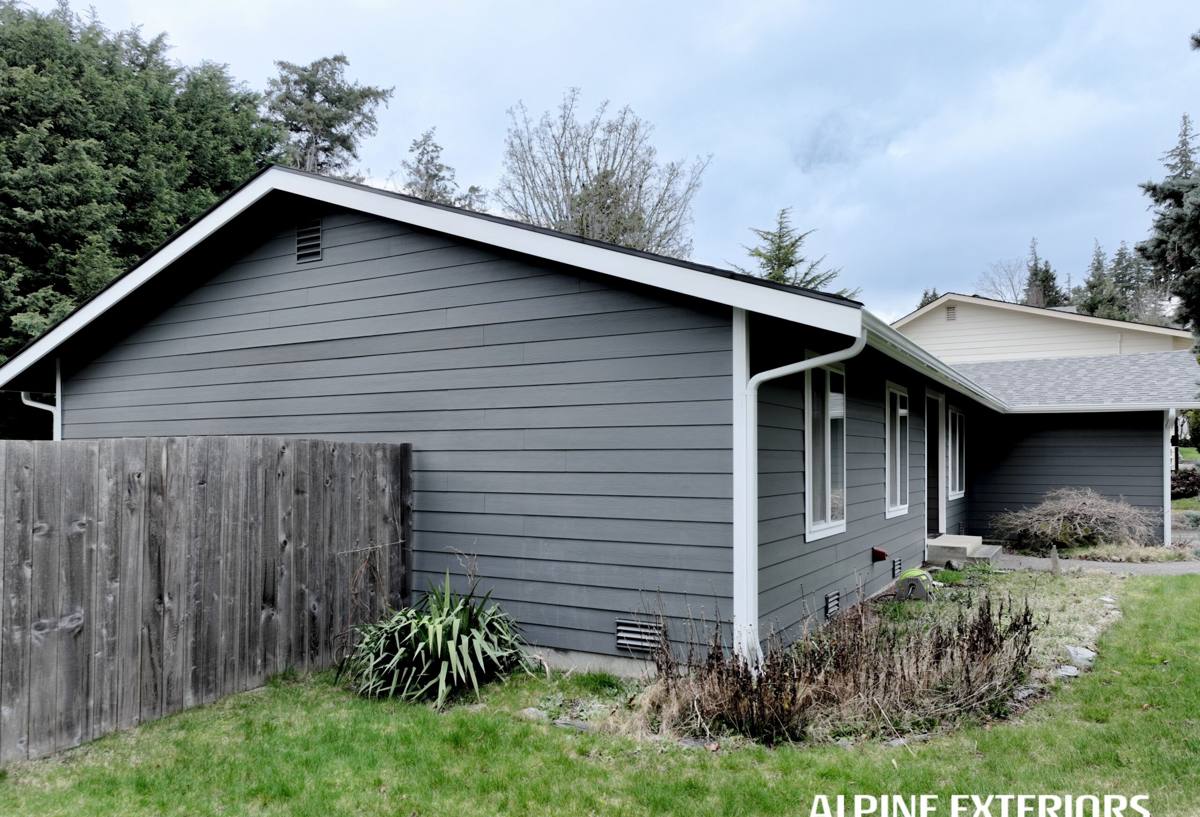
What Belleair Bluffs' Climate Does to Siding
Salt Air
Proximity to Clearwater Harbor and the Gulf means airborne salt settles on every exterior surface in the area, day after day, regardless of the weather. It's not dramatic — you won't see damage from any single event — but it's cumulative. Salt accelerates corrosion on exposed metal fasteners and trim, and over years it can interact with lower-grade coatings and adhesives in ways that shorten a siding system's useful life. It's one of the main reasons fastener choice and finish quality matter more for a home in Belleair Bluffs than they would for a similar home fifty miles inland.
Hurricane-Force Wind
Several months a year, homes here face a real possibility of sustained high winds and gusts well above what most of the country ever has to design around. Siding that isn't rigid or isn't fastened to spec can work loose, distort, or fail outright under that kind of load — and once a section fails during a storm, it opens the wall assembly to wind-driven rain intrusion that can cause a lot more damage than the siding failure itself.
Wind-Driven Rain
Ordinary vertical rain is easy for almost any siding product to shed. Rain that's being pushed sideways by high wind is a different problem — it finds its way into butt joints, fastener penetrations, and trim intersections that would stay perfectly dry in a calmer rain event. Over a storm season or two, homes with aging caulk lines or marginal flashing details start showing water intrusion at exactly those weak points.
Intense, Year-Round UV
Florida's sun angle and day length put far more cumulative UV exposure on siding here than in most of the country, and that exposure doesn't let up seasonally the way it does elsewhere. On lower-grade paints and field-applied finishes, that UV load breaks down pigment binders over time — which is why so many older homes in this area show chalky, faded siding on sun-facing walls years before the shaded side of the same house looks worn at all.
Signs a Belleair Bluffs Home Needs Siding Replacement
Not every siding problem calls for full replacement — some issues are cosmetic and some are structural. Here's what we look for, and what should prompt a professional inspection before the next storm season:
- Soft or spongy spots when pressing on siding near windows, doors, or the bottom courses
- Visible gaps, warping, buckling, or panels that have pulled away from the wall
- Paint or finish that's chalking, fading unevenly, or peeling faster on sun-facing elevations
- Rust streaks or visible corrosion around fasteners, trim, or panel edges
- Musty odors or staining on interior walls that back up to exterior siding
- Siding that's original to a home over 20-25 years old with no documented replacement
- Damage or missing sections after a storm, even if the rest of the wall looks intact
Any one of these on its own isn't necessarily an emergency, but ignoring several at once — especially heading into hurricane season — tends to turn a siding job into a siding-plus-sheathing-repair job.
What a Correct Siding Replacement Actually Involves
The quality of a siding replacement is decided almost entirely by details that never show up from the curb. A wall can look identical from the street whether it was installed to spec or not — the difference only shows up years later, when one holds up through storm season after storm season and the other starts leaking at the joints. For a Belleair Bluffs home, that means:
- Full removal of existing siding and inspection of the sheathing underneath, not just a re-clad over existing problems
- Repair or replacement of any rotted, damaged, or moisture-compromised sheathing and framing found during tear-off
- Installation of a proper water-resistive barrier, correctly lapped and integrated with window, door, and roof flashing
- Correct fastener type, spacing, and penetration depth for our local wind zone — not a generic national default
- Proper clearance from grade, decks, roof lines, and other transitions where trapped moisture causes long-term problems
- Sealed, correctly lapped joints at every seam and penetration, since these are the points where wind-driven rain gets in
None of this is optional detail work. It's the difference between siding that performs for its full expected service life and siding that develops the same problems as a poorly installed product, regardless of what brand is on the wall.
Why We Install Only James Hardie Fiber Cement
We get asked why we don't offer vinyl, LP SmartSide, or other fiber cement brands like Cemplank or Allura. The honest answer is that we made a standardization decision based on what actually holds up under the conditions described above, and we'd rather do one product exceptionally well than several products adequately.
Vinyl is inexpensive and low-maintenance in mild climates, but it isn't mechanically fastened flat the way fiber cement is — it hangs on the wall with room to expand, which is fine in a light breeze but becomes a liability in sustained hurricane-force gusts. Engineered wood products like LP SmartSide have a real track record, but they're still wood-fiber at their core, and in a climate where humidity rarely lets a surface fully dry, any compromise in the factory edge seal creates a point where the wood core can wick moisture and swell.
James Hardie fiber cement is non-combustible, doesn't have an organic core that can rot or swell, and its HZ5 product line is specifically engineered for higher-humidity, higher-moisture climates like ours. Its factory-applied ColorPlus finish resists the fading and chalking that field-painted siding shows under Florida UV, and the manufacturer backs it with a strong transferable warranty and detailed installation documentation that our crews follow closely rather than treating as optional.
Comparing Siding Options for a Belleair Bluffs Home
| Factor | Vinyl | Engineered Wood | James Hardie Fiber Cement |
|---|---|---|---|
| Performance in hurricane-force gusts | Can work loose or tear off under sustained high wind | Solid when properly fastened and sealed | Rigid, mechanically fastened, engineered for wind zones |
| Behavior under constant UV | Can fade and become brittle over years | Factory finish quality varies by product | ColorPlus finish resists fading and chalking |
| Moisture and humidity tolerance | Doesn't rot but traps humid air behind it | Wood-fiber core can swell if edge seal is compromised | Non-organic core, doesn't swell or support rot |
| Salt air exposure | Generally stable; fasteners can corrode | Generally stable; fasteners can corrode | Generally stable; fastener spec matters most |
| Combustibility | Can melt or deform under extreme heat | Combustible (wood-based) | Non-combustible |
Our Siding Replacement Process
Inspection First
Every project starts with a walk of the exterior to see what's actually happening under the current siding, not just what's visible from the driveway or the street. That means checking for soft spots near window and door trim, examining flashing at roof-to-wall transitions, and looking at how water has historically drained around the foundation.
Tear-Off and Sheathing Check
Once we know what we're dealing with, we remove the existing siding and inspect the sheathing underneath before anything new goes up. Any rot or moisture damage gets repaired at this stage — covering it over with new siding just hides the problem for a few more years.
Installation to Spec
Installation follows James Hardie's published fastening, clearance, and joint-treatment specifications, matched to our local wind zone requirements. That includes the water-resistive barrier, flashing integration, fastener schedule, and joint sealing described above.
Final Walkthrough
We finish with a walkthrough covering caulking, any paint touch-up needs, and basic care instructions, so you know what to expect from the siding going forward and what, if anything, needs periodic attention.
Why a Local Crew Matters for This Specific Job
Siding installation quality comes down to judgment calls that a general contractor from outside the area won't have made a hundred times before: how much clearance to leave at the bottom course on a home near the water, how to detail flashing around a roof-to-wall transition that's seen real storm exposure, which fastener spec actually holds up under salt air rather than just meeting a minimum code number. A crew that works Belleair Bluffs and the surrounding Pinellas County communities regularly has already seen how those decisions play out in this specific climate, on this specific building stock, under real storm conditions — not in a training manual written for a different part of the country.
It also matters for permitting. Pinellas County's wind zone requirements affect fastening schedules and product specifications for siding replacement, and a contractor who pulls permits in this county regularly knows what local inspectors expect, rather than applying a generic out-of-state standard and hoping it passes.
What Affects the Cost of Siding Replacement
| Factor | Why It Matters |
|---|---|
| Home size and number of stories | More square footage and elevation changes mean more material and labor time |
| Condition of existing sheathing | Rot or moisture damage found during tear-off adds repair scope before new siding can go up |
| Amount of trim and architectural detail | Corner boards, fascia, and detail work around windows and doors add labor beyond flat wall coverage |
| James Hardie product line chosen | Lap siding, panel, and shingle profiles carry different material and installation costs |
| Site access and staging | Tight lots or limited access can affect labor time and equipment needs |
We don't publish flat pricing because these factors genuinely change the number from one home to the next, but we'll walk through each of them specifically during an estimate rather than leaving you to guess.
Roofing, Windows, and Decks Alongside Siding
Siding rarely fails in isolation from the rest of the building envelope. A roof-to-wall flashing detail is really a roofing and siding problem at the same time, and window flashing integration determines whether new siding actually stays dry around openings. We handle roofing, windows, and decks as well as siding, so when we quote a replacement project in Belleair Bluffs, we're looking at the whole envelope — and we'll tell you honestly if something else needs attention first rather than just quoting the wall surface in isolation.
Ready to Talk Through Your Home's Siding
If you're in Belleair Bluffs and dealing with aging, storm-damaged, or failing siding — or just planning ahead of the next hurricane season — we're happy to come take a look. An honest estimate starts with an inspection, not a sales pitch: we'll check your current siding's condition, talk through which James Hardie product line fits your home, and give you a straightforward number based on your home's actual factors. Use the form below to request a free, no-pressure estimate.