 Seminole Siding
 Board & Batten in Indian Rocks Beach: A Coastal Look That Has to Earn Its Keep
Board and batten siding has a clean, vertical, cottage-to-coastal look that fits Indian Rocks Beach as well as almost any style on the market. It works on beach bungalows, it works on raised coastal homes, and it works as an accent on gables and porches paired with horizontal siding elsewhere on the house. But Indian Rocks Beach is a barrier island community in Pinellas County, sitting directly on the Gulf, and that location is not gentle on exterior building materials. Salt-laden air, near-constant UV exposure, wind-driven rain, and the real possibility of hurricane-force wind loads all work on a home's siding every single day, not just during storm season.
That combination matters more for board and batten than it does for most siding styles, because the batten strips create extra seams, extra fastening points, and extra opportunities for water to find a way in if the assembly isn't detailed correctly. Done right, board and batten on a home this close to the water can look sharp and perform well for decades. Done with the wrong material or a rushed installation, it becomes one of the first things to fail. This page covers what board and batten actually needs to survive in Indian Rocks Beach, how we build it, and why the details matter more here than almost anywhere else.
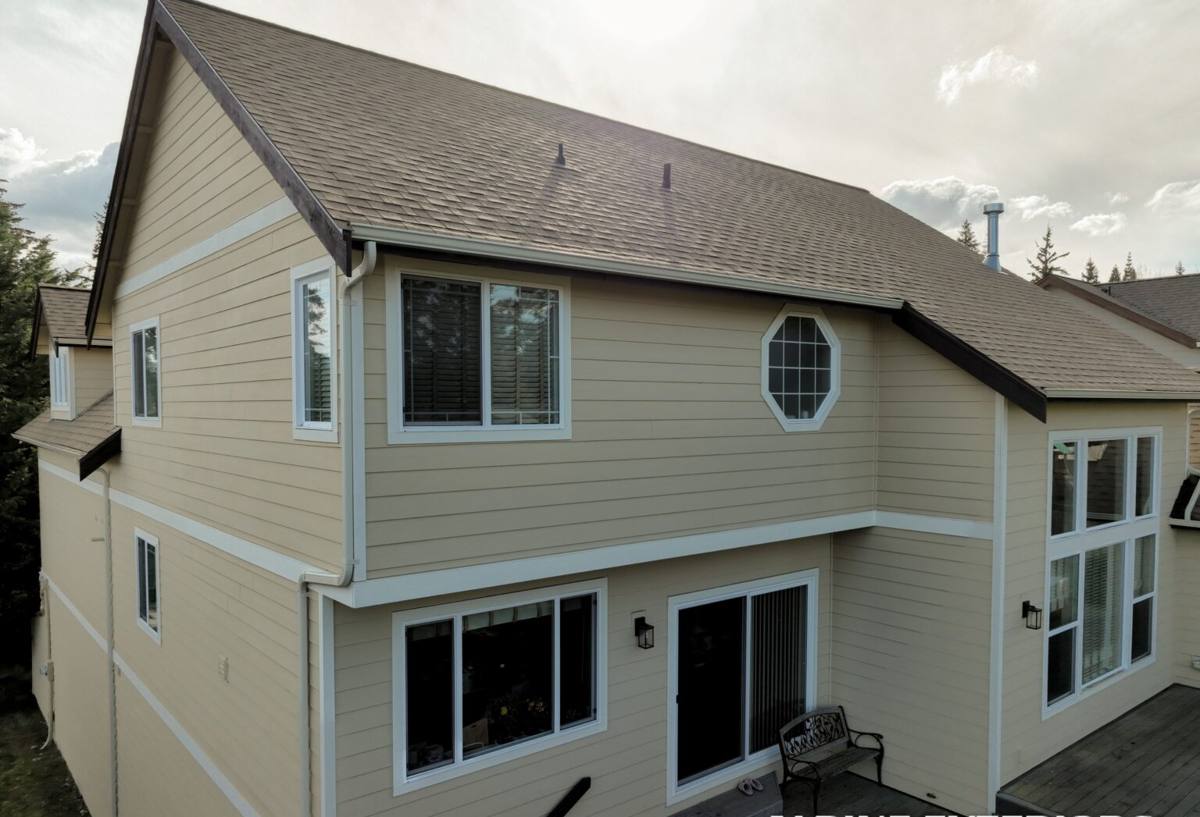
What Board & Batten Actually Is — and Why the Material Underneath It Matters
Board and batten is a siding pattern, not a material. It's built from wide vertical panels or boards with narrower strips (battens) covering the seams between them, creating a rhythmic vertical line down the wall. Historically it was built from solid wood boards, and it's still commonly reproduced today in vinyl, engineered wood, or fiber cement. The pattern is simple. What holds up over time depends entirely on what the boards and battens are made of and how they're installed.
The Problem With Traditional Board & Batten Materials on a Barrier Island
Solid wood board and batten looks great on day one, but wood is porous, and porous material next to the Gulf is fighting a losing battle against humidity, wind-driven rain, and salt. It swells, cups, and rots at the seams and end cuts unless it's maintained aggressively — repainting, recaulking, and inspecting far more often than most homeowners want to. Vinyl board and batten sidesteps the rot problem but introduces a different one: vinyl softens and warps under sustained heat and intense UV, and it's rated for wind resistance well below what a coastal property like this can see in a serious storm. Engineered wood products can perform well when detailed properly, but they're still wood-based composites that depend heavily on unbroken paint and caulk lines to keep moisture out — a hard thing to guarantee on a house that takes salt spray and driving rain from the Gulf.
How James Hardie Delivers the Look Without the Weak Points
We install James Hardie fiber cement exclusively, and board and batten is one of the styles it handles well. The vertical look is built using HardiePanel vertical siding as the field material, with HardieTrim boards installed over the panel seams to create the traditional batten reveal. Fiber cement doesn't rot, doesn't attract termites, and won't swell or warp from humidity the way wood-based products do. It carries a factory-applied ColorPlus finish that's baked on and engineered to hold color and resist fading under sustained UV — a real advantage on a coastline where the sun is relentant nearly year-round. And because it's non-combustible, it doesn't add fuel risk the way some composite and vinyl products can.
Why Indian Rocks Beach Homes Need More From Their Siding
Every coastal town in Pinellas County deals with salt air and storms, but a barrier island property like those in Indian Rocks Beach gets a more concentrated version of it. There's less land buffer between the house and the Gulf, which means more direct salt exposure on the walls, more direct sun with fewer natural windbreaks, and more direct wind loading when a storm comes through.
| Climate Factor | Effect on Standard Board & Batten | What Correct Installation Addresses |
|---|---|---|
| Salt air | Corrodes exposed fasteners; degrades unsealed wood and vinyl edges over time | Corrosion-resistant fastening and factory-sealed material at every cut edge |
| Wind-driven rain | Pushes water sideways into batten seams and panel joints | Proper lap, flashing, and sealant placement at every seam and penetration |
| Year-round UV | Fades field-applied paint; embrittles vinyl over years of exposure | Factory-cured finish engineered for sun exposure, not a job-site paint job |
| Hurricane-force wind | Loosens under-fastened panels; can tear lightweight materials from the wall | Fastening schedule and panel selection matched to wind load, not the minimum code allows |
None of these factors are unique to board and batten, but the style's extra seams and vertical fastening pattern give each one more places to cause trouble if the installation cuts corners. That's the real argument for board and batten specifically being installed with a material and a crew built for this environment, not a generic approach borrowed from an inland job.
What a Correct Board & Batten Installation Involves
The finished look of board and batten is simple, but the assembly behind it is where a job either holds up for decades or starts failing in a few years. On a coastal Pinellas County home, we pay particular attention to a handful of details that are easy to skip and expensive to fix later.
Weather-Resistive Barrier and Drainage Plane
Before any panel goes up, the wall needs a continuous weather-resistive barrier and a drainage plane that gives incidental moisture a way out instead of trapping it against the sheathing. This matters on every siding job, but it matters more on vertical board and batten because water that gets behind a seam has a straight vertical path to travel if there's nowhere for it to drain.
Fastening and Batten Spacing
Panels and battens have to be fastened according to the manufacturer's engineered schedule for the wind zone the home sits in — not a looser, faster pattern. Batten spacing and fastener placement both affect how the assembly resists wind uplift, and this is one of the areas where an installer working outside their normal service area is more likely to default to a generic approach instead of one calibrated to a coastal property.
Flashing, Trim, and Ground Clearance
Every window, door, and roofline transition needs flashing detailed to shed water outward, not just caulk relied on as the only defense. Battens and trim boards get factory-sealed cut edges wherever they're field-cut, and the bottom of the siding is held above grade, decking, and hardscaping per manufacturer clearance requirements so splashback and standing water don't sit against the material.
Fastener and Hardware Selection
In a salt-air environment, fastener corrosion is a real, visible failure mode over time — rust streaks bleeding down a wall are usually a fastener problem, not a siding problem. We use fasteners and hardware rated for coastal, corrosive exposure, not standard-grade hardware that's fine forty miles inland but starts corroding within a few years of exposure to Gulf air.
- Continuous weather-resistive barrier installed before any siding goes up
- Wind-zone-appropriate fastening schedule for panels and battens
- Flashing at every window, door, and roofline intersection
- Factory-sealed or field-sealed cut edges on every panel and trim piece
- Proper clearance from grade, decking, and roofing per manufacturer spec
- Corrosion-resistant fasteners and hardware throughout
- Final inspection of seams, caulk lines, and penetrations before walk-through
Board & Batten Compared to Other Siding Profiles in This Climate
Board and batten isn't the only siding profile that performs well near the Gulf, and it isn't automatically the right choice for every home. It's worth understanding how it stacks up against the alternatives before committing to it for an Indian Rocks Beach property.
| Siding Profile | Coastal Suitability | Typical Use Case |
|---|---|---|
| Board & Batten (HardiePanel + HardieTrim) | Strong when installed to spec; more seams to detail correctly than lap siding | Full facades, gables, porch accents, cottage and coastal styles |
| Horizontal Lap (HardiePlank) | Excellent; fewer vertical seams, water sheds naturally with each course | Whole-home siding on most traditional and coastal designs |
| Shingle/Shake Style (HardieShingle) | Strong with correct fastening; more labor-intensive install | Accent gables, dormers, coastal cottage detailing |
Board and batten's vertical seams aren't a weakness by themselves — HardiePanel and HardieTrim are engineered to handle them — but it does mean the installer has more joints to get right than a straight lap job. That's a reason to be more selective about who installs it, not a reason to avoid the style.
Maintenance in a Salt-Air Environment
James Hardie siding is low-maintenance compared to wood, vinyl, or engineered wood alternatives, but "low-maintenance" doesn't mean "no maintenance," especially this close to the Gulf. A simple seasonal routine keeps board and batten performing the way it's supposed to for the long haul.
- Rinse the siding periodically to clear accumulated salt residue, especially on Gulf-facing walls
- Walk the exterior after major storms and check caulk lines around windows, doors, and batten seams
- Keep irrigation heads and sprinklers from spraying directly on the siding, which accelerates mineral buildup
- Trim back landscaping that holds moisture against the wall or shades it from drying out after rain
- Have a professional inspect fastener condition and seams every few years, not just when a problem is visible
Our Process for Indian Rocks Beach Projects
We start with an on-site assessment of the home's current siding, existing moisture or fastener issues, and how the walls are exposed relative to the Gulf and prevailing wind. From there we walk through material and color options, confirm the batten layout and trim details that fit the home's architecture, and put together a straightforward scope and estimate before any work begins.
Installation follows the same sequence on every job: remove and inspect the existing wall assembly, address any sheathing or moisture issues found underneath before they get covered up, install the weather-resistive barrier and drainage plane, then install panels, trim, and battens to the fastening and flashing standards outlined above. We do a final walk-through with the homeowner before calling the job complete, so any questions about care or warranty coverage get answered on-site, not after the fact.
Why Hiring a Crew That Already Works Indian Rocks Beach Matters
Board and batten installed to spec inland and board and batten installed to spec on a Gulf-facing barrier island aren't quite the same job, even though the materials might be identical. A crew that regularly works Indian Rocks Beach and the surrounding Pinellas County coastline already knows how salt exposure, wind loading, and moisture behave on homes in this specific setting, and builds the fastening schedule, flashing details, and hardware selection around that reality instead of a generic inland default. That local familiarity is also what keeps a project moving — permitting, wind-load requirements, and inspection expectations in coastal Pinellas County aren't identical to a job three counties inland, and a crew that's done it before doesn't have to relearn it on your house.
If you're weighing board and batten for a home in Indian Rocks Beach, we're happy to take a look and talk through what your specific house needs. Use the form below to request a free, no-pressure estimate.