 Seminole Siding
 Decking Built for Pinellas Park's Coastal Climate
Pinellas Park sits inland from the beaches but still gets the full weather package that comes with living in Pinellas County: long stretches of intense UV exposure, sudden wind-driven downpours in summer, hurricane-force gusts during storm season, and a steady dose of salt-laden air blowing in off Tampa Bay and the Gulf. A deck here isn't just outdoor furniture space — it's a structure that has to survive repeated soak-and-bake cycles, high humidity that never really lets up, and fasteners that corrode faster than they would almost anywhere inland in the country.
Composite decking handles that combination better than most materials, but only when it's specified and installed correctly for this environment. A board rated for composite decking in general isn't automatically rated for what a Pinellas Park backyard puts it through. The framing underneath, the fasteners holding it down, and the way the deck ties into the house all matter as much as the boards themselves.
What Pinellas Park Homes Actually Need From a Deck
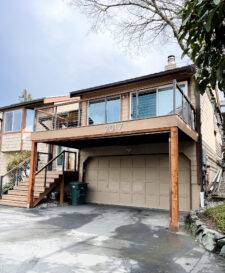
Most homes in this part of Seminole and Pinellas Park were built for Florida living — slab foundations, low elevation, and yards that see standing water after a heavy summer storm. That changes how a deck should be built compared to a similar project up north.
- Substructure materials that won't wick moisture or rot when the ground stays damp for days after a storm
- Fastening systems rated for the wind uplift this area can see during tropical storms and hurricanes
- Hardware that resists corrosion from salt air, not just standard galvanized coating
- Board spacing and ventilation that accounts for Florida humidity, not a dry-climate spec sheet
- UV-stable capped boards that won't fade or chalk after a few Florida summers
Skip any one of these and the deck will still look fine on installation day. The problems show up eighteen months to three years later, usually as fastener staining, a soft spot in the framing, or boards that have started to bow between joists.
What a Correct Composite Deck Installation Involves
Framing and Substructure
Composite boards are heavier than wood and behave differently under load, so the framing underneath has to be built to the composite manufacturer's span tables, not generic lumber-deck spacing. In this climate we lean toward tighter joist spacing than the bare minimum allows, because it reduces flex and keeps the boards from developing a wave over time in the heat. Pressure-treated framing lumber is standard, but every cut end, notch, and drilled hole gets re-sealed — an untreated cut end is where rot starts in a humid climate, full stop.
Fasteners and Hidden-Clip Systems
Most modern composite boards use a hidden fastening system — a clip that locks into a grooved edge on the board, leaving no screw heads on the walking surface. That's the right approach for appearance, but the clips and screws themselves need to be a coastal-grade stainless or coated fastener rated for the salt air here. Standard zinc-coated hardware can start showing rust streaks through the boards within a year this close to the coast.
Ledger Board Attachment and Flashing
Where the deck attaches to the house is the single most common failure point on any deck, composite or wood. It has to be through-bolted (not just screwed) into solid framing, and it needs proper flashing that directs water away from the house rim joist rather than trapping it against the wall. With the amount of wind-driven rain Pinellas Park gets during summer storms, a poorly flashed ledger board is a slow leak waiting to happen — one that can rot the house framing behind the siding long before anyone notices from outside.
Fastening for Wind Uplift
Florida's building code accounts for wind loads that most of the country doesn't have to design around, and decks are no exception. Post connections, joist hangers, and the ledger attachment all need hardware rated for the uplift and lateral forces this area can see, not just what's strong enough to hold up under someone's weight standing on it.
Composite vs. Wood vs. PVC Decking: What Fits Pinellas Park Best
Every decking material has trade-offs. Here's how the three most common options actually perform in this specific climate — not in a showroom.
| Material | Coastal Durability | Maintenance | Upfront Cost |
|---|---|---|---|
| Pressure-treated wood | Lowest — prone to cupping, splintering, and rot in Florida humidity without regular upkeep | Annual sealing/staining required | Lowest |
| Capped composite | Strong — UV-stable cap resists fading, moisture, and salt air when properly installed | Occasional soap-and-water cleaning | Mid-range |
| PVC decking | Very strong — fully synthetic, no wood fiber to absorb moisture | Low; can run hotter underfoot in direct sun | Highest |
For most Pinellas Park homeowners, capped composite is the practical middle ground: it holds up to the sun and salt air far better than wood, without the premium price tag of full PVC. Where a deck gets heavy shade or sits close to open water with more direct salt exposure, PVC is worth the extra cost. We'll walk through which makes sense for your specific yard rather than defaulting to whatever's easiest to sell.
What Composite Decking Costs in Pinellas Park
Pricing depends on deck size, height off the ground, railing style, and how much structural work the substructure needs — a ground-level deck and a second-story deck attached to the house are very different jobs. Broad cost drivers to expect:
| Factor | Why It Moves the Price |
|---|---|
| Deck height / stairs | Elevated decks need deeper footings and more structural framing than ground-level decks |
| Board grade | Entry-level capped composite vs. premium composite or PVC changes material cost significantly |
| Railing type | Composite/aluminum rail systems cost more than basic wood rail but need less upkeep |
| Substructure condition | Replacing an existing frame adds labor beyond installing new decking alone |
| Fastener/hardware grade | Coastal-rated stainless hardware costs more than standard hardware but prevents early rust staining |
We give a firm, itemized quote after walking the site — not a ballpark over the phone. If a number seems too good to be true for the square footage involved, it usually means someone is planning to cut corners on the framing or fasteners, and that's exactly where problems start in this climate.
Our Installation Process
- Site walk and design. We look at drainage, existing grade, how the deck ties into the house, and what board and railing options fit the home and budget.
- Permitting. Pinellas Park and unincorporated Pinellas County both require permits for most new decks. We handle the paperwork and inspections so you don't have to chase it down.
- Demo, if needed. Removing an old deck or repairing rotted framing before anything new goes down.
- Framing. Treated substructure built to span tables and local wind-load requirements, with all cut ends re-sealed.
- Ledger attachment and flashing. Through-bolted connection with proper flashing where the deck meets the house.
- Decking installation. Hidden-fastener composite boards installed with coastal-rated hardware and correct board gapping for expansion.
- Railing, stairs, and trim. Fascia and railing installed to match the board system and finish the edges cleanly.
- Final walk-through and inspection sign-off. We review the finished deck with you and make sure the permit closes out properly.
Maintenance in Florida Sun and Salt Air
One of the real selling points of composite decking is how little it asks of you afterward, but "low-maintenance" doesn't mean "no-maintenance" in this climate. A periodic rinse with soap and water keeps salt residue, pollen, and mildew from building up in the board grain. Furniture feet and grill mats should be checked occasionally — trapped moisture under an object left in one spot for months is one of the few ways mildew can get a foothold on capped composite. Gaps between boards should stay clear of debris so water keeps draining the way the framing was designed to shed it. None of this is heavy work; it's the difference between a deck that still looks new in year eight and one that looks tired by year three.
Permitting and Local Code in Pinellas Park
New decks and significant deck rebuilds typically require a building permit, whether you're inside Pinellas Park city limits or unincorporated Pinellas County. Inspectors check footing depth, framing connections, and railing height and spacing against Florida Building Code requirements, which are written with hurricane wind loads in mind. Skipping the permit might save a little time up front, but it can cause real problems later — at resale, with insurance claims after storm damage, or if the work has to be opened back up and redone to pass inspection. We pull permits as a standard part of every project rather than treating it as optional.
Why Hire a Crew That Already Works Pinellas Park
A contractor who works this specific area regularly already knows which framing details hold up to the local combination of humidity, storms, and salt air, and which ones fail early. That's knowledge you don't get from a spec sheet — it comes from seeing how decks in this exact climate actually age. We also already know the local permitting process, which keeps your project from stalling on paperwork, and we're a phone call away if a hurricane blows through and something needs a look.
Before you hire anyone for a deck project in Pinellas Park, it's worth asking a few direct questions:
- Are you licensed and insured to work in Pinellas County?
- Will you pull the building permit, and is that included in the quote?
- What fastener and hardware grade do you use for coastal installations?
- What's your framing spec, and does it meet the composite manufacturer's requirements?
- Can you explain, in plain terms, why you're recommending one decking product over another for my yard?
A contractor who answers those questions clearly and specifically, without dodging into a sales pitch, is one worth trusting with the job.
Get a Straight Answer for Your Pinellas Park Deck
If you're weighing composite decking for a home in Pinellas Park or elsewhere around Seminole, we're happy to walk the site, talk through what your yard actually needs, and give you a straightforward, itemized estimate — no pressure, no upsell. Use the form below to get started.