 Seminole Siding
 Windows Built for a Barrier Island, Not a Catalog
Redington Shores sits right up against the Gulf, which means the windows on a home here are doing a different job than windows a few miles inland in Seminole or Largo. They're absorbing salt-laden air almost every day, taking direct sun for most of daylight hours, and standing between your living room and wind-driven rain during summer storms and the occasional tropical system. A window that's perfectly fine in a subdivision further from the water can fail years early on a barrier island lot. Custom window work here isn't about picking a style out of a brochure — it's about matching the product, the installation method, and the hardware to what this specific stretch of Pinellas County throws at a house.
When we say "custom," we mean the sizing, the configuration, and the specification are built around your actual openings and your actual exposure — not a one-size-fits-all replacement kit. That matters more in Redington Shores than almost anywhere else we work.
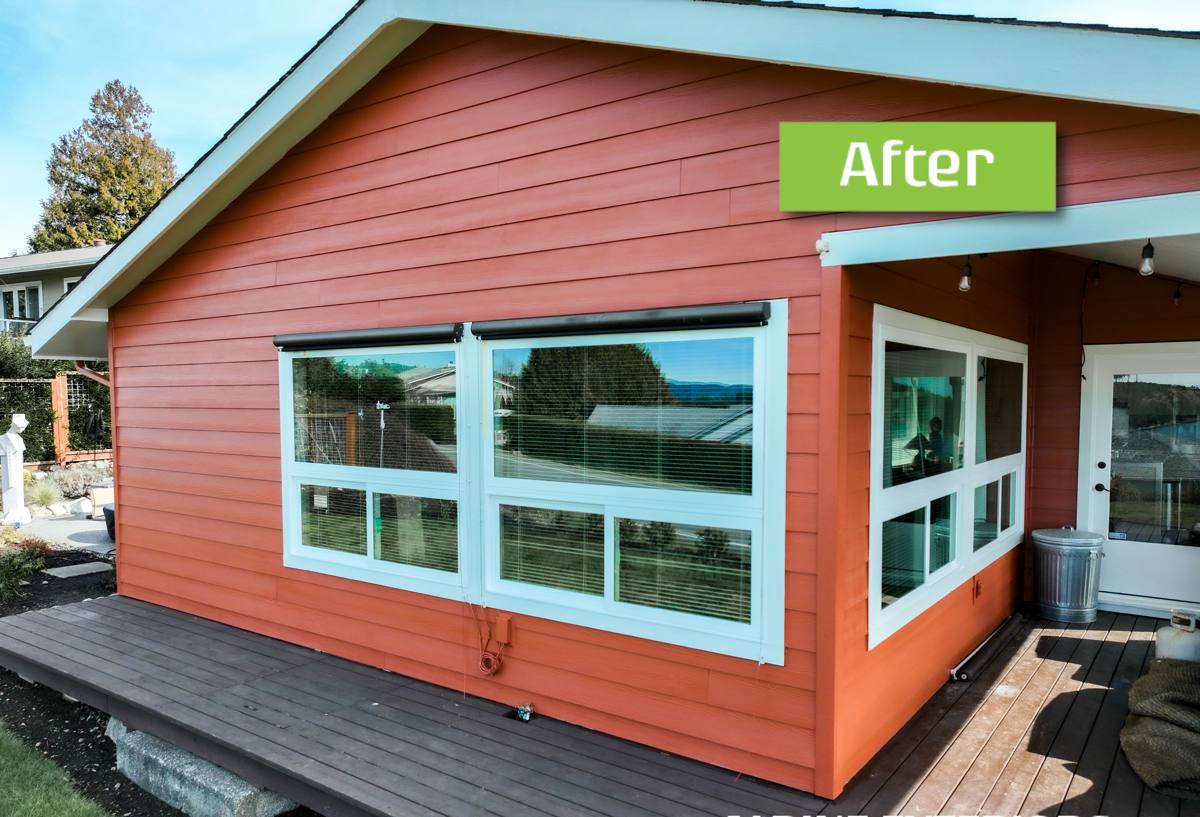
What the Coastal Environment Actually Does to a Window
Homeowners often ask why their windows look tired after eight or ten years when a friend inland is still on their original set after twenty. A few things are happening at once:
Salt air and corrosion
Airborne salt settles on and around window components constantly. Aluminum hardware, screws, and lesser-grade fasteners corrode faster near the Gulf than almost anywhere else in the county. Once corrosion starts on a hinge, lock, or crank mechanism, the window stops sealing the way it was designed to, and that's when water starts finding its way in.
UV exposure
Florida sun is hard on vinyl, weatherstripping, and glazing seals year-round, but a west- or south-facing elevation on a barrier island gets it with almost nothing to block it. UV breaks down rubber gaskets and can cause vinyl frames to become brittle or discolored well before their rated lifespan if the product wasn't built for this exposure.
Wind-driven rain
Rain that comes in sideways during a squall or tropical system doesn't behave like rain falling straight down. It gets pushed into every gap around a window frame, which is why flashing and sealant detail matter as much as the window unit itself. A great window installed with sloppy flashing will still leak.
Wind load
Hurricane-force gusts put real pressure — both pushing and pulling — on a window assembly. The frame, the anchoring, and the glass all need to be rated to handle that load, not just resist it once.
Impact-Rated Windows: What's Required and What We Recommend
Pinellas County, including Redington Shores, falls under Florida Building Code wind provisions that are stricter near the coast than they are further inland. When you pull a permit for window replacement here, the permit will specify a design pressure rating your new windows need to meet based on your home's location, height, and exposure category. That's not a formality — it's engineering that accounts for the fact that your house is a few blocks from open Gulf water.
You generally have two ways to meet that code: impact-rated windows with laminated glass that stays intact under impact, or standard glass paired with code-approved shutters or panels you install before a storm. Both are legal paths. In practice, on the barrier islands we almost always recommend impact-rated glass as the primary approach, for reasons that have nothing to do with upselling and everything to do with how these homes actually get used:
- Impact windows are permanently in place — no scrambling to install shutters before a storm, no storage problem for panels the rest of the year
- Laminated glass also cuts UV transmission significantly, which helps protect interior furnishings and reduces cooling load
- They reduce outside noise substantially, which matters on a street that gets beach traffic
- Insurance carriers frequently offer credits for impact-rated openings, which can offset part of the cost over time
Shutters and panels are a legitimate, lower-cost path to code compliance, and we'll spec them honestly if that's what fits your budget or your home's use — a rarely-occupied second home has different needs than a full-time residence. We just won't tell you impact glass is required everywhere on the island when it isn't; we'll tell you what actually fits your situation.
Frame Material: What Holds Up on the Water
The glass gets the attention, but the frame material determines how the window ages in salt air. Here's how the common options compare for a Redington Shores install:
| Frame Material | Salt Air Performance | Maintenance | Typical Use Case |
|---|---|---|---|
| Vinyl | Good — won't corrode; UV-stabilized vinyl holds color well | Low — occasional cleaning | Most common choice for full replacements |
| Aluminum | Fair — prone to pitting and corrosion near the Gulf unless marine-grade and properly coated | Moderate — coating needs monitoring over time | Impact storefront or large openings where slim sightlines matter |
| Fiberglass | Very good — dimensionally stable, resists corrosion and UV degradation | Low | Higher-budget projects, larger or custom-shaped openings |
| Wood/wood-clad | Poor without diligent upkeep — moisture and salt accelerate rot at joints | High | Rarely recommended this close to the water |
We steer most Redington Shores homeowners toward quality vinyl or fiberglass, not because other materials don't exist, but because the maintenance burden of wood or standard aluminum this close to saltwater tends to outweigh any upfront savings within a few years.
What a Correct Installation Actually Involves
The window unit itself is maybe half the job. The other half is everything around it, and it's the part that determines whether the installation survives its first real storm season. A correct install on a coastal home includes:
- Removing the old unit down to the rough opening and inspecting the substrate for hidden water damage or rot before anything new goes in
- Installing self-adhered flashing membrane integrated with the existing weather-resistive barrier, layered so water sheds outward at every seam
- Anchoring with corrosion-resistant fasteners at the spacing and embedment the window's product approval requires — not just "enough to hold it in place"
- Shimming the frame square and true before fastening, so the sash operates correctly and seals evenly for the life of the window
- Sealing with a marine-grade sealant rated for sustained UV and salt exposure, not a generic caulk that chalks and cracks within a couple of years
- Verifying the finished opening against the county-approved product specification tied to your permit
Skipping any one of these steps is how a homeowner ends up with a "new" window that still leaks during the next wind-driven rain event. It's rarely the glass that fails first — it's the installation detail around it.
Our Process, Start to Finish
- On-site assessment. We walk the exterior, check existing openings, note exposure direction, and look for signs of past water intrusion around the frames.
- Product and spec discussion. We go over impact-rated versus shutter-compliant options, frame materials, and glass packages based on your budget, how the home is used, and its exposure.
- Written estimate. Clear pricing tied to specific products and quantities — no vague allowances.
- Permitting. We handle the permit application with Pinellas County or the relevant local jurisdiction, referencing the correct product approval numbers for your wind zone.
- Installation. Removal, flashing, anchoring, and sealing as outlined above, with attention to protecting your landscaping and interior spaces during the work.
- Final inspection. We coordinate the county inspection and walk the job with you before calling it done.
Permitting on the Barrier Islands
Window replacement in Redington Shores requires a permit, and that permit ties directly to your home's location and wind exposure. Because the town is a barrier island community, plan review can pay closer attention to product approvals and anchoring details than a similar job further inland. We build the permit package around the actual product data — the Florida product approval or Miami-Dade NOA reference, the design pressure rating, and the anchoring schedule — so the review moves without back-and-forth delays. Skipping the permit, or using a contractor who doesn't pull one, can create real problems later: unpermitted work can complicate a home sale, an insurance claim, or a future storm damage assessment.
Signs It's Time to Replace Rather Than Repair
Not every window on a Redington Shores home needs full replacement. But a few signs tend to mean repair is just delaying the inevitable:
- Visible corrosion or pitting on hardware, hinges, or frame fasteners
- Fogging or moisture between panes of insulated glass, which means the seal has failed and can't be repaired
- Frames that feel soft, chalky, or discolored from UV exposure
- Water staining on interior drywall or trim below or beside a window after storms
- Windows original to a home built before current wind-load codes took effect
- Difficulty locking, cranking, or sliding a sash that used to operate smoothly
If you're seeing more than one of these, it's worth getting an honest look before the next storm season rather than after a leak shows up.
Why a Crew That Already Works This Island Matters
Redington Shores isn't a large town, and its permitting expectations, flood zone considerations, and typical construction types differ somewhat from inland Seminole or Largo neighborhoods. A crew that's already done window work on this stretch of coastline knows what the local permitting office expects in a submittal, knows how exposure changes from a Gulf-front lot to one set back a block or two, and has already worked through the practical logistics of a barrier island job site — narrow streets, limited staging space, and beach traffic during season. That familiarity translates into fewer permit delays, fewer surprises during installation, and a finished product that's actually specified for where your home sits, not a generic coastal guess.
If your windows are showing their age, or you're planning ahead of hurricane season, we're happy to come take a look. We'll give you a straightforward, no-pressure estimate based on what your home actually needs — use the form below to get started.