 Seminole Siding
 Why Redington Shores Siding Wears Out Faster Than Inland Homes
Redington Shores sits on a narrow barrier island in Pinellas County, with the Gulf of Mexico on one side and the Intracoastal Waterway on the other. That location is what makes the area beautiful, and it's also what makes siding replacement here a different job than siding replacement ten miles inland. Homes on and near the island take on a combination of stresses that most siding products were never designed to handle for the long haul: sustained salt air, near-constant UV exposure, wind-driven rain that gets pushed sideways into wall assemblies, and the real risk of hurricane-force wind loads during storm season.
Salt air is corrosive to fasteners and hard on any siding material that isn't dimensionally stable. UV breaks down surface coatings faster near the water than it does further inland, which is why paint and lower-grade finishes chalk, fade, and crack sooner on Gulf-facing and near-coastal homes. Wind-driven rain finds every gap in a siding system that isn't properly lapped, flashed, and fastened — and once moisture gets behind siding on a coastal home, it doesn't dry out as quickly given the humidity here. None of this means siding replacement in Redington Shores is more complicated than it needs to be. It means it has to be done correctly the first time, with materials and details chosen for this specific environment rather than a generic install.
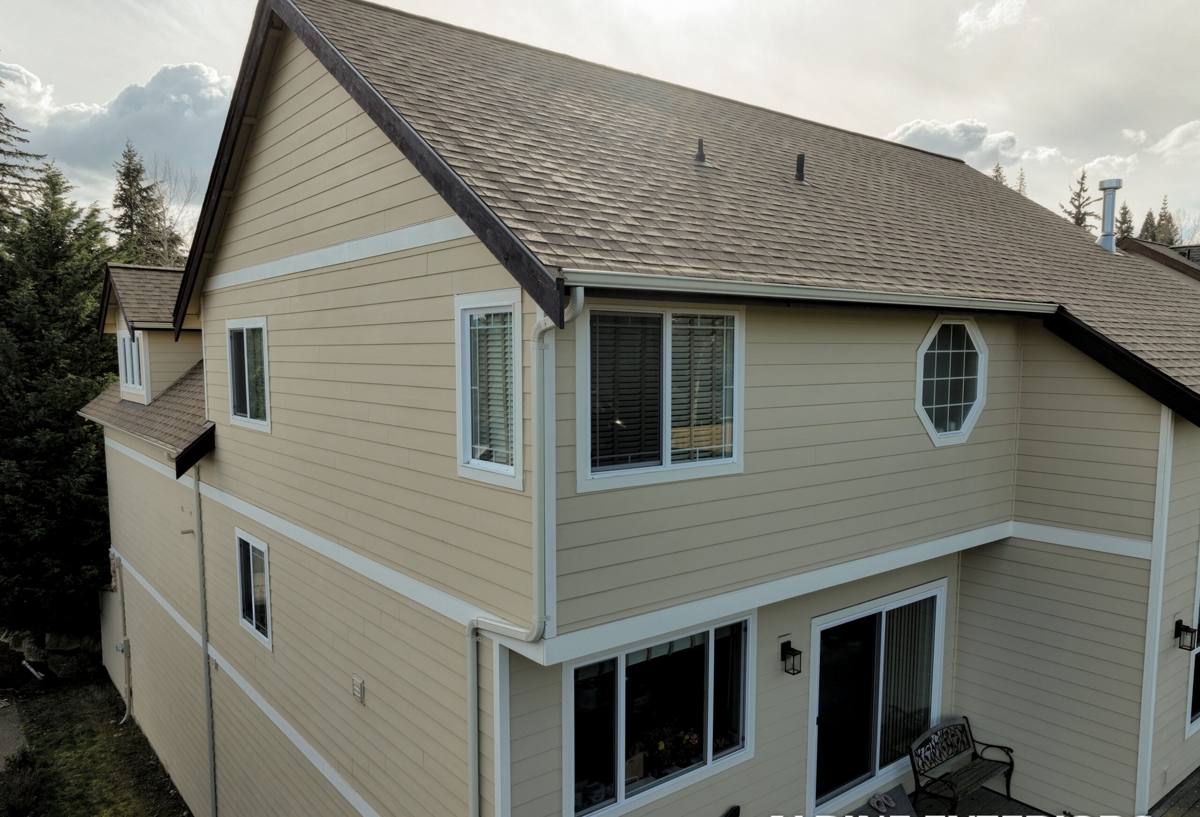
Signs a Redington Shores Home Needs Siding Replacement, Not Just Repair
Coastal exposure accelerates problems, so it's worth knowing what to look for before small issues become structural ones. Some of these are visible from the ground; others take a closer look.
- Soft, spongy, or bubbling spots on the siding surface, which usually means moisture has gotten behind it
- Visible warping, buckling, or panels pulling away from the wall, especially after storm season
- Cracked, chalking, or peeling paint that keeps coming back within a year or two of repainting
- Rust streaks around fasteners or corner trim
- Rot at the bottom edges of siding or around window and door trim
- Rising cooling bills or noticeably drafty rooms, which can point to a failing weather barrier behind the siding
- Visible daylight or gaps at seams, corners, or where siding meets trim
One or two of these on their own might be a repair. Several at once, or any sign of moisture intrusion behind the siding, usually means the wall assembly needs to come apart and be rebuilt correctly — which is a replacement, not a patch.
What a Correct Siding Replacement Actually Involves
Siding is a system, not just a surface. A replacement that only swaps the visible panels without addressing what's underneath will fail in the same ways the old siding did — often faster, because coastal conditions don't forgive shortcuts.
What's Underneath Matters as Much as What's On Top
Once the old siding is off, the sheathing underneath gets inspected for rot, delamination, or water damage. Any compromised sheathing gets replaced before anything new goes up — installing new siding over damaged sheathing just hides a problem that will resurface. A weather-resistant barrier goes on next, properly lapped so water sheds downward and outward rather than working its way in.
Flashing and Fastening Are Where Jobs Succeed or Fail
Windows, doors, and any wall penetration need correct flashing integration so wind-driven rain can't get behind the siding at those transitions — this is one of the most common places a rushed job fails a Gulf-facing home. Fastener type, spacing, and placement also matter more here than inland: fasteners rated for coastal exposure, driven correctly (not overdriven or underdriven), and spaced to the manufacturer's wind-zone specification are what keep siding attached through a tropical storm rather than peeling off in one.
Checklist: What Should Be Included in a Proper Replacement
- Full removal of old siding and trim, not overlay installation
- Sheathing inspection and repair or replacement where needed
- New weather-resistant barrier, correctly lapped and sealed
- Correct flashing at every window, door, and wall penetration
- Manufacturer-specified fastener type and spacing for the local wind zone
- Factory-finished siding rather than field-painted, where possible
- Final inspection of seams, corners, and caulking before the job is called done
Why We Only Install James Hardie Fiber Cement
We made the decision to install exclusively James Hardie fiber cement siding, and we don't install vinyl, LP SmartSide, Cemplank, Allura, or primed wood products like spruce or cedar. That's not a marketing position — it's based on what holds up in exactly the conditions Redington Shores homes face.
Fiber cement is non-combustible, which matters in Florida's dry, windy stretches. It's dimensionally stable in heat and humidity swings, so it doesn't expand, contract, warp, or buckle the way wood-based or vinyl products can under sustained sun and salt exposure. James Hardie's ColorPlus factory-applied finish is baked on under controlled conditions rather than field-painted, which gives it better fade and UV resistance than site-applied paint — a real advantage on a home that gets nearly year-round direct sun.
Built for This Exact Climate: The HZ5 Product Line
James Hardie engineers different formulations for different climate zones, and Redington Shores falls in the HZ5 zone — the line built specifically for high-humidity, high-moisture coastal environments like the Gulf Coast. That's a meaningful distinction: siding engineered for a dry inland climate doesn't perform the same way here, and using the correct HZ-rated product is part of what a correct installation means in this area.
James Hardie also backs its products with a strong, transferable limited warranty, which matters for resale on the barrier island where buyers and their inspectors pay close attention to exterior condition and documentation.
Our Siding Replacement Process
1. On-Site Assessment
We start by walking the home, checking the current siding, trim, and any visible signs of moisture or structural concern. We also look at wind exposure based on the home's orientation and proximity to open water, which affects fastening specification.
2. Tear-Off and Sheathing Check
Old siding and trim come off completely. Sheathing gets inspected, and any rot or damage is addressed before moving forward — this step is non-negotiable, because it's the part homeowners can't see once the new siding goes up.
3. Weather Barrier and Flashing
A new weather-resistant barrier is installed and properly lapped, with flashing detailed at every window, door, and penetration point.
4. James Hardie Installation
HZ5 siding goes up to manufacturer specification — correct fastener type, spacing, and clearances, with attention to the lap and corner details that keep wind-driven rain out.
5. Trim, Caulking, and Final Walkthrough
Trim is finished, seams are sealed, and we walk the job with the homeowner before calling it complete.
What Affects Siding Replacement Cost
Every home is different, so exact pricing depends on a site visit, but the main cost drivers are consistent across Redington Shores homes. This table covers what typically moves the number up or down — it's not a price list, just a guide to what to ask about when comparing estimates.
| Factor | Why It Matters |
|---|---|
| Home size and wall square footage | More surface area means more material and labor |
| Number of stories and access | Multi-story or tight-lot barrier island homes take longer and may need staging or lift equipment |
| Condition of existing sheathing | Rot or moisture damage found during tear-off adds repair scope |
| Trim and architectural detail | Corners, window surrounds, and decorative trim add labor time |
| Siding profile and color | Factory ColorPlus finishes and certain profiles vary in material cost |
| Removal and disposal of old siding | Full tear-off costs more up front than overlay, but avoids trapping moisture problems |
Be cautious of any bid that skips tear-off, skips sheathing inspection, or doesn't specify fastener and flashing detail in writing — those are the corners that cause failures on coastal homes.
Why a Crew That Already Works Redington Shores Matters
Barrier island jobs have logistics that inland jobs don't. Lot sizes are often tighter, parking and staging space is limited, and some streets have restricted access for larger vehicles or equipment. A crew that's already worked in Redington Shores knows how to plan around that instead of losing a day figuring it out on site.
Permitting and wind-load requirements also matter. Pinellas County and coastal Florida building codes account for the higher wind exposure on and near barrier islands, and siding attachment needs to meet those requirements — not the lighter spec that might be acceptable further inland. A contractor familiar with local permitting and code requirements for this specific area is less likely to run into delays or failed inspections.
Salt air exposure also means job-site material handling matters — leaving cut fiber cement edges unsealed, or using the wrong fastener for a coastal environment, causes problems years down the road that are hard to trace back to the install. Familiarity with these conditions isn't a luxury on a Redington Shores project; it's part of getting the job right.
After Installation: Keeping Hardie Siding Performing Long-Term
One advantage of factory-finished fiber cement is that it needs less maintenance than painted wood or vinyl, but "less" isn't "none," especially this close to the Gulf. A periodic rinse to clear salt residue, prompt attention to any caulking that starts to separate at seams or trim, and keeping an eye on areas where sprinklers or landscaping keep siding consistently wet will extend the life of the installation. None of this is heavy maintenance — it's the kind of upkeep that takes an afternoon a couple of times a year.
Get a Straight Answer on Your Siding
If your Redington Shores home is showing signs of siding failure, or you're planning ahead before the next storm season, we're happy to take a look and give you an honest read on what you're dealing with. There's no pressure and no sales script — just a straightforward assessment and a written estimate. Use the form below to schedule a free evaluation.