 Seminole Siding
 Why Ridgecrest Homes Take a Beating From the Outside In
Ridgecrest sits inland enough from the Gulf that people sometimes assume their siding gets an easier ride than homes closer to the water. It doesn't. Pinellas County's climate doesn't spare inland neighborhoods — salt-laden air still drifts across the peninsula on the prevailing wind, UV exposure is intense and constant nearly twelve months a year, and every summer brings the same pattern of wind-driven rain punching sideways into whatever siding is on the wall. Add tropical storm and hurricane-force wind events to that mix, and you have a siding material's worst-case environment running on a loop, year after year.
Most siding failures we see on Ridgecrest homes aren't sudden. They're the slow result of a material that wasn't built for this — paint chalking and fading years ahead of schedule, seams opening up and letting water behind the panel, or edges swelling after repeated soakings that never fully dry out between storms. By the time it's visibly wrong, the damage underneath is usually further along than the surface suggests.
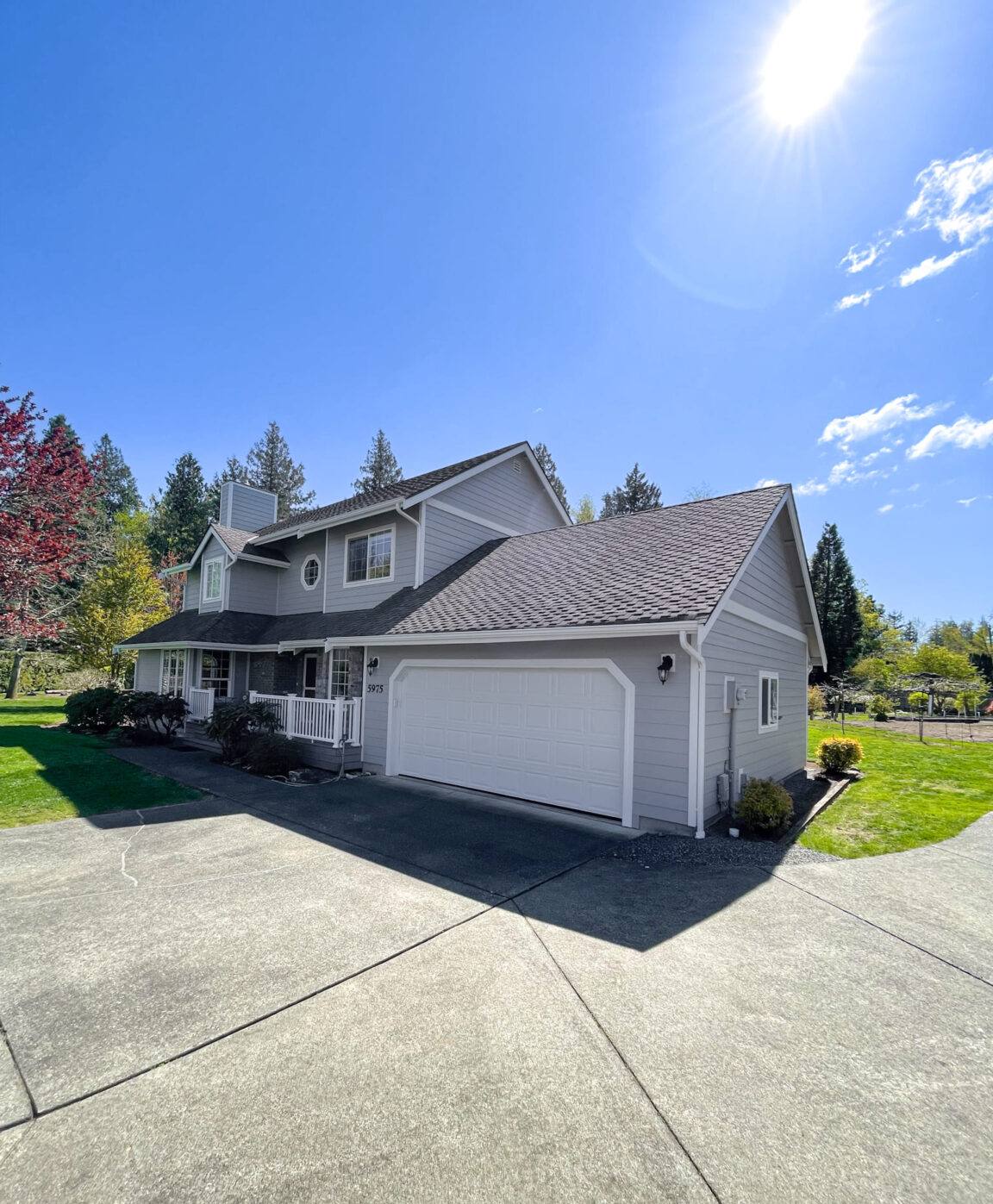
What James Hardie Brings to a House in This Climate
We only install James Hardie fiber cement siding, and in a neighborhood like Ridgecrest that's not a brand preference — it's a materials decision built around what actually holds up here.
Non-combustible, dimensionally stable material
Fiber cement doesn't expand and contract with humidity swings the way wood-based products do, and it isn't a fuel source. In a climate where the siding is constantly cycling between soaked and baked dry, dimensional stability is what keeps seams tight and fasteners from working loose over time.
HZ5 engineering for the Southeast
James Hardie makes region-specific product formulations, and the HZ5 line is engineered for high-humidity, high-moisture climates like ours — it's formulated to resist the moisture-driven damage that's common in Gulf Coast and Southeast installations. That's the line we use on Ridgecrest homes.
ColorPlus factory finish
Rather than field-painted siding that starts fading the day it's installed, ColorPlus is baked on in a controlled factory process, resulting in a finish that resists UV fading and chipping far longer than most site-applied paint jobs. In a market with this much direct sun, that difference shows up within a few years, not decades.
What a Correct Installation Actually Involves
Fiber cement siding is only as good as the installation underneath it. A huge share of the "siding problems" we get called out to inspect in this area aren't product failures — they're installation shortcuts that let water get where it shouldn't. On a Ridgecrest job, that means paying attention to details that don't show up in a drive-by look at the finished house:
- Correct starter strip at the base course so the first row of siding sits at the right plane and angle
- Weather-resistant barrier installed and lapped correctly before a single board goes up
- Proper flashing at windows, doors, and any wall penetration — this is where wind-driven rain finds its way in if it's skipped
- Minimum clearance between the bottom edge of the siding and grade, roofing, or decking, so the board isn't sitting in standing water after a downpour
- Correct fastener type, spacing, and placement — Hardie specifies this for a reason, and in high-wind zones it's not optional
- Field-cut edges sealed per manufacturer specification, since raw cut edges are the most vulnerable point on the board
- Caulking used only where Hardie's install guide calls for it — not as a substitute for correct flashing and lapping
Every one of those steps takes longer to do right than to fake. That's the whole difference between siding that holds up through a decade of Pinellas County summers and siding that needs attention again in three or four years.
Our Process for a Ridgecrest Siding Job
1. On-site assessment
We walk the exterior, check the current siding and what's underneath it where accessible, and look at trim, flashing, and any areas showing water staining or soft spots. This tells us what we're actually dealing with before we quote anything.
2. Scope and product selection
We go over the HZ5 product options, profiles, and ColorPlus colors that fit the house and the neighborhood, and put together a written scope — what's being removed, what's being replaced, and what the install includes.
3. Tear-off and substrate check
Old siding comes off and we check the sheathing underneath for rot or moisture damage before covering it back up. This is the step that gets skipped by crews trying to move fast, and it's the step that matters most in a wet climate — covering damaged sheathing with new siding just hides a problem that keeps growing.
4. Weather barrier and flashing
New weather-resistant barrier goes on correctly lapped, with flashing detailed at every window, door, and penetration before the first board is hung.
5. Installation to Hardie spec
Boards go up with the correct fastening pattern, clearances, and edge treatment, following James Hardie's published installation requirements for our climate zone — not a generalized approach used everywhere regardless of region.
6. Final walkthrough
We walk the finished job with the homeowner, check caulking and trim details, and go over basic care so the siding performs the way it's supposed to for the length of its warranty.
Common Issues We Find Replacing Older Siding in This Area
| What We Find | Why It Happens Here |
|---|---|
| Faded, chalking paint on wood or older fiber cement | Constant UV exposure breaks down field-applied paint faster than in milder climates |
| Soft or delaminating sheathing behind old siding | Years of wind-driven rain finding gaps in flashing or lapping that were never sealed correctly |
| Cracked or lifted panels near the roofline and corners | Repeated wind loading during storm season stresses weak fastening points first |
| Corroded fasteners or trim hardware | Salt air accelerates corrosion on anything not rated for a coastal-influenced environment |
| Gaps at seams and butt joints | Material expansion and contraction from heat and humidity cycling, worse on products not engineered for this region |
Cost Factors Worth Understanding Before You Get Quotes
Every Ridgecrest home is different, so we're not going to throw out a number that doesn't mean anything. What we can do is explain what actually drives the price, so the estimates you get make sense:
| Factor | Why It Matters |
|---|---|
| Home size and wall complexity | More corners, gables, and trim details mean more cutting, flashing, and labor time |
| Condition of the substrate | Rotten or damaged sheathing found during tear-off adds repair work before new siding can go on |
| Siding profile and finish | Lap width, texture, and ColorPlus color selection affect material cost |
| Access and site conditions | Landscaping, fencing, or tight setbacks can slow installation and staging |
| Existing siding removal | Multiple layers of old material or extensive trim replacement adds labor |
Why It Matters That the Crew Already Works This Neighborhood
Installing James Hardie correctly isn't complicated in theory — the manufacturer publishes detailed specifications. But applying those specs correctly to Ridgecrest's actual conditions takes repetition: knowing how wind exposure varies by lot and tree cover in this part of Seminole, knowing which flashing details matter most given the rain patterns here, and having done enough of these installs locally to catch the small things before they become the reason a homeowner calls us back in two years. A crew that's worked this area regularly isn't guessing at any of that.
Living With Hardie Siding in Pinellas County
One of the practical advantages of fiber cement in this climate is how little it asks of you afterward. It doesn't need repainting on the schedule wood siding does, it isn't a target for the moisture and pest issues that come with cellulose-based products in humid climates, and the ColorPlus finish is built to handle sustained UV without the fading that shows up fast on field-painted alternatives. That said, no siding is maintenance-free here. A simple annual rinse to clear salt residue and organic buildup, and a periodic look at caulking and trim, goes a long way toward getting the full life out of the material and keeping the warranty intact.
A Simple Checklist Before You Hire Anyone for a Siding Job
- Ask exactly which siding product and product line they're proposing — and why, for your specific home
- Confirm they're following manufacturer-specified fastening, flashing, and clearance requirements, not a generic approach
- Ask what happens if they find damaged sheathing during tear-off, and how that's handled in the quote
- Get the warranty terms in writing — both material and workmanship — and understand what could void them
- Ask how many jobs they've done in your specific area recently, not just "in Florida" broadly
If your Ridgecrest home's siding is fading, cracking, or you're just planning ahead before it becomes a problem, we're happy to walk the exterior with you and give a straight, no-pressure estimate — no obligation, just an honest look at what your house actually needs. Use the form below to get started.