 Seminole Siding
 Redington sits close enough to the Gulf that a roof here is doing a different job than a roof twenty miles inland. It's not just shedding rain — it's holding shingles or tile down against hurricane-force gusts, standing up to some of the most intense year-round UV exposure in the country, shrugging off wind-driven rain that comes in sideways instead of straight down, and resisting salt air that never stops working on fasteners, flashing, and metal components. When a storm actually hits, all four of those stresses show up at once, and the damage that results isn't always obvious from the ground. This page covers what storm damage roof repair actually looks like for homes in and around Redington, what a correct repair involves, and why the crew you hire for it matters as much as the materials.
Why Redington Roofs Take a Different Kind of Storm Damage
A roof a few miles inland in Pinellas County deals with heat, humidity, and the occasional heavy storm. A roof in a Gulf-adjacent community like Redington deals with all of that plus sustained salt exposure and a shorter buffer from full hurricane-force wind before it ever reaches the structure. That combination changes how storm damage actually presents. Wind uplift starts at lower sustained speeds on an exposed coastal roof than it does on a sheltered inland one. Granule loss and UV breakdown on shingles happen faster here because the sun exposure is more constant and more direct. And fasteners, flashing, and any exposed metal are already dealing with slow salt-air corrosion before a storm ever adds wind and rain stress on top of it.
None of that means every storm automatically means a new roof. It means storm damage assessment on a Redington home has to account for conditions that don't apply the same way twenty minutes inland, and a repair that doesn't account for them tends to fail again in the next storm rather than holding for its expected lifespan.
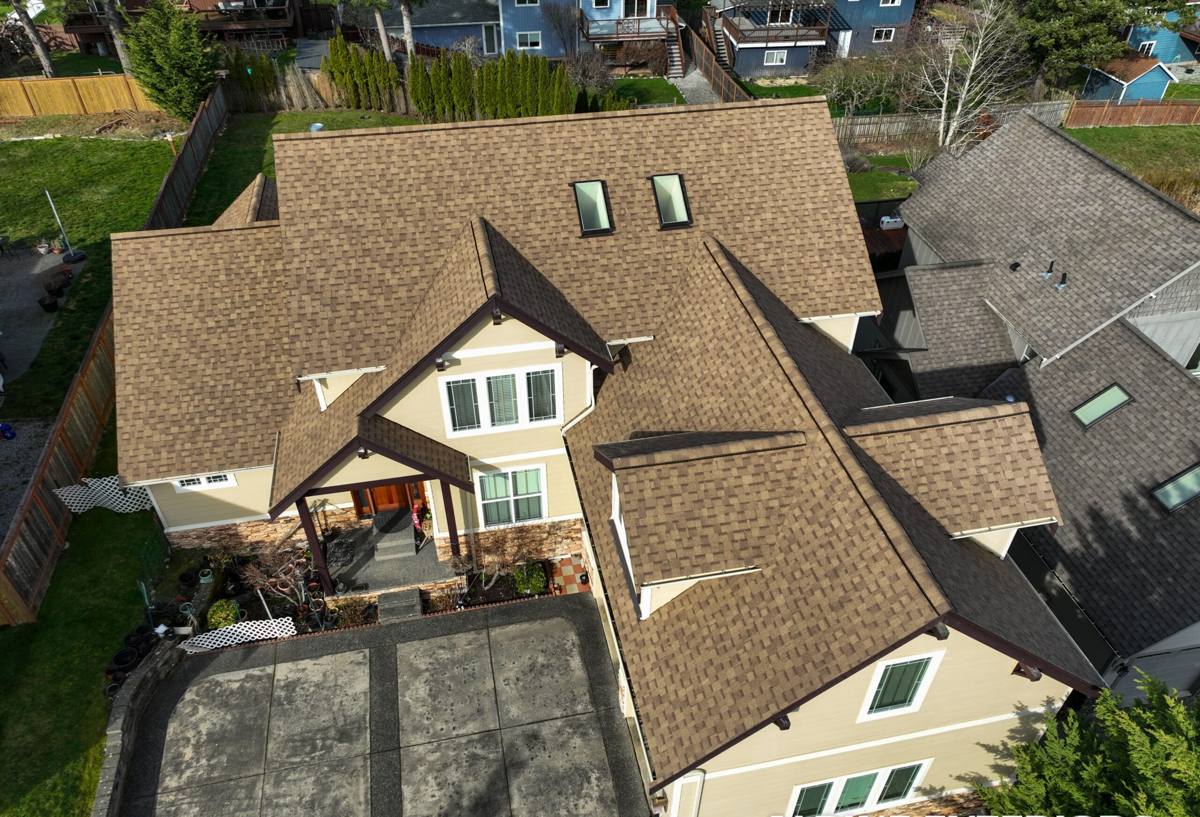
What Hurricane-Force Wind, UV, Rain, and Salt Air Actually Do to a Roof
Wind Uplift
Roofing materials are rated for wind, but that rating assumes correct installation to begin with. Sustained hurricane-force gusts, and especially the gusts that spike well above the sustained number during a storm, put uplift pressure on shingle tabs, tile fasteners, and ridge caps. Where a roof was installed to spec, that pressure is distributed and resisted. Where fastening was marginal, or where a prior repair wasn't tied back into the surrounding field correctly, wind finds that weak point first — and once one shingle or tile lifts, it exposes the underlayment and the next course to the same wind, so damage tends to spread outward from a single starting point rather than staying contained.
UV Breakdown
Constant, intense sun exposure breaks down the asphalt and granule bond on shingles over time, and it degrades sealant and coatings on tile and metal roofing as well. A roof that's already a decade or more into its service life and showing UV wear — brittle shingles, granule loss in the gutters, faded or chalky tile coating — has less flexibility to absorb storm stress than a newer roof. That's often why two homes hit by the same storm end up with very different amounts of damage: the older, more UV-worn roof simply had less margin left.
Wind-Driven Rain
Rain that's being pushed sideways by high wind doesn't behave like a normal rain event. It gets forced up under shingle tabs and tile laps, into ridge vents, and around any penetration — a pipe boot, a chimney flashing, a skylight curb — that isn't sealed and lapped correctly. A roof can look intact from the ground after a storm and still have taken on water at these points, which is why a lot of storm damage doesn't show up as a visible hole but as a water stain on a ceiling days or weeks later.
Salt Air Corrosion
This one doesn't wait for a storm. Airborne salt settles on every exposed roofing surface in a community this close to the Gulf and works on exposed nails, screws, flashing, and drip edge continuously. By the time a storm hits, fasteners and flashing that have been out in salt air for years are often weaker than their age alone would suggest, which is one more reason storm damage on a coastal roof can be more extensive than the same wind event would cause further inland.
Common Storm Damage We Find on Redington Roofs
- Missing, cracked, or lifted shingles, especially along ridges, hips, and roof edges where wind pressure concentrates
- Cracked, slipped, or displaced roof tiles, sometimes with the underlayment beneath exposed
- Torn or lifted flashing at chimneys, skylights, vent pipes, and roof-to-wall transitions
- Granule loss and exposed asphalt mat on shingles that took direct wind and debris impact
- Damaged or torn ridge vent and soffit vent components, which lets wind-driven rain into the attic
- Water staining on interior ceilings or in the attic with no obvious matching exterior damage
- Debris impact damage from tree limbs, loose fencing, or neighboring roof material carried by wind
- Corroded or backed-out fasteners that were already weakened by salt exposure before the storm
What a Correct Storm Damage Repair Actually Involves
Inspection Before Anything Else
We start with a full roof inspection, not a drive-by look from the street. That means getting on the roof to check every elevation, not just the side that's visibly missing shingles or tile, because wind damage on a hip or gable roof often hits multiple sides differently depending on which direction the storm came from. We also check the attic from the inside, since water intrusion at a flashing point or vent can show up there before it ever reaches a ceiling.
Matching the Repair to the Roof System
A shingle roof, a tile roof, and a metal roof all fail differently in a storm and repair differently too. Shingle repair means matching the existing product as closely as possible and correctly integrating new shingles into the surrounding courses so water sheds the way it's designed to. Tile repair means sourcing matching tile where possible and making sure the underlayment beneath any replaced tile is actually intact, since a cracked tile with sound underlayment underneath is a very different repair than one where the underlayment has already failed. We assess which situation we're actually dealing with before quoting anything.
Flashing and Underlayment
Most of the leaks we trace back after a storm start at a flashing detail, not in the open field of the roof. Chimney flashing, wall step-flashing, pipe boots, and skylight curbs all get re-checked and resealed or replaced as part of a proper storm repair, not just patched over. If underlayment has been exposed to weather for any length of time — which happens whenever shingles or tile have been missing since the storm — we check its condition rather than assuming it's still doing its job once new roofing material goes back over it.
Documentation for Insurance
We photograph and document damage before repair work starts, which matters if you're filing a homeowner's insurance claim. Storm damage that isn't documented before repair can be harder to substantiate after the fact, so we build that step into the process rather than treating it as optional paperwork.
Quick Checklist After a Storm
- Check the attic for water stains, damp insulation, or daylight showing through the roof deck
- Look at gutters and the ground around the house for granule loss or shingle/tile fragments
- Note any visible missing or displaced roofing material from the ground, without climbing up yourself
- Photograph anything visible before tarping or covering damaged areas
- Get a professional inspection promptly — delayed repairs let a small leak become sheathing or framing damage
- Keep any insurance claim documentation and repair estimates together in one place
Our Process, Start to Finish
- Inspection — full roof and attic assessment, documented with photos, covering every elevation and every penetration
- Honest scope — a clear explanation of what's actually damaged, what's repairable, and what isn't, without upselling a full replacement a repair can handle
- Temporary protection if needed — securing exposed areas against further water intrusion while materials are sourced
- Material matching — sourcing shingle, tile, or metal roofing components that match the existing roof as closely as possible
- Repair work — replacing damaged roofing material, flashing, and underlayment as needed, tied correctly into the surrounding roof system
- Final inspection — a walkthrough confirming the repair sheds water correctly and checking that no secondary damage was missed
Repair vs. Replacement: How We Make That Call
Not every storm-damaged roof needs to come off. The honest answer depends on the roof's age, how widespread the damage is, and what condition the underlayment and decking are in once we can actually see them.
| Factor | Leans Toward Repair | Leans Toward Replacement |
|---|---|---|
| Roof age | Roof is well within its expected service life | Roof is already near or past the end of its expected lifespan |
| Extent of damage | Damage is localized to one or two areas | Damage is spread across multiple elevations or the whole roof |
| Underlayment condition | Underlayment is intact where checked | Underlayment shows widespread wear or prior water damage |
| Material availability | Matching shingle or tile is available | Discontinued material makes a seamless match impossible |
| Prior storm history | This is the roof's first significant storm event | Roof already has a history of repeated repairs after past storms |
Roofing Materials and Trade-Offs for a Coastal Community Like Redington
When repair isn't enough and replacement is on the table, material choice matters more here than it does further inland, simply because the roof is taking more sustained wind and salt exposure over its lifetime. Asphalt shingles rated for high wind zones hold up well and are the most common material we work with, but the quality of the shingle and the fastening pattern used during installation matter more in a coastal wind zone than the shingle brand alone. Tile roofing has real advantages in UV and heat resistance and a long service life, but individual tiles can crack under impact and need a repair approach that doesn't disturb the surrounding field any more than necessary. Metal roofing performs well against wind uplift when installed correctly, though fastener and flashing quality become the deciding factor in how well it resists salt-air corrosion over time. We'll walk through what's actually on your roof and what the honest trade-offs are for repair versus replacement in that specific material, rather than defaulting to one recommendation for every job.
Working With Insurance After a Storm
Most storm damage repair in this area involves a homeowner's insurance claim, and the process goes more smoothly when the documentation is thorough from the start. We provide a written scope of damage and photos that a homeowner can submit alongside their claim, and we're straightforward about what we find — we won't inflate a scope to pad a claim, and we won't downplay damage that's actually there. If an adjuster's assessment misses something we documented during our inspection, we can point to that documentation directly rather than leaving a homeowner to argue the point alone.
Why Hiring a Crew That Already Works Redington Matters
Storm damage repair looks straightforward from a distance — replace what's missing, seal what's exposed — but the details that determine whether a repair holds through the next storm season are the same details that are easy to miss if you don't work this stretch of Pinellas County regularly. Knowing how far to pull back damaged shingles or tile before you find sound material underneath. Knowing which flashing details tend to fail first on homes with this area's typical roof age and construction. Knowing how much salt-air corrosion to expect on fasteners that look fine on the surface. Those aren't things a general contractor picks up on a single job — they come from doing this work in this specific climate, on this specific coastline, over and over.
We also know what Pinellas County permitting and inspection expects for storm repair work, which keeps a project from stalling on paperwork when a homeowner is trying to get their roof closed back up before the next system moves through. That local familiarity is part of what you're actually paying for when you hire a crew that already works Redington, not just the labor itself.
Get a Straightforward Look at Your Roof
If your roof took damage in a recent storm, or you just want an honest read on how it's holding up before the next one, we're happy to come take a look. We offer free, no-pressure estimates for storm damage roof repair in Redington and the surrounding Seminole area — use the form below to get a time on the schedule.