 Seminole Siding
 Why Treasure Island Siding Wears Out Faster Than Inland Homes
Treasure Island sits on the Gulf side of Pinellas County, just west of Seminole, and that location changes the math on siding. A wall assembly here isn't just shedding the occasional summer storm — it's absorbing salt-laden air almost every day of the year, taking direct UV exposure with very little tree cover to soften it, and getting hit by wind-driven rain that pushes water sideways into seams, laps, and trim joints that would stay dry a few miles inland. Add hurricane-force wind events to that mix and you have an environment that will find every weak point in a siding installation faster than almost anywhere else in the state.
None of that means siding can't last on a barrier island property. It means the material, the fasteners, the flashing details, and the crew doing the work all have to be chosen with that exposure in mind — not treated the same way you'd treat a house in a shaded inland neighborhood.
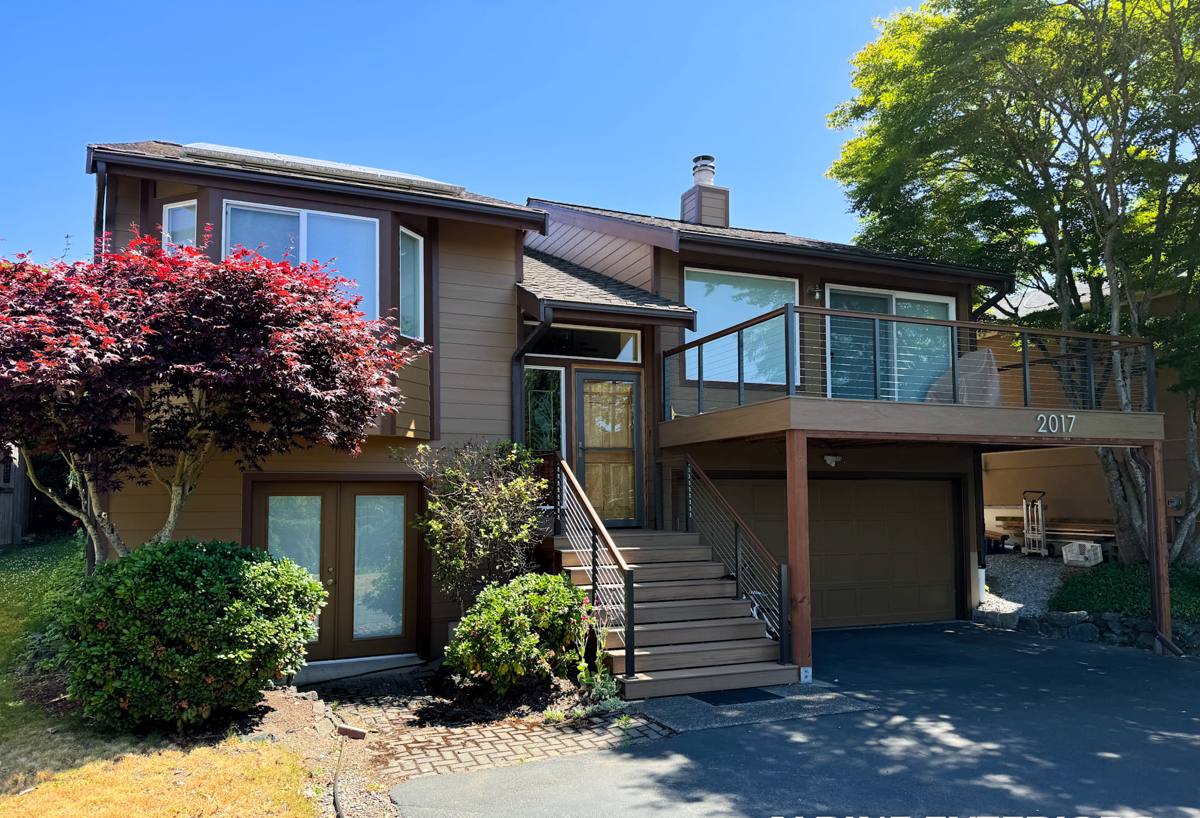
What a Correct Siding Replacement Actually Involves
"Siding replacement" gets used loosely. Some contractors mean re-covering over the old siding. On a home this close to the Gulf, that's the wrong approach almost every time — you can't fix what's underneath if you never look at it. A real replacement means the wall gets opened up and every layer gets addressed.
Tear-Off and Substrate Inspection
Once the old siding is off, the sheathing underneath gets inspected for moisture damage, soft spots, and rot — especially around window and door openings, at corners, and near the bottom few feet of wall where splashback and humidity do the most damage over time. Any compromised sheathing gets replaced before anything new goes up. Skipping this step is the single most common reason a siding job looks fine for a year or two and then fails from the inside out.
Weather-Resistive Barrier and Flashing
A new weather-resistive barrier goes on the sheathing, and flashing gets installed at every penetration — windows, doors, hose bibs, light fixtures, vents — so water that gets behind the siding has a path back out instead of a place to sit. In a wind-driven rain environment like this one, flashing detail is not optional trim work; it's the difference between siding that sheds water and siding that traps it.
Fastening for Wind Uplift
Fastener type, spacing, and placement all matter more here than in a low-wind inland market. Under-fastened or improperly nailed siding is one of the first things to fail in a high-wind event, and it's invisible from the ground until it happens. Correct fastening isn't faster or cheaper to skip — it's just not visible once the job is done, which is exactly why it gets cut on lower-quality installs.
Choosing Siding That Can Actually Handle This Exposure
Not every siding product is engineered for salt air, constant UV, and wind-driven rain in the same way. This is the core reason we install only James Hardie fiber cement siding on the homes we work on — it's a non-combustible product with a factory-applied ColorPlus finish designed to resist fading and hold up against moisture better than many alternatives, and Hardie's HZ product lines are engineered specifically for the climate zone that includes coastal Florida.
| Factor | James Hardie Fiber Cement | Vinyl Siding | Wood / Engineered Wood |
|---|---|---|---|
| Salt air / humidity resistance | Engineered for high-moisture, coastal climate zones | Won't rot, but can warp or become brittle with heat and UV cycling | Absorbs moisture; vulnerable to rot without diligent upkeep |
| Wind performance | Rigid panel, rated for high wind exposure when installed to spec | Lighter panels more prone to flexing and blow-off in gusts | Performance varies widely by product and installation quality |
| UV / fade resistance | Factory ColorPlus finish holds color under constant sun | Can fade and chalk over time in intense UV | Requires repainting or resealing on a regular cycle |
| Fire resistance | Non-combustible | Combustible (petroleum-based) | Combustible |
This isn't a knock on every alternative product across every situation — vinyl and wood both have legitimate uses elsewhere. But on a Gulf-facing property in Pinellas County, the trade-offs of those materials show up faster and cost more to manage over time than most homeowners expect when they first price out the job.
Our Process for a Treasure Island Siding Replacement
- On-site inspection of the existing siding, trim, and visible substrate condition, plus a look at wind and moisture exposure specific to the property's position on the island.
- A written estimate that spells out scope, product line, color, and what's included — no vague allowances.
- Full tear-off of the old siding and inspection of the sheathing before anything new is installed.
- Repair or replacement of any compromised substrate, then installation of the weather-resistive barrier and flashing at every penetration.
- Installation of James Hardie siding to manufacturer fastening specifications, with attention to caulking, trim, and transitions where water intrusion typically starts.
- Final walkthrough so you can see the finished work and ask questions before we consider the job done.
Wind, Code, and Permitting on a Barrier Island Property
Homes in coastal Pinellas County are built and repaired under wind-design requirements that are stricter than what applies further inland, because the Florida Building Code accounts for the higher sustained and gust wind speeds this area actually sees. Siding replacement on a home in this zone should be permitted and installed to those requirements — not just to whatever the minimum standard is in a general product manual. Beyond the county's own permitting process, some properties in and around Treasure Island fall under condo or homeowners' association guidelines that govern exterior appearance, color approval, or contractor requirements. It's worth checking your association's rules before finalizing color selections, since that's easier to resolve before ordering materials than after.
Signs Your Siding Needs Replacing Now
Coastal exposure tends to show damage in specific, recognizable ways before a full failure happens. If you're seeing any of the following, it's worth having the siding evaluated rather than waiting:
- Visible warping, buckling, or panels that have separated from the wall
- Soft or spongy spots when you press on the siding near the bottom of walls or below windows
- Chronic paint failure, bubbling, or peeling that keeps coming back after touch-ups
- Cracked or missing caulking at seams, corners, and window trim
- Visible rust staining around fasteners or trim
- A musty smell or discoloration on interior walls that share an exterior wall with the affected siding
- Siding that flexes noticeably or has come loose in a prior wind event
What Siding Replacement Costs Depend On Here
There's no honest flat number for siding replacement without seeing the property, but a few factors consistently move the price on Treasure Island jobs more than they would on a typical inland home.
| Cost Factor | Why It Matters Here |
|---|---|
| Substrate condition | Sheathing repair needs are often higher on older coastal homes with a history of moisture exposure |
| Wall complexity | Corners, dormers, and multiple roof lines increase flashing and trim work |
| Siding profile and finish | Lap width, texture, and color selection within the Hardie product line affect material cost |
| Access and site conditions | Narrow lots, seawalls, and limited staging space common on barrier island properties can affect labor time |
| Trim and accessory scope | Fascia, soffit, and trim replaced alongside siding add to the project but improve the finished result and long-term protection |
Why the Crew Matters as Much as the Material
The best siding product on the market still fails if it's installed wrong, and coastal properties expose bad workmanship faster than inland ones do. A crew that's worked on Treasure Island and other Gulf-adjacent Pinellas County neighborhoods already knows what to check for on an older coastal home — where moisture tends to hide, how prior installers in this area have historically cut corners on flashing, and what fastening actually holds up when a real wind event comes through. That's knowledge you don't get from a crew that mostly works inland subdivisions and treats every job the same way.
It also matters for the practical side of the job — navigating narrow island access, coordinating around condo or HOA rules, and timing work sensibly around hurricane season rather than starting a tear-off with a storm on the horizon. None of that shows up in a brochure, but it shows up in whether the job goes smoothly.
If your Treasure Island home is due for new siding, we're glad to take a look and walk you through what we're seeing — no pressure, no obligation. Use the form below to request a free estimate.