 Seminole Siding
 Why Siding Choice Matters More in Bardmoor
Bardmoor sits inland from the Gulf but still well within Pinellas County's coastal weather belt, which means homes here take on the same punishment as siding closer to the water: salt-laden air moving in on sea breezes, intense sun nearly every day of the year, sudden wind-driven downpours, and the real possibility of hurricane-force gusts during storm season. A siding product that performs fine in a drier, milder climate can fail quickly here — fading, warping, softening at the seams, or simply not holding up to a Cat 1 or Cat 2 wind event. For homeowners in this neighborhood, siding isn't just a cosmetic decision. It's part of the building envelope that keeps water out and holds up under load.
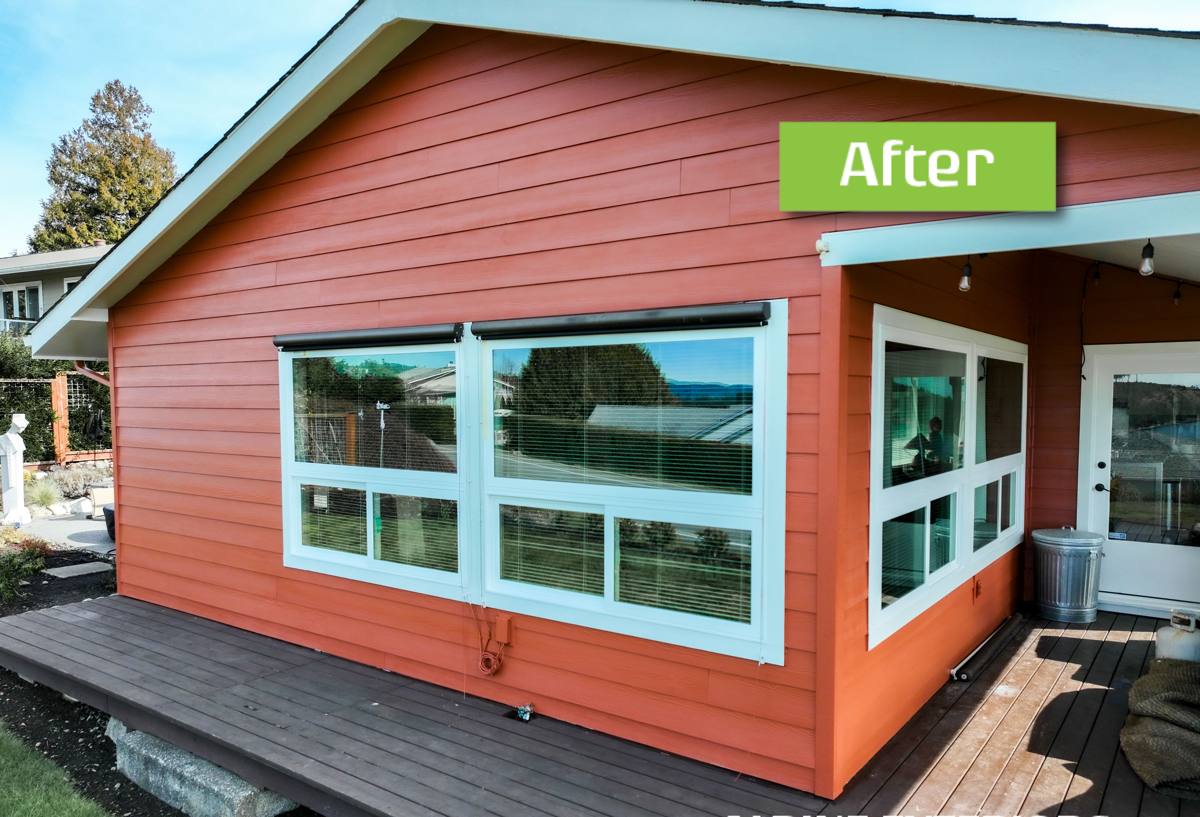
This page is about one thing done right: James Hardie fiber cement siding, installed correctly, on Bardmoor homes. We're not going to cover every siding material on the market or every neighborhood in Seminole — just what actually matters if you live here and you're deciding what goes on your exterior walls next.
What Bardmoor's Climate Actually Does to Siding
Wind
Pinellas County's wind design requirements exist for a reason. Even outside of a named storm, this area sees sustained gusts strong enough to test poorly fastened panels, loose trim, and weak seams. Siding that isn't rated and installed for local wind exposure can lift, crack at the corners, or pull away from the wall over time — and once wind gets behind a panel, water follows.
UV exposure
Florida sun is relentless almost year-round. Siding with a painted-on or low-grade factory finish tends to chalk, fade unevenly, and lose its color long before the material itself wears out. South- and west-facing walls take the worst of it.
Wind-driven rain
It's not just how much rain falls — it's the angle it falls at. Wind-driven rain gets pushed sideways into laps, seams, and penetrations (windows, hose bibs, light fixtures) that would stay dry in a calmer climate. Any siding system with weak flashing details or gaps at trim will let moisture in eventually.
Salt air
Even set back from the immediate coastline, Bardmoor homes are exposed to airborne salt that accelerates corrosion of fasteners and can degrade materials not engineered to resist it over the long term.
Put together, that's four separate stressors working on your siding at once, continuously, for the life of the house. Fiber cement — specifically James Hardie's product line — is engineered around exactly this kind of exposure, which is a big part of why it's the only siding we install.
Why We Only Install James Hardie Fiber Cement
James Hardie fiber cement is a cement-based composite, not a plastic or wood product, and that changes how it behaves under Florida conditions:
- Non-combustible — it doesn't contribute fuel to a fire, which matters for insurance and for peace of mind.
- Dimensionally stable in humidity swings — it doesn't expand, contract, warp, or rot the way wood-based products can when they take on moisture.
- ColorPlus factory-applied finish — baked on in a controlled environment rather than field-painted, so it resists UV fading and chalking far better than site-applied paint.
- Climate-engineered HZ product lines — Hardie makes specific formulations tuned to different climate zones, including the HZ5 line built for the moisture, humidity, and pest pressures of Florida and the Gulf Coast.
- Strong transferable warranty — backed by a real manufacturer with decades in the fiber cement category, and transferable if you sell the home, which matters to buyers and appraisers.
We don't install LP SmartSide, vinyl, Cemplank, Allura, or primed wood siding. That's a deliberate standard, not an oversight. Each of those products has legitimate uses somewhere, but for the specific combination of wind, UV, humidity, and salt air that Bardmoor homes deal with, James Hardie is the product we're willing to put our name behind and warranty our labor on.
What a Correct Fiber Cement Installation Involves
The material is only half the equation. A huge share of siding failures we get called out to inspect aren't material failures at all — they're installation shortcuts. Correct installation on a Bardmoor home should include:
Substrate and moisture barrier
Old siding and any damaged sheathing come off so we can actually see the wall. A code-compliant weather-resistant barrier goes down before a single piece of Hardie touches the wall — this is the layer that manages any moisture that does get past the siding.
Flashing at every penetration
Windows, doors, hose bibs, vents, and anywhere two planes of the house meet need proper flashing and sealant, not just caulk smeared over a gap. This is where wind-driven rain finds its way in if it's skipped.
Correct clearances
Hardie's installation instructions specify minimum clearances from the ground, roofline, and other transitions. Panels installed too close to grade or a roof deck trap moisture against the material and void warranty coverage.
Fastening pattern and hardware
Fastener type, spacing, and depth all matter — over-driven nails crack the board's edge, under-driven ones leave panels loose in high wind. In a salt-air environment, corrosion-resistant fasteners aren't optional.
Joint and seam treatment
Butt joints get treated correctly, factory edges are used wherever possible, and field-cut edges are primed and sealed to prevent moisture wicking into the cut end of the board.
Skip any one of these steps and you can end up with siding that looks fine on install day but starts failing within a few storm seasons.
Our Process for Bardmoor Homes
- On-site assessment — we walk the exterior, check current siding and substrate condition, and look at wind exposure on each elevation.
- Product and color plan — we walk through the relevant James Hardie lines and ColorPlus color options for your home's style and HOA or neighborhood expectations.
- Written estimate — scope, materials, and timeline in writing before anything starts.
- Tear-off and prep — old siding removed, sheathing inspected and repaired as needed, moisture barrier installed.
- Installation to manufacturer spec — flashing, clearances, fastening, and joint treatment done to James Hardie's published requirements, not shortcuts.
- Final walkthrough — punch list addressed before we call the job done.
Why Local Experience in Bardmoor Matters
Bardmoor is a mixed-vintage neighborhood — homes from different building eras with different framing and sheathing conditions behind the old siding. A crew that's worked this specific area knows what tends to be hiding under the existing exterior before the tear-off even starts, which means fewer surprises and fewer change orders mid-project. Local crews also stay current on Pinellas County permitting requirements and wind-load codes, which are stricter here than in a lot of inland markets — getting that wrong isn't just an inspection headache, it's a real risk to how the siding performs in the next storm.
There's also a practical side: a company that's already doing work around Seminole and greater Pinellas County can respond faster if something needs attention after installation, and isn't disappearing to another region once the job's done.
Comparing the Options Bardmoor Homeowners Actually Consider
| Factor | James Hardie Fiber Cement | Vinyl | Wood / Engineered Wood |
|---|---|---|---|
| Wind resistance | Rated and tested for high-wind installation | Can crack or blow off in strong gusts | Depends heavily on install quality; edges vulnerable |
| UV/fade resistance | Factory-baked ColorPlus finish resists fading | Fades and can become brittle over time | Field-applied paint fades faster, needs recoating |
| Moisture behavior | Dimensionally stable, doesn't rot | Doesn't rot but can trap moisture behind panels | Vulnerable to swelling, rot, and pest damage if moisture gets in |
| Fire rating | Non-combustible | Combustible (petroleum-based) | Combustible |
| Typical maintenance | Periodic cleaning, minimal recoating | Low, but degrades with age and UV | Regular repainting/resealing required |
This isn't about any of these being a bad product in the abstract — it's about which one holds up best against the specific wind, sun, rain, and salt conditions a Bardmoor home faces year-round. That combination is why fiber cement is where we've drawn the line.
Cost Factors on a Bardmoor Fiber Cement Project
We don't quote pricing without seeing the house, but a few things reliably move the number:
| Factor | Why it matters |
|---|---|
| Home size and elevation count | More wall area and more corners/transitions means more material and labor |
| Substrate condition | Rotted or damaged sheathing found during tear-off adds repair scope |
| Product line and profile | Lap width, texture, and trim details vary in material cost |
| Color | Standard ColorPlus colors vs. custom options can shift cost |
| Access and site conditions | Landscaping, fencing, or tight lot lines affect labor time |
A Simple Maintenance Checklist for Fiber Cement Siding
Once it's installed correctly, James Hardie siding is genuinely low-maintenance — but "low" isn't "none." A short annual routine keeps it performing the way it should:
- Rinse the exterior with a garden hose (not a high-pressure washer aimed directly at seams) once or twice a year to clear salt residue and pollen buildup.
- Walk the exterior after any significant storm and look for cracked caulk lines, loose trim, or visible impact damage.
- Keep sprinkler heads and irrigation from spraying directly on siding — constant wetting shortens the life of any exterior material.
- Trim back landscaping that's holding moisture against the wall or rubbing on panels.
- Address any caulk gaps at windows, doors, and trim promptly rather than waiting for the next paint cycle.
Ready for a Straightforward Estimate
If your Bardmoor home's siding is showing its age, or you're planning ahead of the next storm season, we're happy to come out, take a real look at your home's exterior, and give you a straightforward, no-pressure estimate for James Hardie fiber cement siding done to spec. Use the form below to get started.