 Seminole Siding
 Belleair Beach Sits Right at the Edge of the Gulf's Weather
Belleair Beach is barrier-island living — a narrow strip with the Gulf of Mexico on one side and the Intracoastal on the other. That location is the whole appeal of the area, and it's also exactly why siding here fails faster than siding does ten or fifteen miles inland. Homes on this stretch of Pinellas County take a steady diet of salt-laden air, direct Gulf sun, wind-driven rain, and the occasional direct hit or near-miss from a tropical system. Siding that would hold up fine in a subdivision outside Seminole proper can blister, delaminate, or rot within a few years out here.
We install fiber cement siding on homes throughout Seminole and the surrounding coastal communities, and Belleair Beach is one of the areas where the product choice and the installation details matter most. This page covers what that actually means in practice — not marketing language, just what a barrier-island home needs from its siding and how we deliver it.
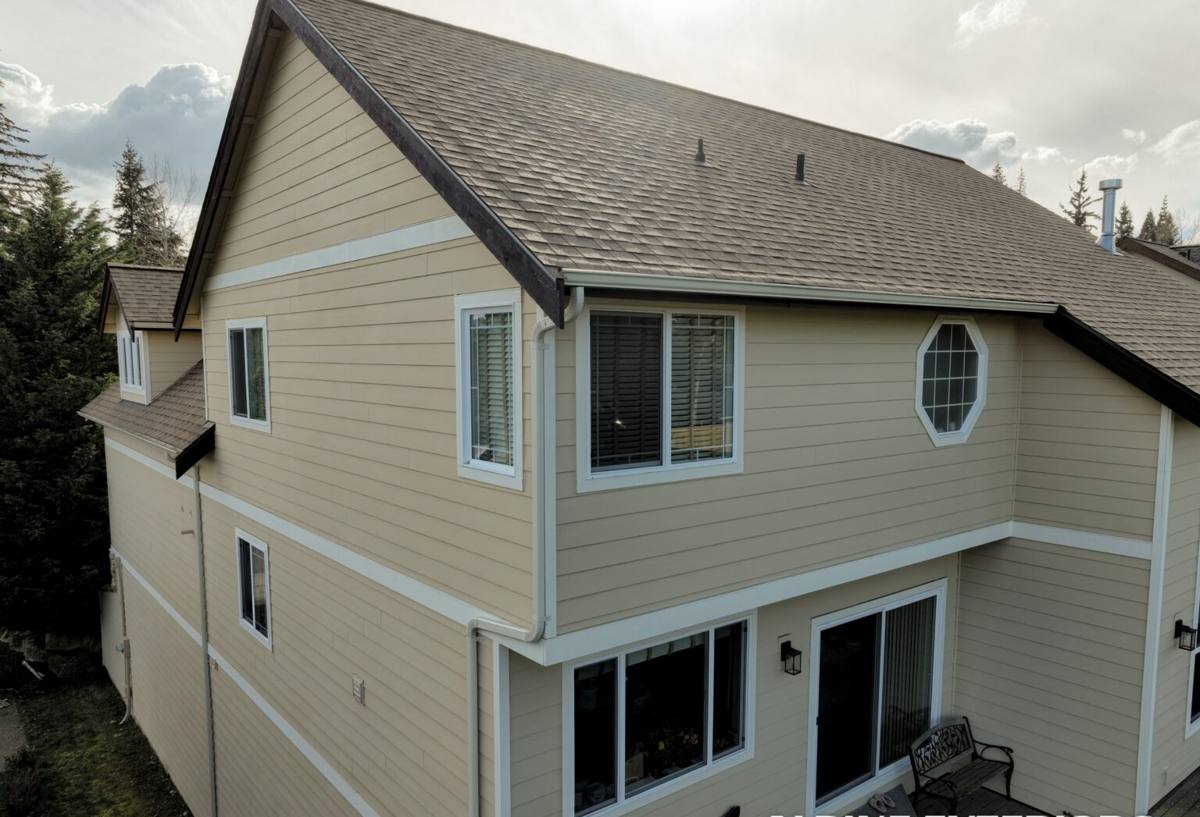
What Salt Air, UV, and Wind-Driven Rain Actually Do to Siding
It helps to understand the specific mechanisms at work, because they explain almost every siding decision that follows.
Salt air
Airborne salt from the Gulf settles on every exterior surface. On wood and wood-composite products it accelerates rot and holds moisture against the substrate. On metal fasteners and trim it drives corrosion. On paint films it breaks down the surface faster than the same paint would fail a few miles inland.
Year-round UV
Florida sun is intense and constant, not seasonal. Pigments fade, caulk joints get brittle, and any coating that isn't baked into the material itself starts to chalk and thin. Fields painted on-site, rather than factory-cured, tend to show fading unevenly — worse on the Gulf-facing elevation than the street side.
Wind-driven rain
The problem with coastal storms isn't just volume of rain, it's the horizontal force behind it. Wind-driven rain gets pushed sideways into laps, seams, and penetrations that would stay dry in a normal vertical downpour. Any siding system that relies on face-sealing alone — rather than proper flashing, laps, and drainage behind the cladding — will eventually let water in during a real coastal event.
Put those three together and you get the actual failure pattern we see on older Belleair Beach homes: paint that's chalked and faded unevenly, corroded fasteners bleeding rust streaks down the wall, and soft or swollen material around window trim and bottom courses where wind-driven rain found a way in.
Why We Install Only James Hardie Fiber Cement
We made a standing decision as a company to install James Hardie fiber cement exclusively — no vinyl, no LP SmartSide, no unbranded fiber cement, no primed wood siding. That's not a sales pitch; it's a practical response to the climate this section of Florida throws at a house.
Fiber cement is a blend of cement, sand, and cellulose fibers, engineered to be dimensionally stable and resistant to moisture intrusion in a way wood-based products aren't. It doesn't rot, it isn't attractive to wood-boring insects, and it's non-combustible. James Hardie specifically manufactures a version of this product — HZ5 — engineered for hot, humid, high-moisture climates like ours, which matters because not every fiber cement product on the market is formulated the same way for every region.
Just as important as the raw material is the finish. Hardie's ColorPlus technology bakes color onto the board in a factory setting, in multiple coats, under controlled conditions — rather than relying on a job-site painter to apply and cure paint outdoors in Florida humidity. On a barrier island where UV exposure is constant and salt air is actively working against ordinary paint films, a factory-cured finish holds its color and its seal meaningfully longer than field-applied paint does. That difference shows up first on Gulf-facing walls, which is exactly where a Belleair Beach home needs it most.
The Hardie Product Lines That Fit This Area
James Hardie makes several siding profiles, and the right mix depends on the home's style and exposure.
- HardiePlank lap siding — the standard horizontal siding profile for most homes, available in multiple textures and exposures.
- HardiePanel vertical siding — used for board-and-batten looks or accent sections, common on Florida coastal architecture.
- HardieTrim — fascia, corner boards, and trim pieces manufactured to hold paint and resist moisture as well as the field siding does, so trim doesn't become the weak point.
- HardieSoffit — pre-vented or non-vented panel options for the underside of eaves, an area that takes a lot of humidity cycling on coastal homes.
All of these are available in the HZ5 formulation appropriate for our climate zone, and all can be specified in ColorPlus factory finish rather than primed-for-field-paint.
What a Correct Installation Actually Involves
Fiber cement siding is only as good as the installation behind it. Most of the problems we get called out to look at on other contractors' work trace back to installation shortcuts, not the material itself. On a barrier-island home, the margin for error is smaller, so we hold to a specific set of practices:
- Correct fastener type and spacing — stainless steel or hot-dip galvanized fasteners driven per Hardie's published fastening schedule, not whatever was in the gun.
- Proper starter strip and minimum clearance from grade, decks, and roof lines, so the bottom course isn't sitting in a moisture trap.
- A code-compliant water-resistive barrier installed correctly behind the siding, with house wrap seams lapped and taped, not just stapled up and covered.
- Correct lap and overlap dimensions on every course, so wind-driven rain has nowhere to track behind the board.
- Proper flashing at every window, door, and penetration — this is the single most common failure point we find on re-sides.
- Factory-cut and factory-primed edges kept intact wherever possible; any field cuts sealed per manufacturer specification, since a raw cut edge is the fastest way for moisture to get into the board.
- Caulking only where Hardie's installation instructions call for it — not as a substitute for correct flashing and laps.
None of this is exotic. It's the difference between following the manufacturer's installation manual to the letter versus treating it as a general guideline, and on a home exposed to Gulf wind and salt, that difference determines whether the siding lasts fifteen years or forty.
Our Process, Start to Finish
We keep the process straightforward and give homeowners a clear idea of what to expect before work starts.
- On-site assessment. We walk the exterior, check the current siding and substrate condition, note problem areas — trim, windows, roof-to-wall intersections — and measure for material.
- Written estimate. A clear scope of work and price, specifying the exact Hardie products, colors, and trim details, before anything is ordered.
- Substrate check and prep. Once old siding is off, we inspect sheathing for hidden moisture damage — common on coastal homes — and address any rot or soft spots before the new water-resistive barrier goes on.
- Weather barrier and flashing. This is the layer nobody sees once the job is done, and it's the layer that actually keeps water out. We don't rush it.
- Siding, trim, and soffit installation. Installed to Hardie's fastening and clearance specifications, with attention to how each elevation faces prevailing wind and rain.
- Final walkthrough. We review the finished work with the homeowner, including caulk lines, paint touch-ups on cut edges, and cleanup.
What Drives Cost on a Belleair Beach Project
Every home is different, so we won't quote a number without seeing the house, but these are the factors that most often move the price on a coastal fiber cement project:
| Factor | Why It Matters Here |
|---|---|
| Substrate condition | Coastal homes more often have hidden sheathing damage from past moisture intrusion, which adds repair scope once old siding comes off. |
| Number of stories and elevations exposed to the Gulf | Gulf-facing walls typically need more careful flashing and detailing due to direct wind-driven rain exposure. |
| Trim and architectural detail | Board-and-batten accents, multiple roof lines, and dormers all add labor beyond flat-wall square footage. |
| Product line and finish | HZ5 fiber cement in ColorPlus factory finish costs more up front than primed-for-field-paint options, but avoids a repaint cycle. |
| Existing siding removal and disposal | Older wood or vinyl siding removal, and any asbestos-era board disposal requirements, factor into total cost. |
| Access and staging | Narrow island lots, seawalls, and limited driveway space can affect equipment staging and labor time. |
Maintaining Fiber Cement Siding on a Barrier Island
Fiber cement is low-maintenance compared to wood, but "low-maintenance" doesn't mean "no maintenance" in a salt-air environment. A simple annual routine keeps a Hardie installation performing the way it's designed to:
- Rinse the exterior with fresh water once or twice a year to remove salt buildup, especially on Gulf-facing walls.
- Walk the perimeter after major storms and check caulk joints around windows, doors, and trim for cracking or separation.
- Keep sprinklers and irrigation heads from spraying directly on the siding day after day.
- Keep plantings and mulch pulled back from direct contact with the bottom course.
- Check fastener heads periodically for any sign of rust bleed, which can indicate the wrong fastener type was used originally.
- Address any soft or discolored trim promptly rather than waiting — small moisture problems are far cheaper to fix than the rot they turn into.
Why It Matters That We Already Work This Coastline
A crew that mainly works inland subdivisions can install fiber cement correctly by the book and still miss the details that matter specifically on a barrier island — the clearance needed near a seawall, how much more attention a Gulf-facing elevation's flashing needs, or how salt exposure changes fastener selection. Working Seminole, Belleair Beach, and the surrounding Pinellas County coastline regularly means we're not guessing at how this climate treats a house; we're applying what we've already seen hold up and what we've seen fail.
That local, hands-on familiarity, paired with a single-manufacturer standard we hold ourselves to on every job, is what we bring to a Belleair Beach siding project. We're not the cheapest way to re-side a house, and we don't try to be — we install one system, correctly, because that's what holds up out here.
If you're weighing options for your Belleair Beach home, we're happy to walk the property, look at what's there now, and put together a straightforward, no-pressure estimate for James Hardie fiber cement siding. Use the form below to get started.