 Seminole Siding
 Belleair's Climate Is Hard on Siding — Here's Why That Matters
Belleair sits close enough to the Gulf and the Intracoastal that salt-laden air reaches every home in town, not just the ones with water views. Add in Pinellas County's intense year-round sun, seasonal wind-driven rain, and the real chance of hurricane-force wind loads, and you have one of the tougher environments in Florida to keep exterior siding looking good and performing well for the long haul. Siding that isn't engineered for this combination doesn't fail all at once — it fades, swells, delaminates, or lets moisture in gradually, and by the time it's obvious, the damage is often behind the wall, not just on the surface.
This page focuses on one product, in one place: James Hardie fiber cement siding installed correctly on Belleair homes. We install James Hardie exclusively — no vinyl, no LP SmartSide, no Cemplank or Allura, no primed spruce or cedar — and we'll explain why, along with what a correct installation actually involves and why local experience in this specific climate matters as much as the product you choose.
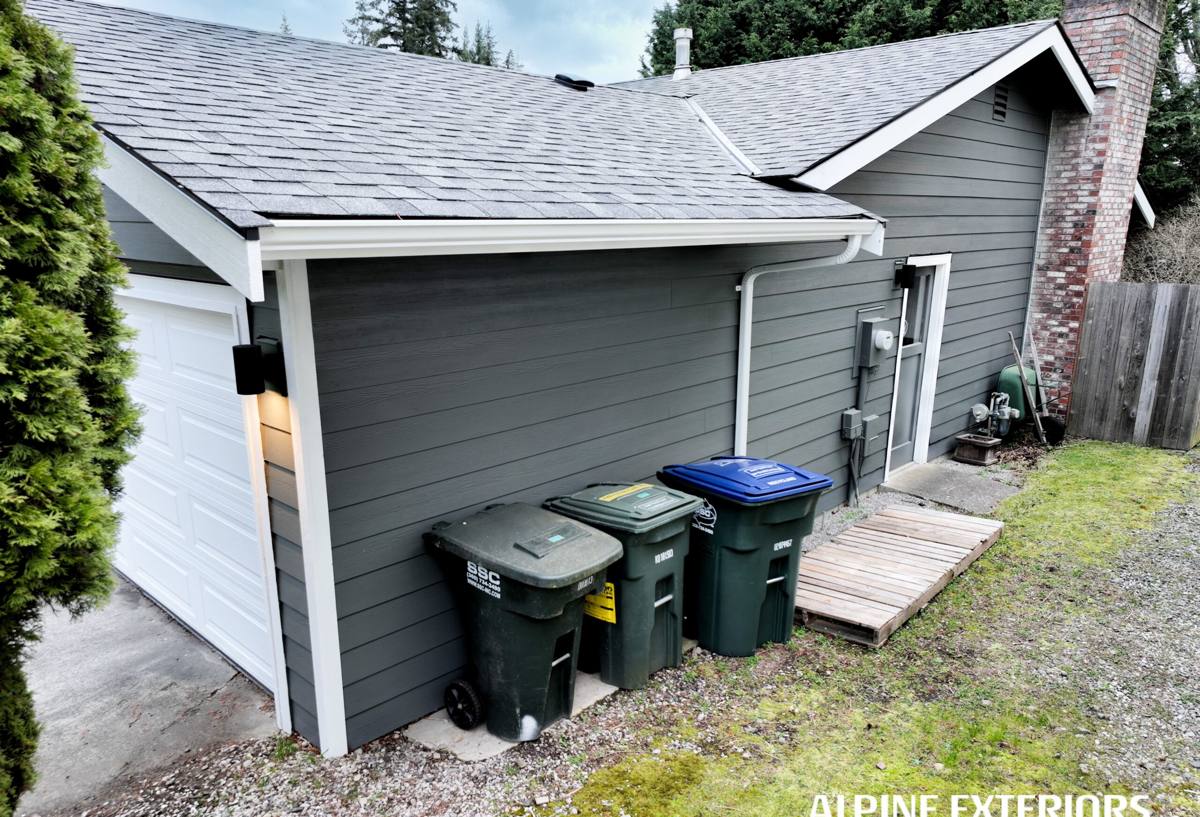
What Salt Air, UV, and Wind Actually Do to Siding Over Time
Salt Air and Corrosion
Airborne salt doesn't just affect metal fasteners and flashing — it accelerates the breakdown of paint films, caulk, and lower-grade composite materials. Salt crystals are hygroscopic, meaning they pull moisture out of the air and hold it against a home's exterior surfaces longer than plain humidity would. Materials that rely on a surface coating to stay watertight are the most vulnerable, because once that coating starts to chalk or crack, salt-laden moisture gets underneath it faster than it would in an inland climate.
UV Exposure and Fading
Florida sun is intense and consistent almost year-round. Paint films on wood and some engineered wood products break down under sustained UV exposure, leading to chalking, fading, and the need for repainting on a schedule most homeowners don't want to keep up with. A finish that isn't baked on at the factory under controlled conditions is fighting an uphill battle here.
Wind-Driven Rain and Moisture Intrusion
Pinellas County storms rarely arrive as gentle, straight-down rain. Wind pushes water sideways and upward under laps, around trim, and into any gap in the water-resistive barrier. Siding materials that swell, wick moisture, or delaminate when they get wet and don't fully dry out are a poor match for a climate where "wet season" is most of the year.
Hurricane Wind Loads
Belleair falls within Florida's high-velocity wind zones, which means siding attachment isn't just about the material — it's about fastener type, fastener spacing, and how the product is rated to perform in sustained high wind and wind-borne debris events. A product with excellent wind ratings installed with the wrong fastener schedule performs no better than a weaker product installed correctly.
Why We Install Only James Hardie Fiber Cement
We standardized on James Hardie because it's engineered around the exact problems Belleair homes face, not because it's the only siding product on the market. Fiber cement is non-combustible, dimensionally stable in humidity swings, and doesn't support the fungal growth that plagues untreated wood-based products in a humid coastal climate.
The HardiePlank HZ5 System
James Hardie engineers its HZ product line by climate zone, and Florida falls into the HZ5 category — formulated specifically for high-humidity, high-moisture regions. That's a meaningful difference from a one-size-fits-all siding product; the formulation itself accounts for the conditions we're installing into, rather than relying on installers to compensate for a mismatch after the fact.
ColorPlus Factory Finish
Most Hardie products we install use the ColorPlus finish system — a multi-coat color baked on at the factory under controlled conditions, rather than field-painted after installation. That finish is formulated to resist UV fading and hold color consistency far longer than a site-applied paint job, which matters enormously under Florida sun. It also comes backed by its own finish warranty, separate from the product warranty on the siding itself.
Fire Resistance and Long-Term Stability
Because it's cement-based rather than wood or wood-fiber based, Hardie siding won't ignite from embers or direct flame contact the way combustible siding materials can, and it won't rot, delaminate from moisture cycling, or attract termites and wood-boring insects. Those are real, measurable trade-offs compared to wood-based and engineered-wood siding products, and they're a large part of why we don't install those alternatives anymore.
What a Correct James Hardie Installation Actually Involves
The product only performs as designed if it's installed to manufacturer specification. This is the part of the job that separates a siding installation that lasts twenty-plus years from one that fails at the seams within a few storm seasons.
Manufacturer-Spec Fastening for Wind Zones
Fastener type, length, and spacing all change based on wind zone and substrate, and James Hardie publishes specific installation guidance for high-wind regions like ours. Skipping studs, under-fastening, or using the wrong fastener type is one of the most common — and most damaging — shortcuts in the industry.
Moisture Barrier and Flashing Details
A correct installation starts before the first plank ever goes up: a properly lapped water-resistive barrier, correctly integrated window and door flashing, and rigid attention to how water sheds at every penetration. Fiber cement siding is only as watertight as the assembly behind it.
Proper Clearances, Gaps, and Caulking
Hardie siding needs specific clearance from roof lines, decks, and grade, along with correctly sized gaps at butt joints that are sealed with the right sealant — not caulked tight against manufacturer spec, which can trap moisture instead of shedding it. These are small details, but they're exactly the details that separate a warrantied installation from one that voids coverage.
Comparing Siding Materials for Belleair's Climate
Homeowners often ask why we don't offer options besides Hardie. The honest answer is that once you weigh how each common siding material behaves under salt air, UV, and wind-driven rain, the trade-offs stack up quickly against the alternatives.
| Material | Salt Air / Moisture Behavior | UV Fade Resistance | Wind / Impact Performance |
|---|---|---|---|
| James Hardie fiber cement (HZ5) | Dimensionally stable, won't rot or swell | Factory ColorPlus finish resists fading | Engineered and rated for high-wind zones |
| Vinyl siding | Can warp or crack in heat/impact cycles | Colors fade and chalk over time | Lower impact resistance, can crack in debris strikes |
| LP SmartSide (engineered wood) | Wood-based core is vulnerable if moisture reaches it | Relies on field or factory paint, needs upkeep | Good in some ratings, but moisture is the long-term risk |
| Untreated or primed wood/cedar | Prone to rot, swelling, and insect damage in humidity | Requires frequent repainting/staining | Performance depends heavily on maintenance |
None of these products are automatically "bad" — they can make sense in the right climate or budget. But in Belleair's specific combination of salt exposure, sun, and wind, we've made the professional call that fiber cement is the only material we're willing to warranty our workmanship on.
Our Process for Belleair Siding Jobs
Inspection and Measurement
We start with a full exterior walk-around, checking existing siding, trim, and any signs of moisture intrusion behind current cladding before we ever talk product or price.
Product and Color Selection
We help homeowners choose the right HardiePlank profile and ColorPlus color for their home's style, factoring in HOA or architectural review requirements that are common in established Pinellas County communities.
Installation
Our crews follow James Hardie's published fastening, flashing, and clearance specifications for our wind zone — not a generalized approach borrowed from a different climate.
Final Walkthrough
Before we consider a job finished, we walk the exterior with the homeowner, check every elevation, and confirm the details that protect both the product warranty and the workmanship behind it.
What to Ask Before You Hire a Siding Contractor
Because installation quality matters as much as the product itself, a few direct questions can tell you a lot about who you're hiring:
- Are they licensed and insured to do exterior work in Florida?
- Do they follow James Hardie's published fastening and flashing specifications for our wind zone, or a generic approach?
- Will the installation qualify for James Hardie's manufacturer warranty, and do they know what voids it?
- Do they have experience with the permitting and, where applicable, HOA/architectural review process in Belleair and surrounding Pinellas County communities?
- Can they explain how their moisture barrier and flashing details differ from a standard build?
- Are they willing to put the scope of work, materials, and fastening method in writing before starting?
Signs Your Current Siding May Already Be Failing
Coastal siding problems often start small and hide behind trim or at seams. Common warning signs include soft or spongy spots when pressed, visible swelling or delamination at panel edges, persistent staining or streaking that won't wash off, paint that's chalking heavily or peeling in sheets, and gaps opening up at butt joints or around window trim. Any one of these is worth a professional look before the next storm season, not after.
Warranty and Long-Term Maintenance
James Hardie backs its fiber cement products with a manufacturer warranty, and ColorPlus finishes carry their own separate finish warranty — both are transferable, which matters if you plan to sell. On the maintenance side, Hardie siding is far less demanding than wood-based alternatives: no annual repainting cycle to fight UV fade, no sealing schedule to keep moisture out of a porous surface. Periodic rinsing to clear salt residue and a visual check after major storms is realistically what it takes to keep it performing as designed.
If you're weighing a siding replacement in Belleair and want a straight answer about what your home actually needs, we're happy to take a look. Reach out for a free, no-pressure estimate using the form below.