 Seminole Siding
 Treasure Island Is a Different Kind of Exposure
Treasure Island sits out on the Gulf side of Pinellas County, and that location changes the math on siding. This isn't a general Seminole or Pinellas County climate problem — it's barrier island exposure. Homes here sit closer to open salt water on two sides in many cases, catching direct Gulf breeze and bay breeze with almost nothing to slow it down. Salt-laden air doesn't dissipate the way it does a few miles inland; it settles on siding, trim, and fasteners day after day, year-round.
Add in the rest of what west-central Florida throws at a house — hurricane-force wind events, intense UV exposure nearly twelve months a year, and wind-driven rain that hits siding sideways instead of running straight down — and you've got a building envelope that's working harder than almost anywhere else in the region. Whatever goes on the outside of a Treasure Island home has to hold up to all four of those stresses at once, not just one.
What This Exposure Does to the Wrong Siding Choice
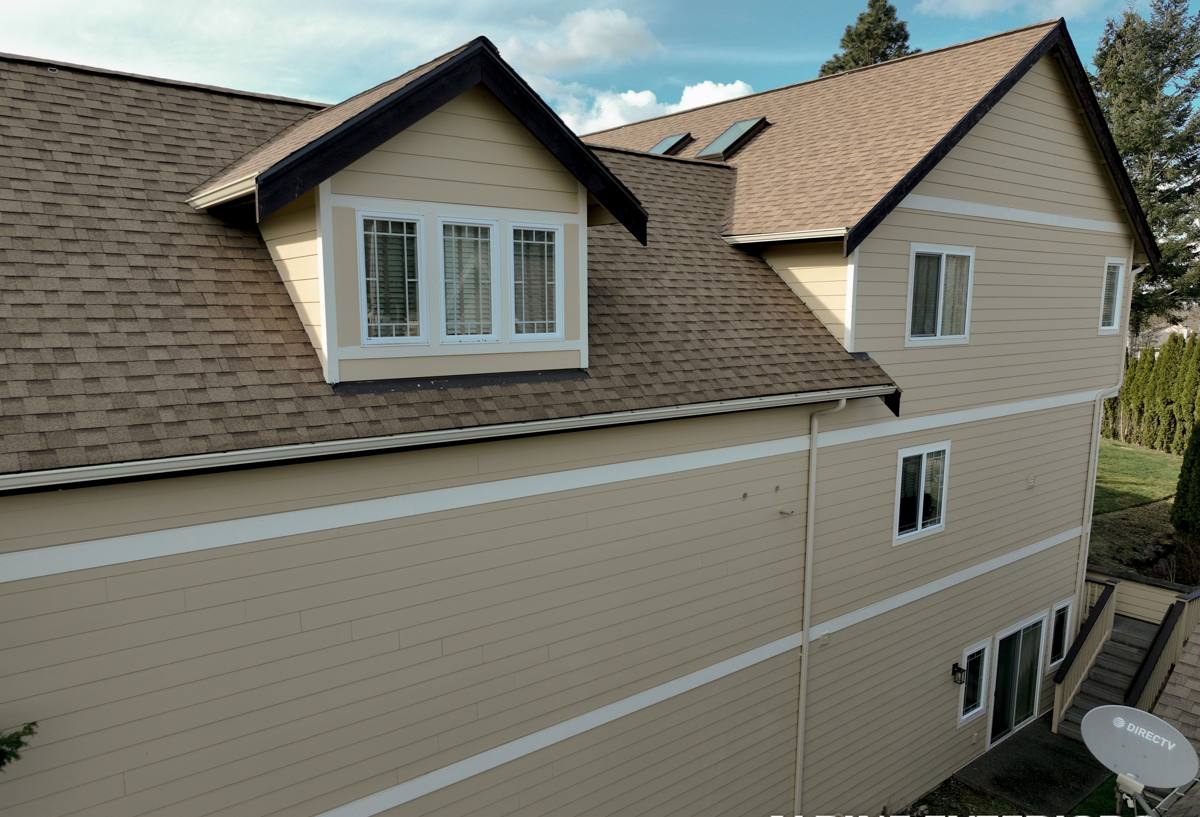
We install James Hardie fiber cement exclusively, and pages like this one exist because homeowners deserve to understand why before they spend money on their home's exterior. On a barrier island, the weak points of other siding materials show up faster than they would inland:
- Vinyl softens and warps under sustained direct sun and heat reflecting off nearby water, and its seams and clips give wind-driven rain more chances to find a way behind the panel.
- Wood and primed spruce products absorb moisture from humid salt air even when painted well, and that moisture cycle — swell, dry, swell again — is what eventually opens up joints and invites rot.
- Standard fasteners and trim not rated for coastal salt exposure corrode faster here than almost anywhere else in the county, which is a detail installers sometimes overlook even when the siding material itself is a reasonable choice.
None of this means those products are worthless everywhere — it means a barrier island house is not the place to gamble on a material or a fastener spec that's marginal even in ideal conditions.
Why James Hardie Is Built for This Environment
James Hardie fiber cement is non-combustible and dimensionally stable, meaning it doesn't expand and contract with humidity swings the way wood-based products do. That matters directly on a barrier island, where humidity is almost always elevated. Hardie's HZ5 product line is engineered specifically for climates with high moisture exposure and cyclical wet-dry conditions — which describes Treasure Island about as well as any location in Florida.
The factory-applied ColorPlus finish is also relevant here in a way it might not be on an inland home: it's baked on under controlled conditions and resists fading and chalking far better than field-applied paint exposed to this level of UV and salt. On a house that gets this much direct sun reflecting off the water on top of standard Florida UV, finish durability isn't cosmetic — it's part of what keeps the material protecting the house instead of just looking tired within a few years.
What "Climate-Engineered" Actually Means Here
It's not a marketing phrase — HardiePlank and HardiePanel HZ5 products are formulated and tested for regions that see both hurricane wind loads and consistent high humidity. That combination is exactly what pulls siding apart over time on the Gulf coast: wind stresses the fastening and seams, and humidity works on any exposed edge or gap those wind events create. A material engineered for one without the other isn't engineered for Treasure Island.
What a Correct Installation Involves on a Barrier Island Home
Material selection is half the equation. The other half is installation, and on Treasure Island the details that get skipped on an easier job are exactly the ones that matter most:
| Detail | Why It Matters Here |
|---|---|
| Stainless or coated coastal-rated fasteners | Standard fasteners corrode faster in sustained salt air, leading to staining and loosened boards years before the siding itself would fail |
| Correct nailing pattern and clearance from edges | Under hurricane-force wind loads, fastener spacing and placement are what keep boards attached — this is not a place to eyeball it |
| Proper flashing and moisture barrier behind every seam | Wind-driven rain hits siding at an angle here more often than it falls straight down, and a barrier island sees this pattern more than most Pinellas County locations |
| Correct ground and roofline clearance | Keeps moisture and standing water away from board edges, critical given elevated humidity and occasional storm surge conditions near the water |
| Caulking and joint treatment per manufacturer spec | Under-caulked or over-caulked joints are a common source of early moisture intrusion, especially with constant salt air cycling through them |
Every one of those items is in James Hardie's installation manual. The difference between a siding job that lasts and one that disappoints an owner within five years is almost never the material — it's whether the crew followed the spec on all five of these points, every time, on every elevation of the house.
How We Handle a Treasure Island Job
We work Treasure Island regularly enough to know what's different about it compared to a mainland Seminole job — barrier island access, tighter lot lines on many properties, and homes that are frequently elevated on pilings or stem walls for flood compliance. That last point changes how siding meets the foundation and how trim details get handled at transition points, and it's not something a crew unfamiliar with the island figures out on the fly.
Our Process
- On-site assessment — we look at wind exposure by elevation, existing moisture or fastener corrosion, and any flashing or trim issues from the current siding before quoting anything.
- Product and color selection — HZ5 board selection and ColorPlus color matched to the home and any HOA or community aesthetic guidelines that may apply.
- Removal and substrate check — old siding comes off and we check the sheathing and moisture barrier underneath before anything new goes up, since problems hiding behind old siding are common on older coastal homes.
- Installation to manufacturer spec — correct fasteners, flashing, clearances, and joint treatment as outlined above, on every side of the house, not just the street-facing elevation.
- Final walkthrough — we go over the finished work with the homeowner and explain what maintenance, if any, the home will need going forward.
Color and Product Line Choices for a Coastal Look
Treasure Island's mix of beach cottages, elevated coastal homes, and newer builds means there's no single "right" look, but a few practical notes apply across the board. Lighter ColorPlus tones tend to show salt residue and water spotting less between washes than very dark colors, though dark colors are still a viable choice — they just may need rinsing a bit more often. HardiePlank lap siding remains the most common choice for a traditional coastal exterior, while HardiePanel with battens is a common option for a more modern or beach-modern look that's become more popular on newer Gulf-front builds.
Maintenance Expectations for a Salt-Air Environment
Even with the right material and a correct install, a barrier island home benefits from a bit more attention than an inland house:
- Rinse siding periodically to clear salt residue buildup, especially on Gulf-facing and bay-facing walls
- Inspect caulking at joints and trim annually, since UV and salt exposure can break down sealant faster here than inland
- Check fastener heads and trim fasteners for early corrosion signs during routine gutter or roof inspections
- Address any small paint or finish chips at cut ends promptly to keep the factory finish's protection intact
None of this is heavy maintenance — it's the kind of light upkeep that keeps a correctly installed Hardie exterior performing the way it's designed to for decades, rather than the kind of scraping and repainting cycle wood or field-finished products require.
What to Ask Before You Hire Anyone for This Job
Whoever you hire, use this as a starting checklist:
- Do they specify coastal-rated fasteners in writing, not just "standard" fasteners?
- Can they explain their flashing and moisture barrier approach for wind-driven rain, not just the siding itself?
- Do they have experience with elevated or piling-foundation homes, common on Treasure Island?
- Are they installing to the manufacturer's published spec for HZ5 product in a hurricane-wind zone?
- Will they walk you through product line and color choices suited to salt-air conditions, not just what's in stock?
A contractor who can answer all five without hesitation has done this work on this island before. That's worth more than the lowest bid.
Get an Estimate
If you own a home on Treasure Island and your siding is showing salt staining, chalking, warping, or gaps at the joints, it's worth a look before the next storm season adds to the damage. We offer free, no-pressure estimates — use the form below to get one scheduled.