 Seminole Siding
 St. Pete Beach Asks More of Siding Than Almost Any Other Market We Work In
St. Pete Beach sits directly on the barrier island, with the open Gulf of Mexico on one side and the Intracoastal on the other. That position gives homes here some of the most direct, unbroken exposure to wind, sun, and salt spray anywhere in Pinellas County. There's no inland buffer of trees or blocks of other buildings to soften what comes off the water — a home here takes the full force of Gulf weather more or less straight on. When siding fails on a barrier island home, it's rarely one single cause. It's usually years of hurricane-force gusts, sustained UV, wind-driven rain, and salt air working together, each one making the others more damaging than they'd be on their own.
That combination is exactly why siding replacement on St. Pete Beach isn't the same job as siding replacement a few miles inland in Seminole or elsewhere in the county. The material has to be right, the installation details have to be right, and the crew doing the work needs to actually understand what this specific stretch of coastline does to a building envelope over time. This page walks through what a correct siding replacement looks like for a St. Pete Beach home, and why we approach it the way we do.
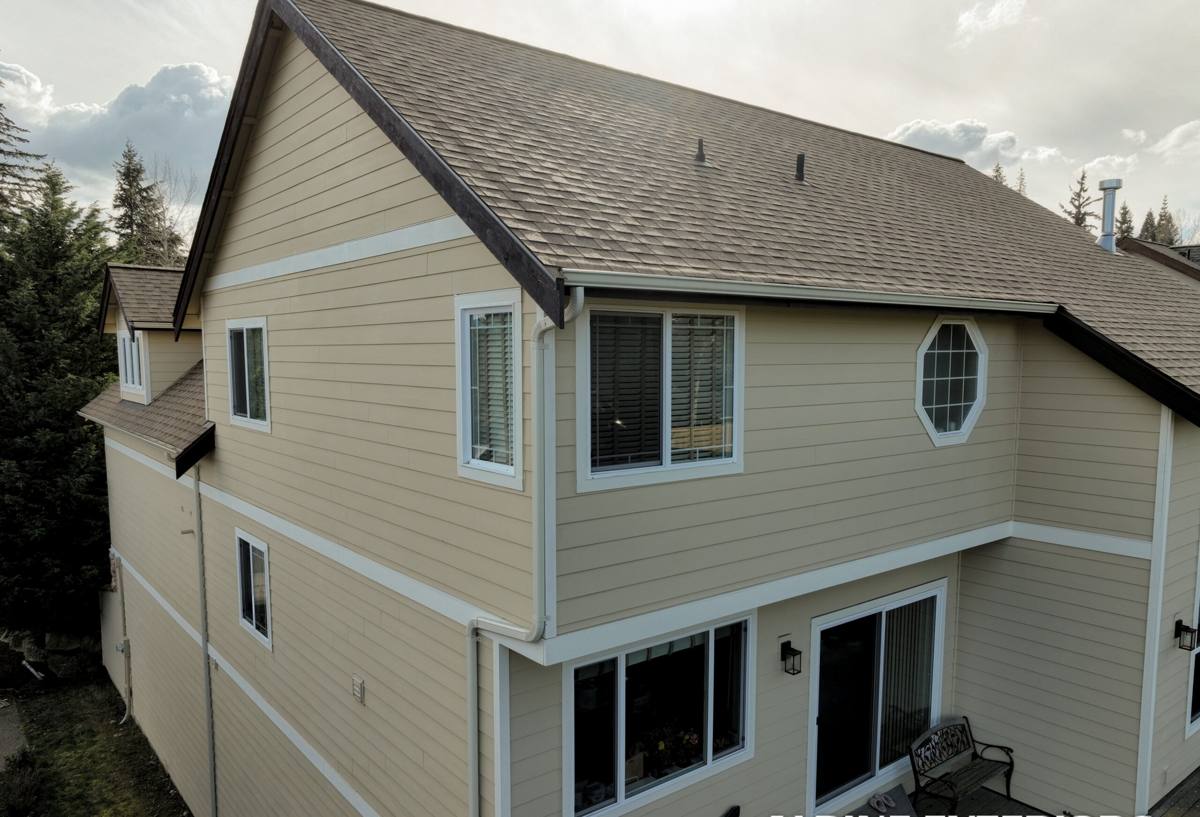
What Makes a Barrier Island Replacement Different
Direct Gulf Exposure
Homes set back from the water, even by a few blocks, get some natural shielding from surrounding structures and vegetation. On St. Pete Beach, especially anything close to the Gulf-facing side, siding takes wind and salt spray at close to full strength. That means the margin for a marginal installation — a slightly under-fastened panel, a joint that wasn't fully sealed — is much smaller here than it is even a short distance inland.
Flood-Zone Construction Patterns
A lot of homes on the barrier island were built, or have been rebuilt, to current flood-zone requirements, which often means elevated living space with the ground level used for parking, storage, or breakaway construction rather than living area. That changes where siding starts, how it meets grade or a raised foundation, and how flashing needs to be detailed at that transition. It's a different set of considerations than a typical slab-on-grade home a few miles inland, and it needs to be accounted for during both the inspection and the install.
Rental and Seasonal Occupancy
Many properties on St. Pete Beach are used seasonally or as rentals, which means a homeowner isn't always on-site to catch small problems early — a hairline gap at a corner post or a soft spot near a window can go unnoticed for a full season before anyone's there to see it. That makes durable material and correct installation even more important here, because a slow leak has more time to do damage before it's caught.
Signs a St. Pete Beach Home Needs Replacement, Not Just Repair
Not every siding problem calls for a full tear-off. But on a barrier island home, we lean toward recommending full replacement more often than we would inland, because the exposure here tends to mean damage that's visible on one elevation has usually already started on others. Some signs point clearly toward replacement rather than a patch:
- Siding that's chalking, fading unevenly, or peeling significantly across more than one wall, not just the sun-facing side
- Soft, spongy sections when pressed near windows, doors, corner boards, or the bottom courses
- Multiple areas of visible warping, buckling, or gapping, especially after a storm season
- Rust streaks or visibly corroded fasteners and trim in several places, not an isolated spot
- Musty smells or interior staining on walls that back up to exterior siding
- Siding that's original to a home older than 20-25 years, with no documented replacement
A single soft spot or one damaged panel might be a legitimate repair. Widespread wear across multiple elevations, especially on a Gulf-facing home, is usually a sign the whole system — siding, water-resistive barrier, and flashing — is past the point where patching makes sense.
Why We Install Only James Hardie Fiber Cement on the Island
We get this question often from St. Pete Beach homeowners specifically, because it's a market where the siding choice matters more than almost anywhere else we work. We standardized on James Hardie fiber cement and don't install vinyl, LP SmartSide, Cemplank, Allura, primed spruce, or cedar, and the reasoning is more pointed on a barrier island than it is elsewhere.
Vinyl
Vinyl is a rigid-but-hung product — it's fastened with room to expand and contract, which works fine in mild conditions but leaves it more vulnerable to being lifted or torn in sustained hurricane-force gusts than a product that's mechanically fastened flat to the wall. On a direct Gulf-front lot with nothing to slow the wind down, that's a real consideration, not a theoretical one.
Engineered and Solid Wood
Wood-based siding — engineered wood, primed spruce, cedar — is a wood-fiber product at its core, and wood-fiber products absorb moisture. In a climate where humidity rarely lets a wall fully dry out, any break in the factory seal at a cut edge or fastener line becomes a place where the material can start wicking water and swelling. That's a maintenance-sensitive product profile in a location where maintenance gaps are more likely, given how many homes here are seasonally occupied.
Other Fiber Cement Brands
Not all fiber cement products are engineered the same way. We chose James Hardie specifically for its HZ product lines, which are climate-engineered for high-humidity, high-moisture coastal regions, its factory-applied ColorPlus finish that resists the fading and chalking that plain field paint shows under Florida sun, and the depth of its installation documentation and warranty backing. It's also non-combustible, which matters to a lot of homeowners regardless of storm exposure.
Comparing Siding Options for a Direct Gulf-Exposure Home
| Factor | Vinyl | Engineered/Solid Wood | James Hardie Fiber Cement |
|---|---|---|---|
| Wind performance in sustained hurricane-force gusts | More prone to being torn loose; hung rather than fully fastened | Holds up if properly fastened, but the material itself is the weaker link long-term | Rigid, mechanically fastened flat to the wall; engineered for wind zones |
| Behavior under near-constant UV | Can fade, chalk, and become brittle over years | Finish and coating quality vary; sun accelerates wear | ColorPlus factory finish resists fading and chalking |
| Moisture and humidity tolerance | Doesn't absorb water but traps humid air behind panels | Wood-fiber core absorbs moisture at any compromised edge | Non-organic; doesn't swell, wick, or support rot |
| Salt air exposure | Panel itself is stable; fasteners and trim can corrode | Panel and fasteners both vulnerable to salt-driven wear | Stable material; correct fastener spec matters most |
| Combustibility | Can soften or deform under extreme heat | Combustible, being wood-based | Non-combustible |
How We Approach a Siding Replacement Project Here
Every project starts with a full exterior walk, checking every elevation rather than just the side that looks worst from the street — on a Gulf-front home, the water-facing wall and the walls that catch prevailing wind often show different wear patterns, and we want to see all of them before scoping the job. That includes pressing on suspect areas to check for soft sheathing, looking closely at flashing where the roof meets the wall and around every window and door, and checking how the siding meets grade or a raised foundation.
Once we know what we're dealing with, the tear-off comes next, and this is where a lot of hidden problems get found — damaged sheathing, corroded fasteners, or water intrusion that wasn't visible from outside. We repair or replace anything compromised before a single new piece of siding goes up, because installing new material over damaged sheathing just hides the problem instead of fixing it. From there, installation follows James Hardie's published specifications for fastening, clearance, and joint treatment, adjusted for our local wind zone and salt exposure.
What a Full Replacement Includes
- Full exterior inspection across every elevation, including a moisture check before tear-off
- Removal of existing siding and inspection of sheathing and framing underneath
- Repair or replacement of any damaged sheathing, framing, or fastener points found during tear-off
- Installation of a continuous water-resistive barrier with correctly lapped and sequenced flashing
- James Hardie plank, panel, or shingle siding installed to manufacturer spec and local wind-zone code
- Corrosion-resistant fastener type and spacing suited to direct salt-air exposure
- Trim, corner boards, and fascia work matched to the chosen Hardie product line
- Final walkthrough covering caulking, touch-up needs, and ongoing care
Permitting and Wind Code on the Barrier Island
Pinellas County's wind zone requirements set the baseline for fastening schedules and product specifications, and homes on the barrier island frequently fall into higher wind-exposure categories than comparable homes further inland because of that open, unshielded position relative to the Gulf. A contractor who pulls permits here regularly knows what the county and local wind-load requirements actually call for, rather than defaulting to a generic national minimum. We handle permitting as part of the job and won't cut corners on fastening schedules to save time, because those details are exactly what get tested first when the next storm comes through.
Roofing, Windows, and Decks Alongside Siding
On a barrier island home, siding problems rarely show up in isolation. Roof-to-wall flashing, window integration, and deck ledger connections all interact with the same water-resistive barrier and framing that siding depends on. We handle roofing, windows, and decks in addition to siding, so when we're scoping a replacement, we're looking at the whole envelope and will tell you honestly if something else — a flashing detail at the roofline, a window that's no longer sealing correctly — needs attention as part of the same project rather than being left to fail on its own timeline.
Why a Crew That Already Works St. Pete Beach Matters
Siding performance comes down to details that don't show up in a finished photo — how deep a fastener is driven, how much clearance is left above grade or a raised foundation, whether a cut edge got sealed before it was installed, how a joint was lapped. A crew that regularly works this stretch of coastline has already seen how those details hold up, or fail, under direct Gulf exposure specifically, not just Florida weather in general. That's a meaningfully different thing from experience gained mostly on inland homes. It also means we're not learning the local wind-zone requirements and flood-zone construction quirks on your project — we already know what St. Pete Beach asks of a siding job before we show up.
What to Expect From Your Estimate
An honest estimate starts with a real inspection, not a quick guess from the driveway. We'll check your current siding's condition across every elevation, look for hidden moisture or sheathing damage, talk through which James Hardie product line makes sense for a direct Gulf-exposure home, and give you a clear number based on what we actually find — not a low estimate that grows once the tear-off starts. Cost varies with home size, number of stories, existing damage, and trim complexity, and we'll walk through those factors specifically with you rather than leaving you to guess.
If you're on St. Pete Beach and thinking about siding replacement — whether you're dealing with visible damage now or just planning ahead of the next storm season — we're happy to come take a look and provide a straightforward, no-pressure estimate using the form below.